Particle accelerator interior cern
1344×768 · AVIF · CC BY 4.0
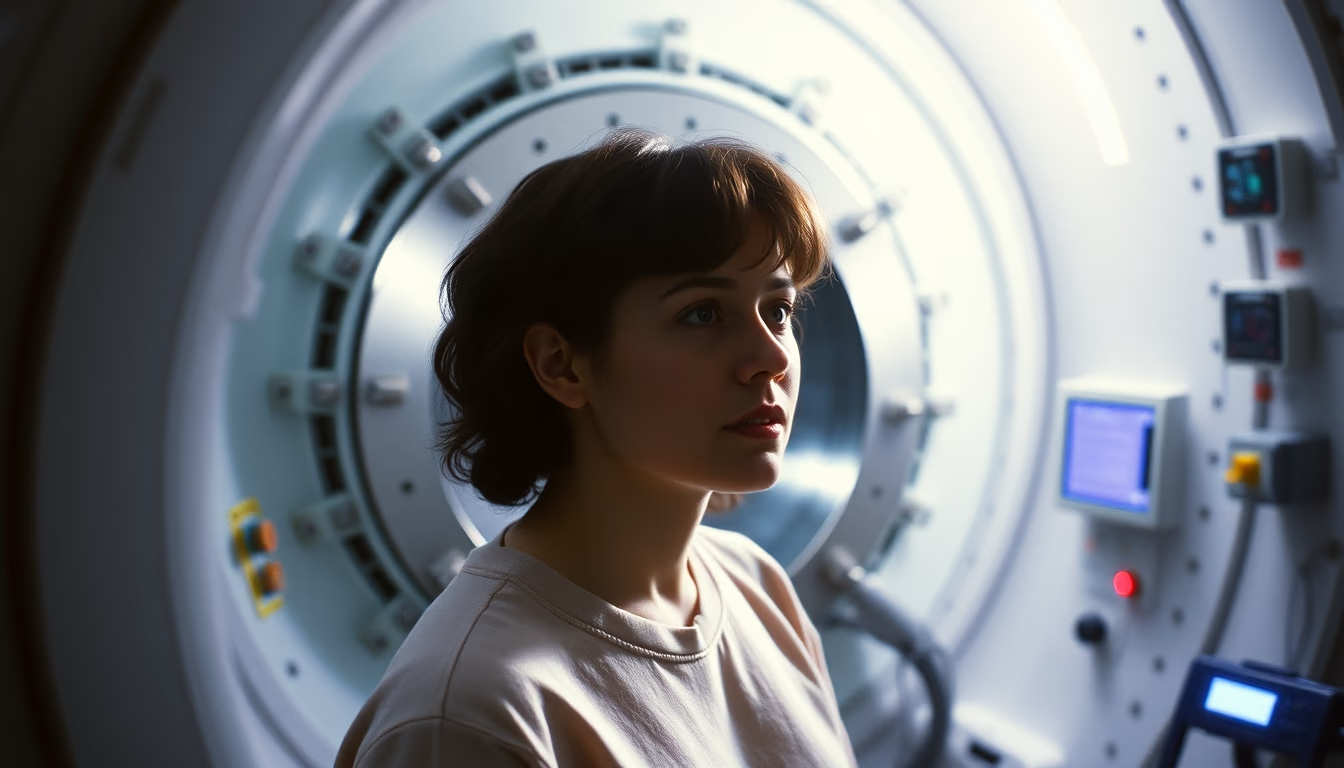
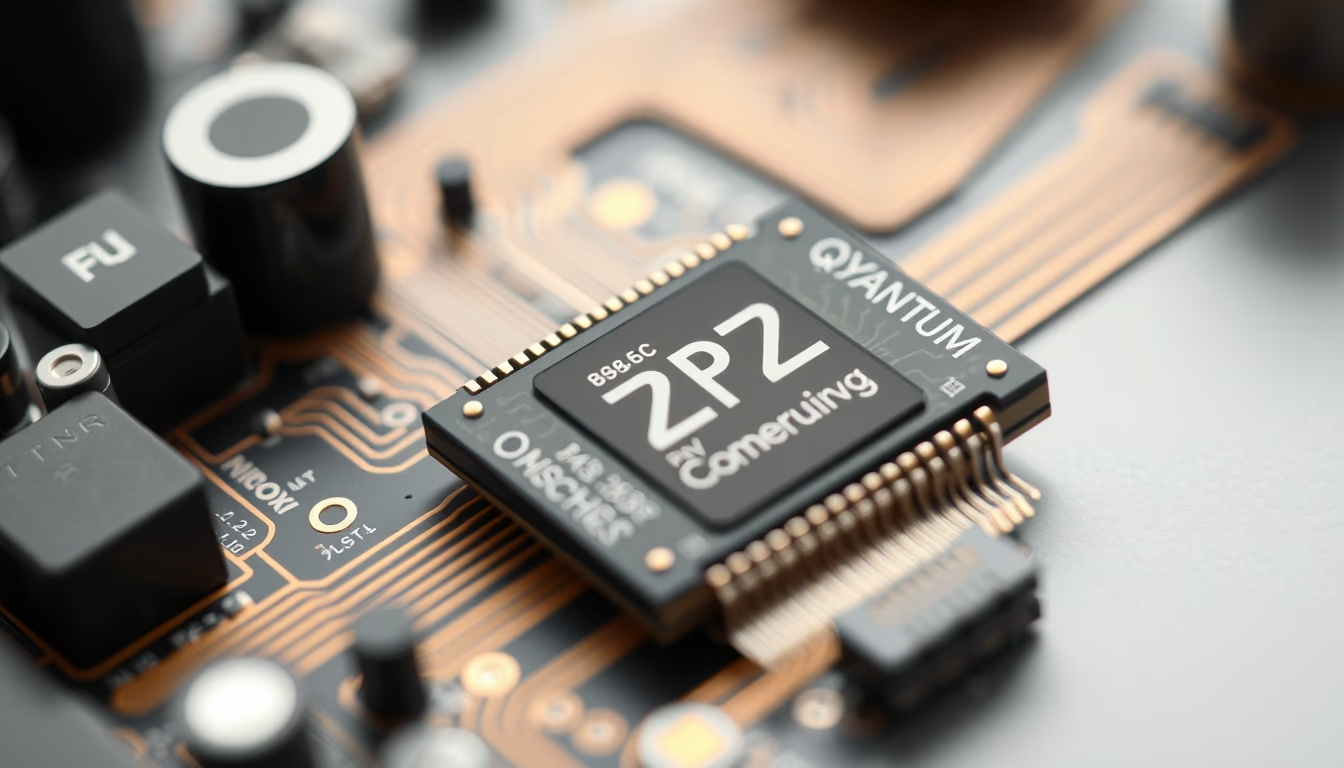
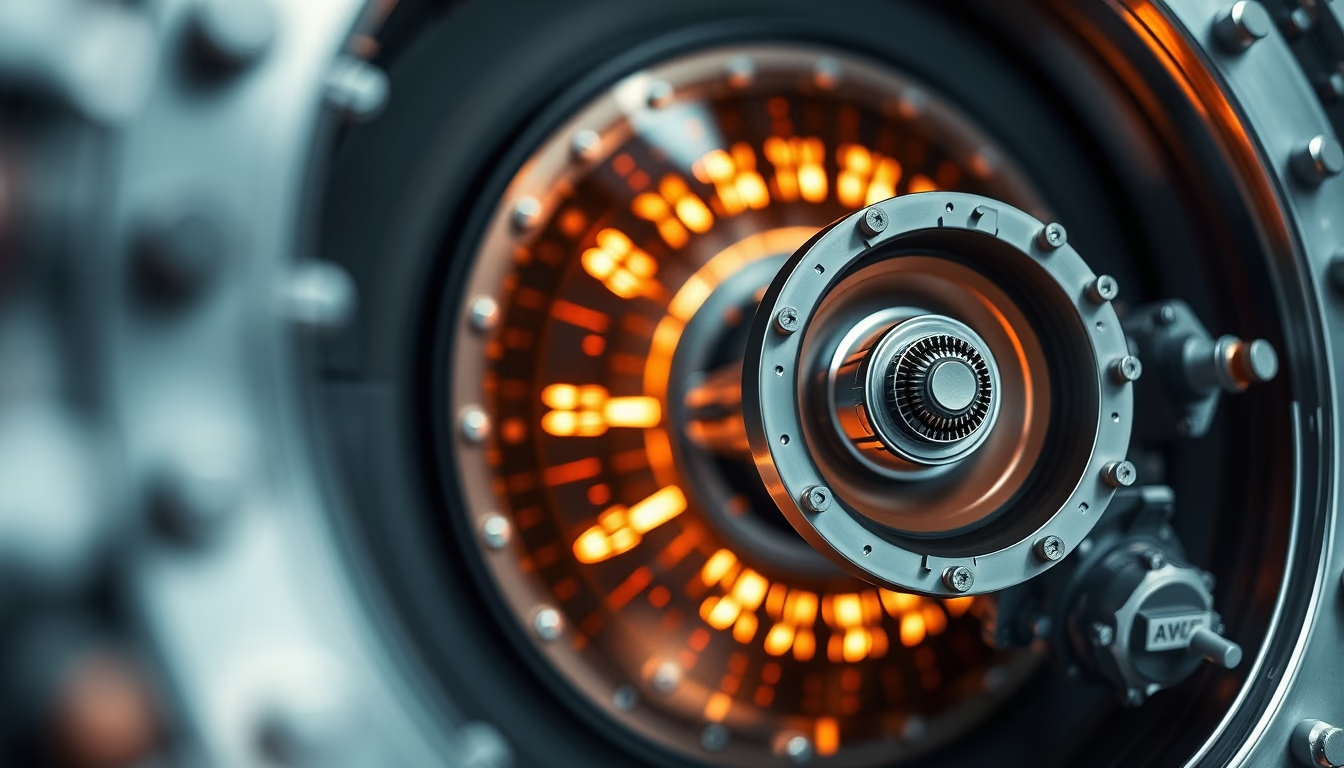
The interior of CERN's particle accelerator reveals the technology behind particle physics discoveries, such as the Higgs boson.
About this subject
CERN, the European Organization for Nuclear Research, houses the world's largest and most powerful particle accelerator: the Large Hadron Collider (LHC). Located on the border between Switzerland and France, its circular tunnel spans 27 kilometers, built about 100 meters underground. Inside, ultra-high vacuum tubes and superconducting magnets cooled to near absolute zero guide proton beams at speeds close to light. These extreme conditions allow protons to collide, generating energies that recreate the first moments after the Big Bang.
The LHC is not the only accelerator in the complex. Before reaching the main ring, particles pass through a chain of smaller accelerators, such as the LINAC (linear accelerator) and the PS (Proton Synchrotron). Each step increases the beam energy. Inside the LHC, detectors like ATLAS and CMS record the collisions. It was in this environment that, in 2012, the discovery of the Higgs boson was confirmed, completing the Standard Model of particle physics. Since then, research has sought new particles, dark matter, and extra dimensions.
Interestingly, the photograph of the accelerator interior, with its lo-fi disposable camera style, contrasts with the high technology of the site. This aesthetic recalls the early decades of CERN, founded in 1954, when facilities were recorded on film. Today, the LHC interior is monitored by thousands of sensors, but images like this evoke the pioneering spirit of science. The vacuum inside the tube is 100 times lower than on the Moon, and the beams travel in packets called 'bunches,' each with 100 billion protons, separated by only 25 nanoseconds.
Beyond the LHC, CERN operates other accelerators like the SPS (Super Proton Synchrotron), which helped discover the W and Z bosons in the 1980s. Maintenance of the accelerator interior requires special suits and strict contamination control. The image, with its grainy quality, captures the essence of an environment where human knowledge reaches its experimental limits.
Frequently Asked Questions
What happens inside CERN's particle accelerator?
Inside the accelerator, protons or ions are accelerated to near light speed and collide at specific points. The collisions produce subatomic particles that are detected and analyzed to study the fundamental laws of physics.
Why is the LHC important for science?
The LHC led to the discovery of the Higgs boson in 2012, a key piece of the Standard Model. It also searches for evidence of dark matter, supersymmetry, and other theories beyond the Standard Model.
How are images of the accelerator interior obtained?
Internal photographs are rare and usually taken during maintenance periods when the accelerator is off. Special cameras and documentation techniques record components like magnets and vacuum tubes.
Direct URL
https://pub-c7d6a6ea828543ac903a74a341ccb2e1.r2.dev/imagens/particle-accelerator-interior-cern-lo-fi-disposable-camera-p9.avifHow to credit
Include a visible link back to UtilizAí. Copy one of the snippets below:
<a href="https://xn--utiliza-eza.com/en/midia/imagens/particle-accelerator-interior-cern-lo-fi-disposable-camera-p9">Particle accelerator interior cern</a> by <a href="https://xn--utiliza-eza.com">UtilizAí</a>, licensed under <a href="https://creativecommons.org/licenses/by/4.0/">CC BY 4.0</a>.
[Particle accelerator interior cern](https://xn--utiliza-eza.com/en/midia/imagens/particle-accelerator-interior-cern-lo-fi-disposable-camera-p9) by [UtilizAí](https://xn--utiliza-eza.com), CC BY 4.0
License: CC-BY-4.0