Particle accelerator interior cern
1344×768 · AVIF · CC BY 4.0
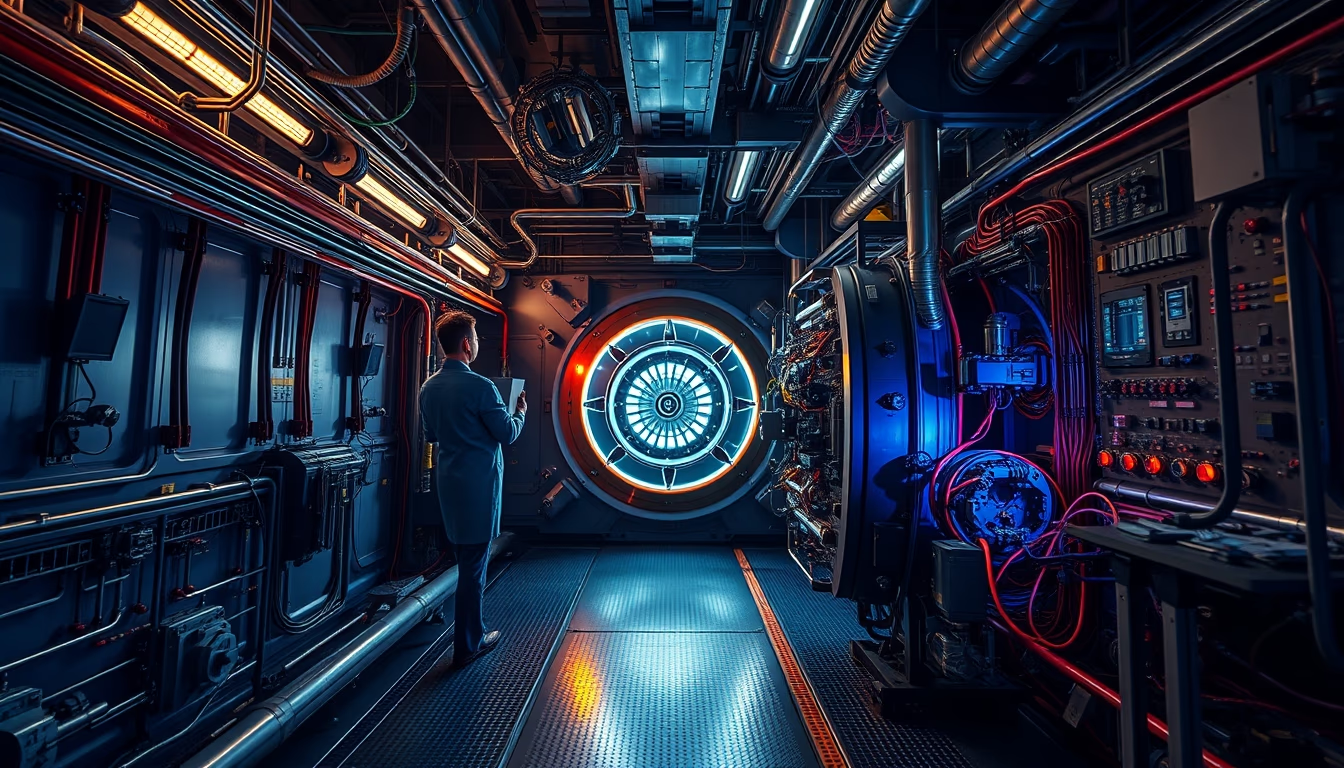
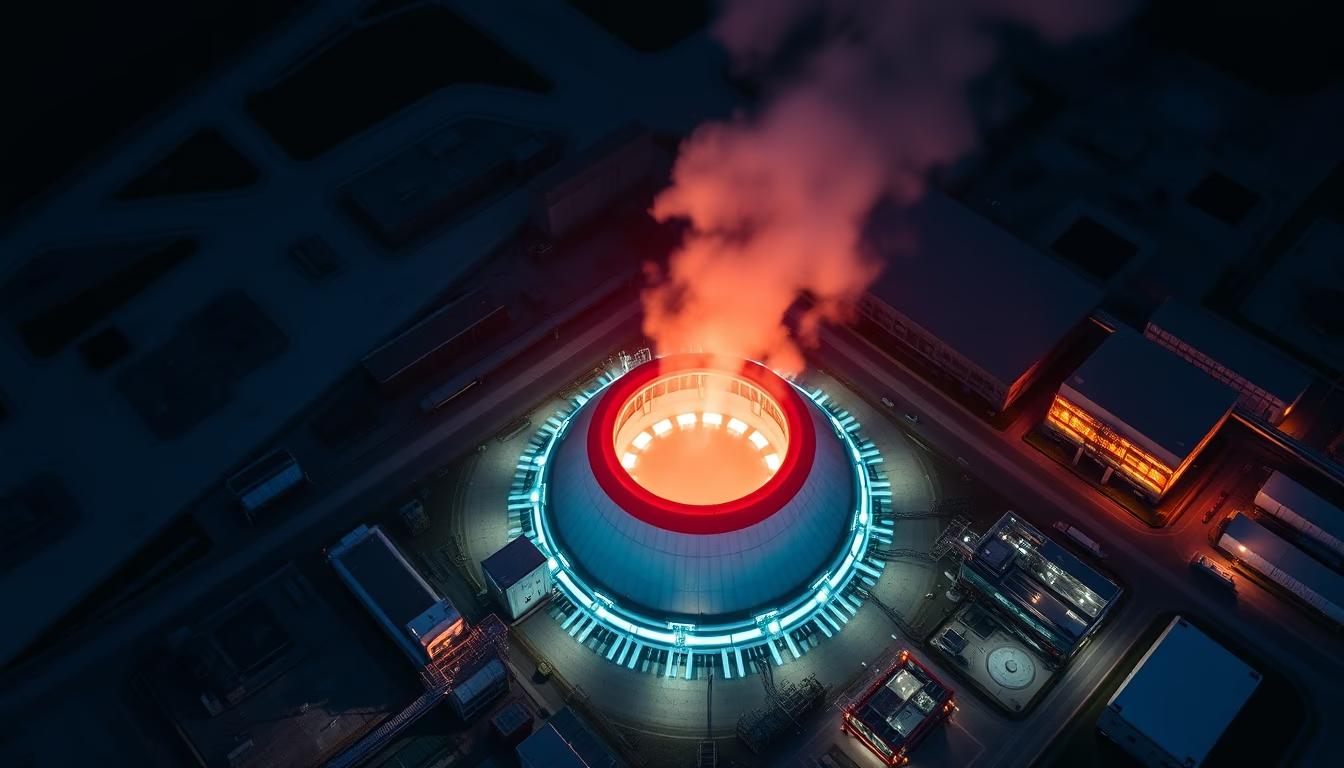
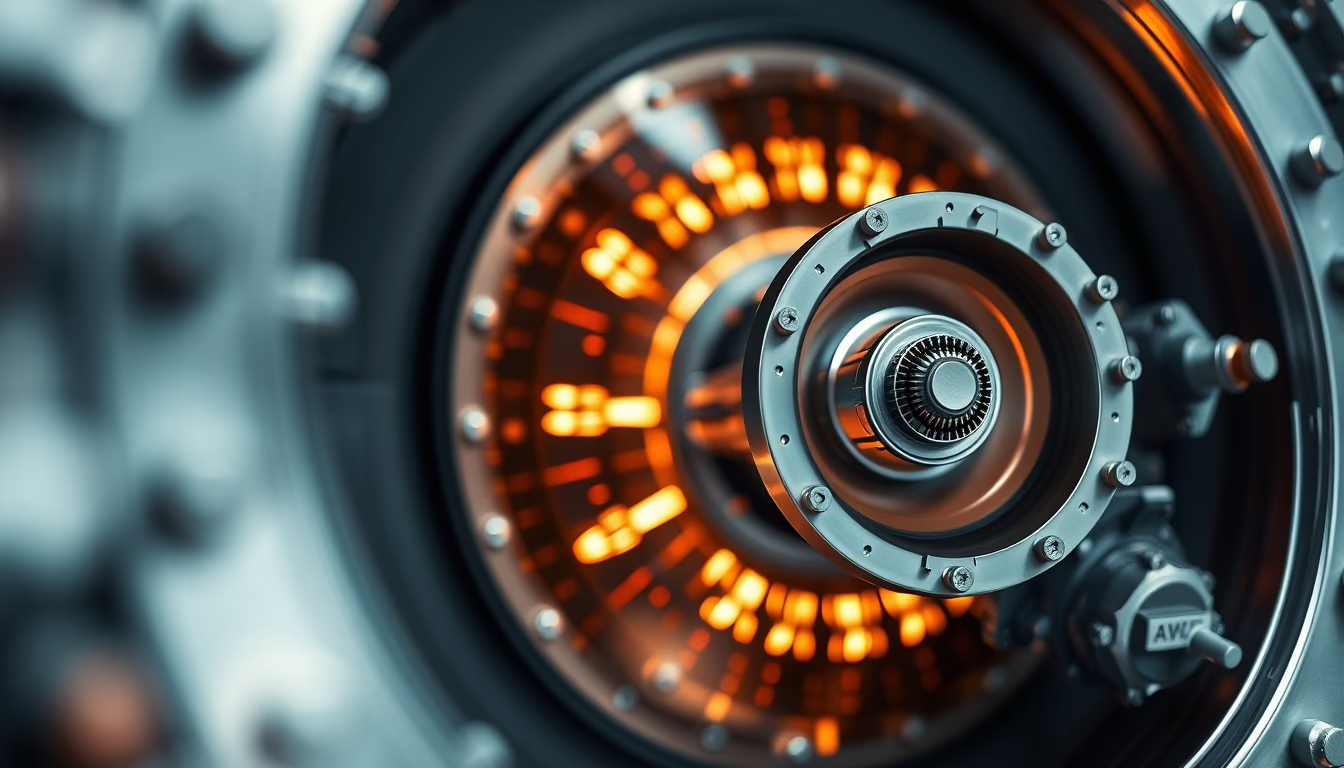
The interior of a CERN particle accelerator, such as the LHC, where protons collide at near-light speeds to unlock the secrets of the universe.
About this subject
The Large Hadron Collider (LHC) is the world's largest and most powerful particle accelerator, located at CERN on the border between France and Switzerland. With a 27-kilometer circumference ring, it accelerates proton beams in opposite directions to energies of 6.5 TeV (tera-electronvolts) each, colliding them at four main points: ATLAS, CMS, ALICE, and LHCb. These collisions recreate conditions similar to those just after the Big Bang, enabling the study of fundamental particles. In 2012, the LHC was instrumental in discovering the Higgs boson, the particle that gives mass to other particles, confirming the Standard Model of physics. The accelerator's interior consists of thousands of superconducting magnets cooled with liquid helium to -271.3 °C, which guide the protons around the ring. Ultra-high vacuum tubes, with pressures 100 trillion times lower than the atmosphere, keep the beams free from unwanted collisions. The LHC operates in multi-year cycles, with planned upgrades to increase luminosity (collision rate). Beyond particle physics, CERN's technology has led to innovations like the World Wide Web, invented at the lab in 1989. Each second, about 600 million collisions occur inside the detectors, generating petabytes of data analyzed globally. Studying the accelerator's interior reveals precision engineering that pushes the boundaries of science and technology.
Frequently Asked Questions
What is the purpose of a particle accelerator like the LHC?
The LHC is designed to collide subatomic particles at extremely high energies, enabling scientists to investigate the fundamental laws of nature, the origin of mass, and the composition of the universe. It has confirmed the Higgs boson and seeks new particles beyond the Standard Model, such as dark matter.
How are protons accelerated inside the LHC?
Protons are accelerated in stages by a series of linear and circular accelerators before being injected into the main ring. There, oscillating electric fields and superconducting magnets increase their energy and curve their trajectory, keeping the beams circulating for hours.
Why does the accelerator interior require vacuum and extremely low temperatures?
The ultra-high vacuum prevents protons from colliding with air molecules, preserving the beam. Cryogenic temperatures near absolute zero are necessary for the superconducting magnets to operate without energy loss, generating intense magnetic fields.
Direct URL
https://pub-c7d6a6ea828543ac903a74a341ccb2e1.r2.dev/imagens/particle-accelerator-interior-cern-fine-art-photography-p1.avifHow to credit
Include a visible link back to UtilizAí. Copy one of the snippets below:
<a href="https://xn--utiliza-eza.com/en/midia/imagens/particle-accelerator-interior-cern-fine-art-photography-p1">Particle accelerator interior cern</a> by <a href="https://xn--utiliza-eza.com">UtilizAí</a>, licensed under <a href="https://creativecommons.org/licenses/by/4.0/">CC BY 4.0</a>.
[Particle accelerator interior cern](https://xn--utiliza-eza.com/en/midia/imagens/particle-accelerator-interior-cern-fine-art-photography-p1) by [UtilizAí](https://xn--utiliza-eza.com), CC BY 4.0
License: CC-BY-4.0