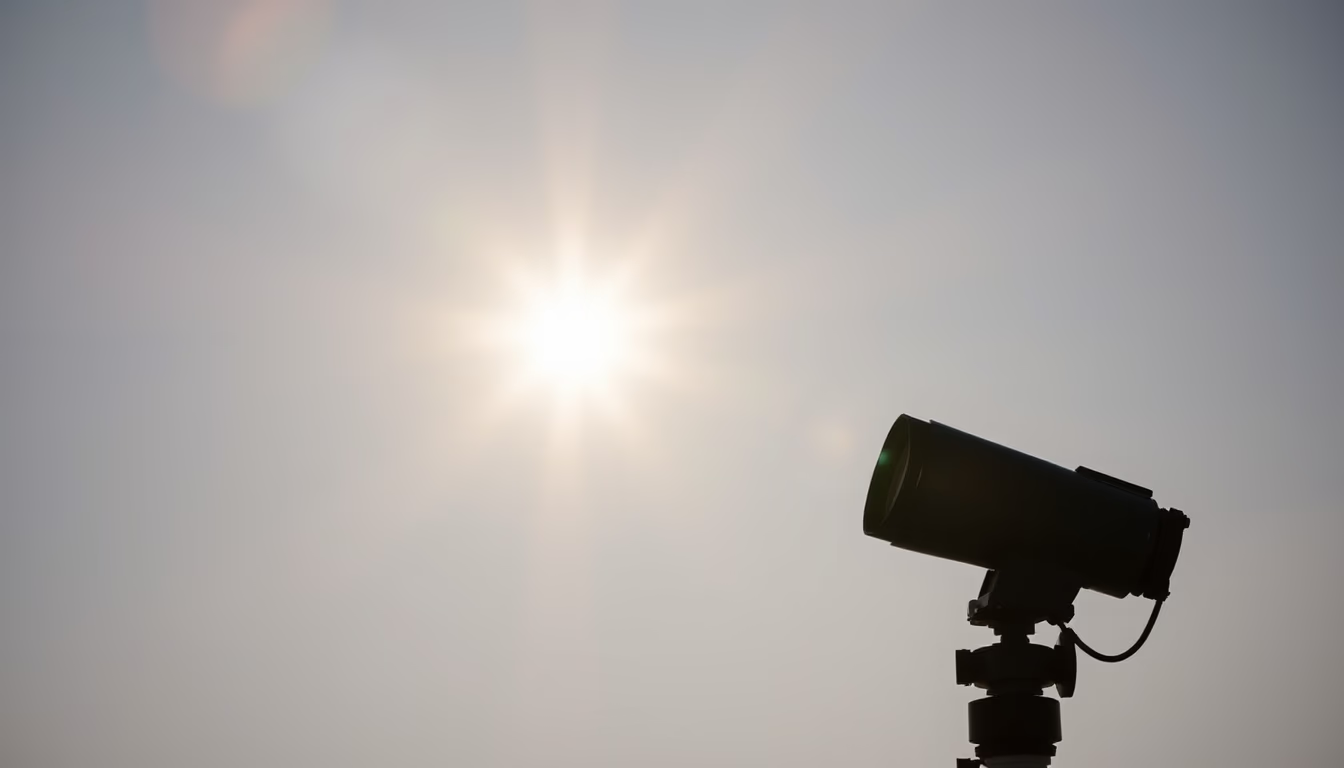
Parker solar probe sun
1344×768 · AVIF · CC BY 4.0
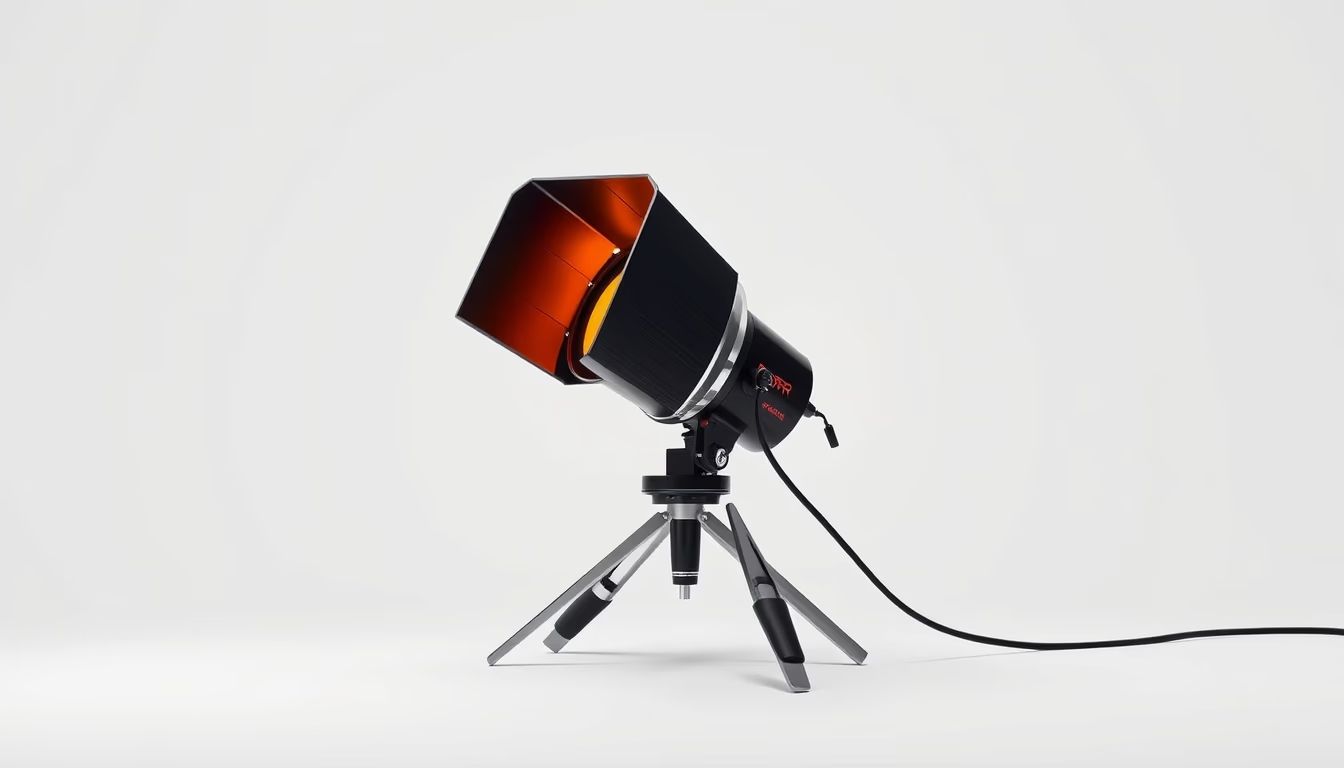
The Parker Solar Probe is NASA's first mission to "touch" the Sun, gathering unprecedented data on the solar corona and solar wind.
About this subject
The Parker Solar Probe is a NASA spacecraft launched on August 12, 2018, designed to study the solar corona, the outermost layer of the Sun's atmosphere. Named after astrophysicist Eugene Parker, who predicted the existence of the solar wind in the 1950s, the probe performs increasingly close approaches to the Sun, using Venus gravity assists to adjust its orbit. In December 2021, the Parker Solar Probe became the first spacecraft to fly through the solar atmosphere, passing just 8.5 million kilometers from the Sun's surface.
The probe carries instruments capable of withstanding extreme temperatures exceeding 1,400 degrees Celsius, thanks to a carbon-composite heat shield. Its sensors measure magnetic fields, energetic particles, and plasma, helping to understand why the corona is millions of degrees hotter than the Sun's surface. The data collected is crucial for predicting solar storms that can affect satellites and power grids on Earth.
The mission is scheduled to last seven years, with 24 orbits around the Sun. At its closest planned approach in 2025, the probe will reach about 6.2 million kilometers from the Sun's surface, inside the orbit of Mercury. The project is a milestone in engineering and space science, opening new frontiers in the study of the star that sustains life on Earth.
Frequently Asked Questions
What is the main objective of the Parker Solar Probe?
The goal is to study the solar corona and solar wind, helping to understand why the corona is hotter than the Sun's surface and how solar particles are accelerated.
How does the Parker Solar Probe withstand extreme temperatures?
It uses a carbon-composite heat shield that reflects most solar radiation, keeping instruments at a safe temperature of about 30 degrees Celsius.
How many times has the probe approached the Sun?
As of 2023, the probe has completed over 15 approaches, each closer than the last. The final approach is planned for 2025, at 6.2 million kilometers.
Direct URL
https://pub-c7d6a6ea828543ac903a74a341ccb2e1.r2.dev/imagens/parker-solar-probe-sun-commercial-product-photography-fresh0.avifHow to credit
Include a visible link back to UtilizAí. Copy one of the snippets below:
<a href="https://xn--utiliza-eza.com/en/midia/imagens/parker-solar-probe-sun-commercial-product-photography-fresh0">Parker solar probe sun</a> by <a href="https://xn--utiliza-eza.com">UtilizAí</a>, licensed under <a href="https://creativecommons.org/licenses/by/4.0/">CC BY 4.0</a>.
[Parker solar probe sun](https://xn--utiliza-eza.com/en/midia/imagens/parker-solar-probe-sun-commercial-product-photography-fresh0) by [UtilizAí](https://xn--utiliza-eza.com), CC BY 4.0
License: CC-BY-4.0