Papercraft architecture
1344×768 · AVIF · CC BY 4.0
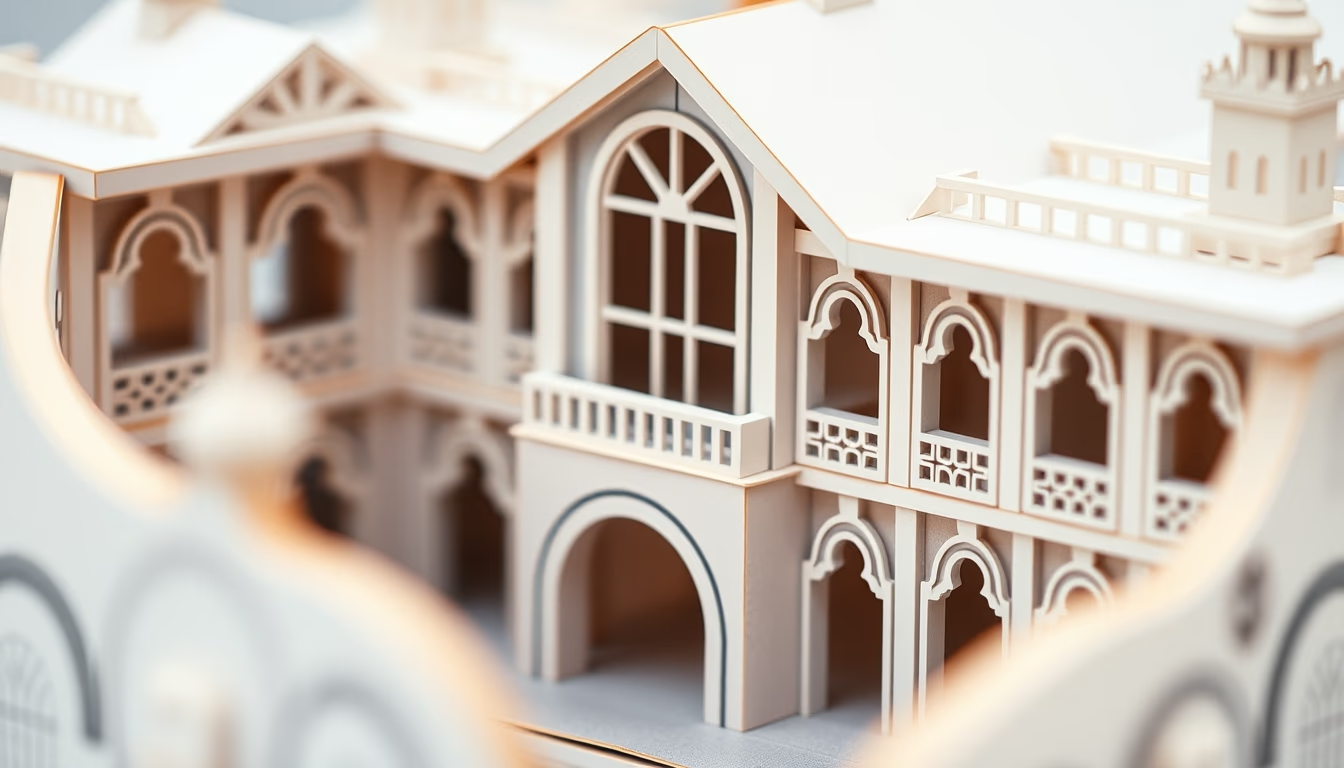
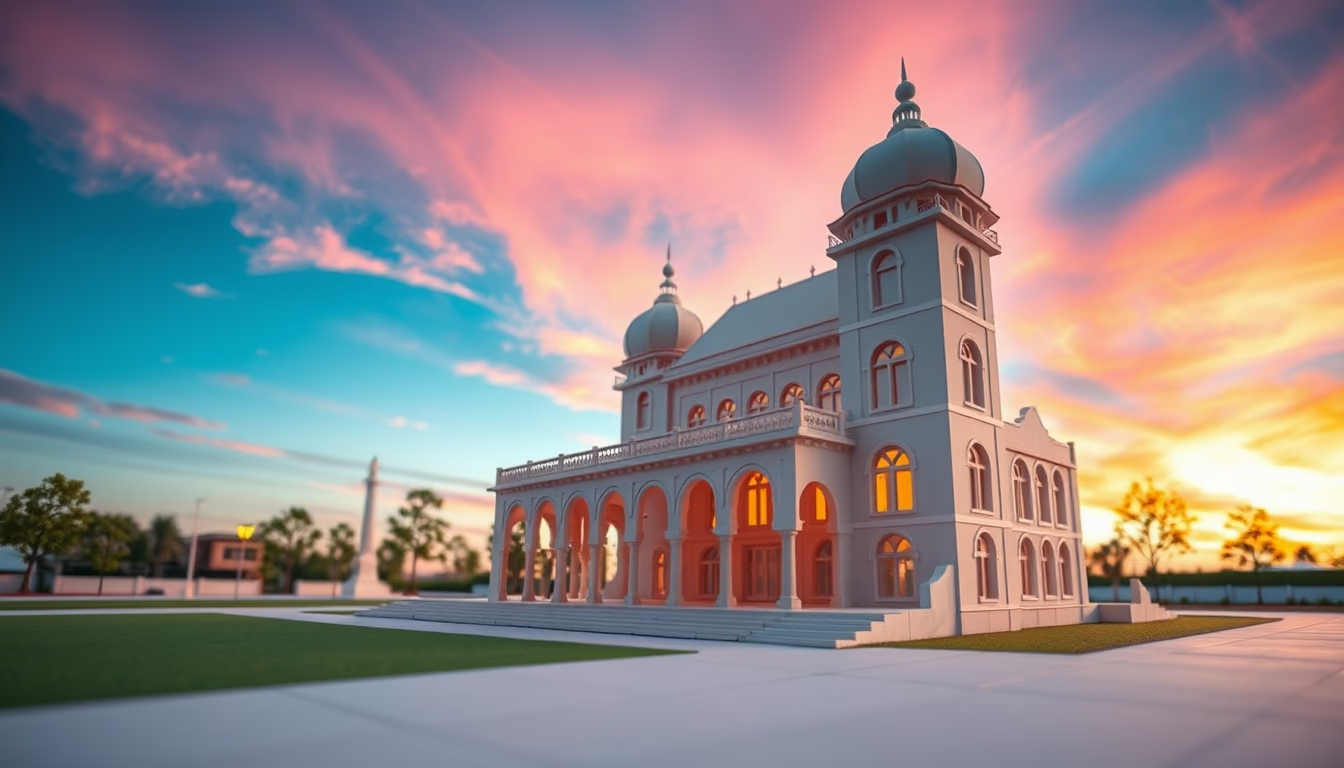
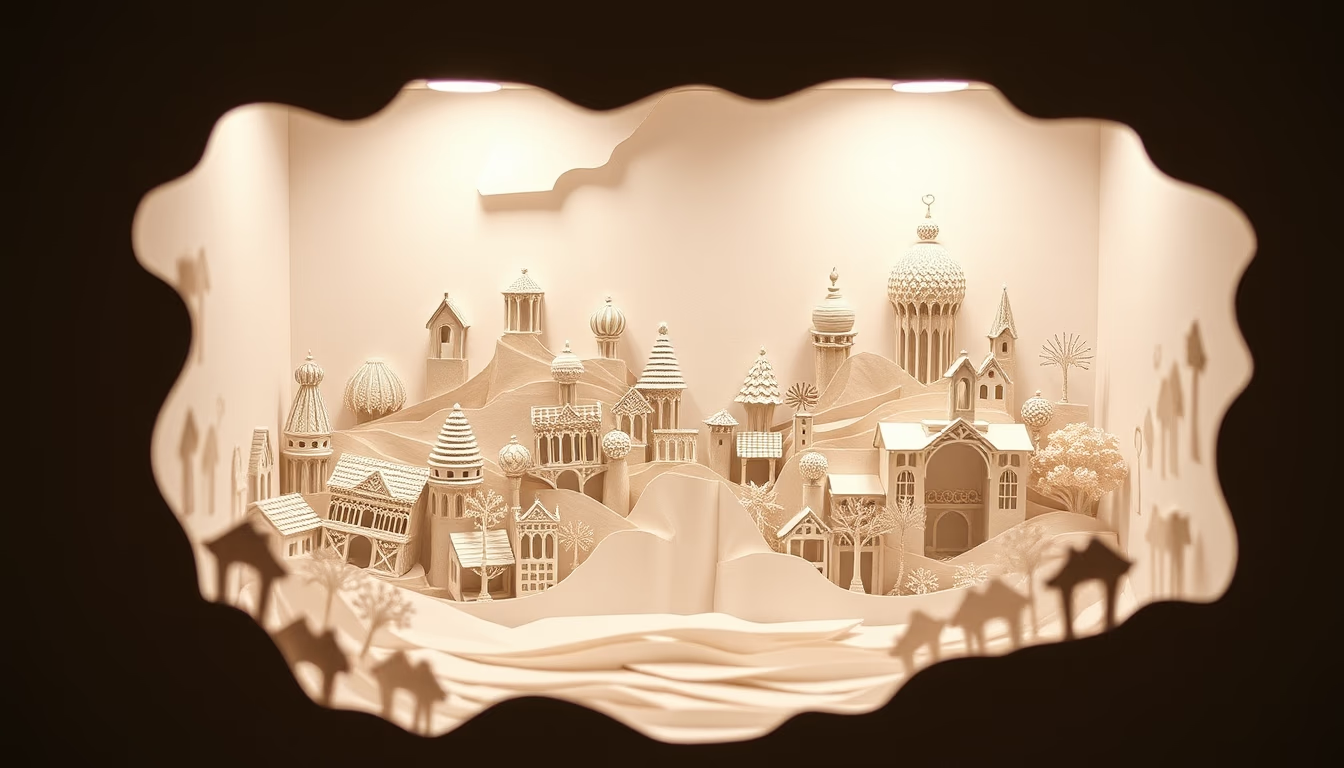
Papercraft architecture is the art of building three-dimensional architectural models with paper, combining technical precision and creativity in miniature.
About this subject
Papercraft architecture, also known as paper architecture, is an art form that uses paper as the primary material to create detailed replicas of buildings, monuments, and imaginary structures. Unlike origami, which folds paper without cuts or glue, papercraft often involves cutting, creasing, and glueing flat pieces to assemble three-dimensional shapes. This practice dates back to architectural and engineering paper models from the 18th century but gained prominence as a hobby and artistic expression in recent decades with the spread of digital templates and 3D printers.
The technique demands patience and manual skill: each piece is precisely cut, folded at the correct angles, and carefully glued to ensure stability. Scales can range from tiny dollhouses to complete urban complexes. Notable artists include Japanese Takahiro Iwasaki, who creates architectural landscapes from thread and paper, and English Peter Callesen, who transforms a single sheet into narrative sculptures. American Eric Standley is famous for his laser-cut paper layers that form intricate architectural stained glass.
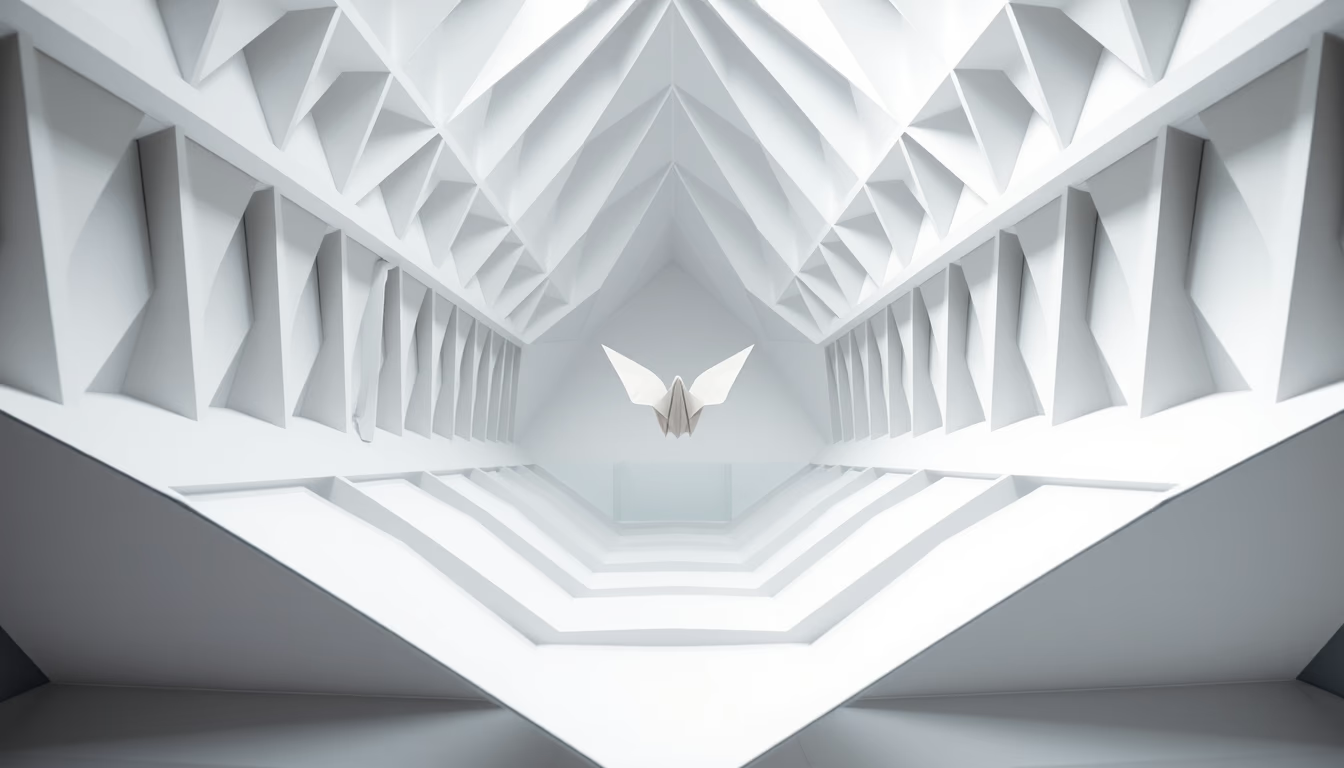
Culturally, papercraft architecture engages with the tradition of physical architectural models but also with contemporary maker culture. Many enthusiasts share free templates online, allowing anyone to recreate from the Taj Mahal to the Sagrada Família. Beyond entertainment, the technique is used in education to teach spatial geometry and in art exhibitions as a sustainable and accessible way to represent structures. A macro close-up of a piece reveals the paper's texture, crease lines, and the complexity of joints, showing that simple materials can yield highly sophisticated works.
Frequently Asked Questions
What is the origin of papercraft architecture?
The practice of building architectural models from paper dates back to the 18th century, when architects and engineers used paper mockups to visualize designs. As a widespread art form, it gained momentum in recent decades with the availability of downloadable templates and the maker movement.
What materials are used in papercraft architecture?
The primary material is cardstock or high-grammage paper for rigidity. Tools include a craft knife, metal ruler, cutting mat, white glue or glue stick, and tweezers for small pieces. Home printers are commonly used to print colored templates.
What is the difference between papercraft and origami?
In origami, a single sheet of paper is folded without cuts or glue to create figures. In papercraft, multiple pieces are cut, folded, and glued, allowing for greater complexity and three-dimensional detail, such as in architectural models.
Direct URL
https://pub-c7d6a6ea828543ac903a74a341ccb2e1.r2.dev/imagens/papercraft-architecture-macro-closeup-fresh7.avifHow to credit
Include a visible link back to UtilizAí. Copy one of the snippets below:
<a href="https://xn--utiliza-eza.com/en/midia/imagens/papercraft-architecture-macro-closeup-fresh7">Papercraft architecture</a> by <a href="https://xn--utiliza-eza.com">UtilizAí</a>, licensed under <a href="https://creativecommons.org/licenses/by/4.0/">CC BY 4.0</a>.
[Papercraft architecture](https://xn--utiliza-eza.com/en/midia/imagens/papercraft-architecture-macro-closeup-fresh7) by [UtilizAí](https://xn--utiliza-eza.com), CC BY 4.0
License: CC-BY-4.0