Paper marbling water
1344×768 · AVIF · CC BY 4.0
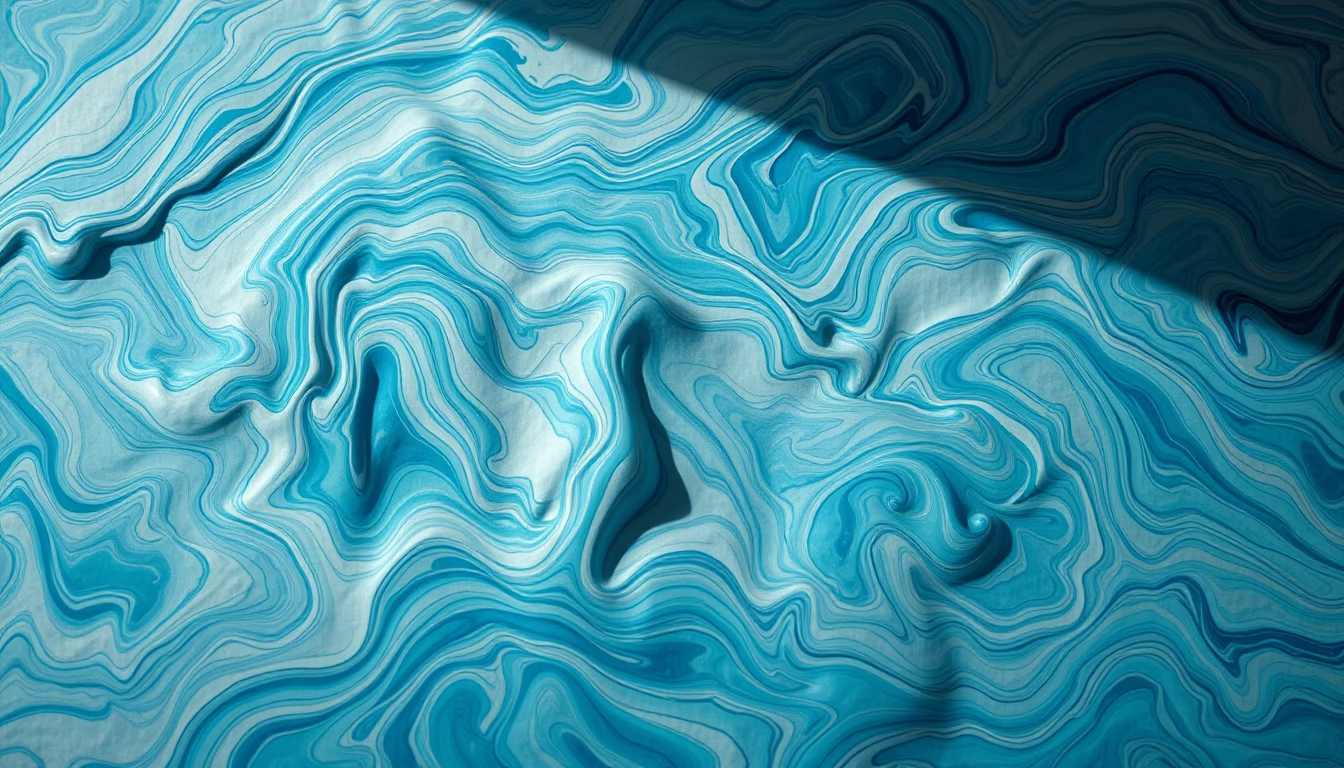
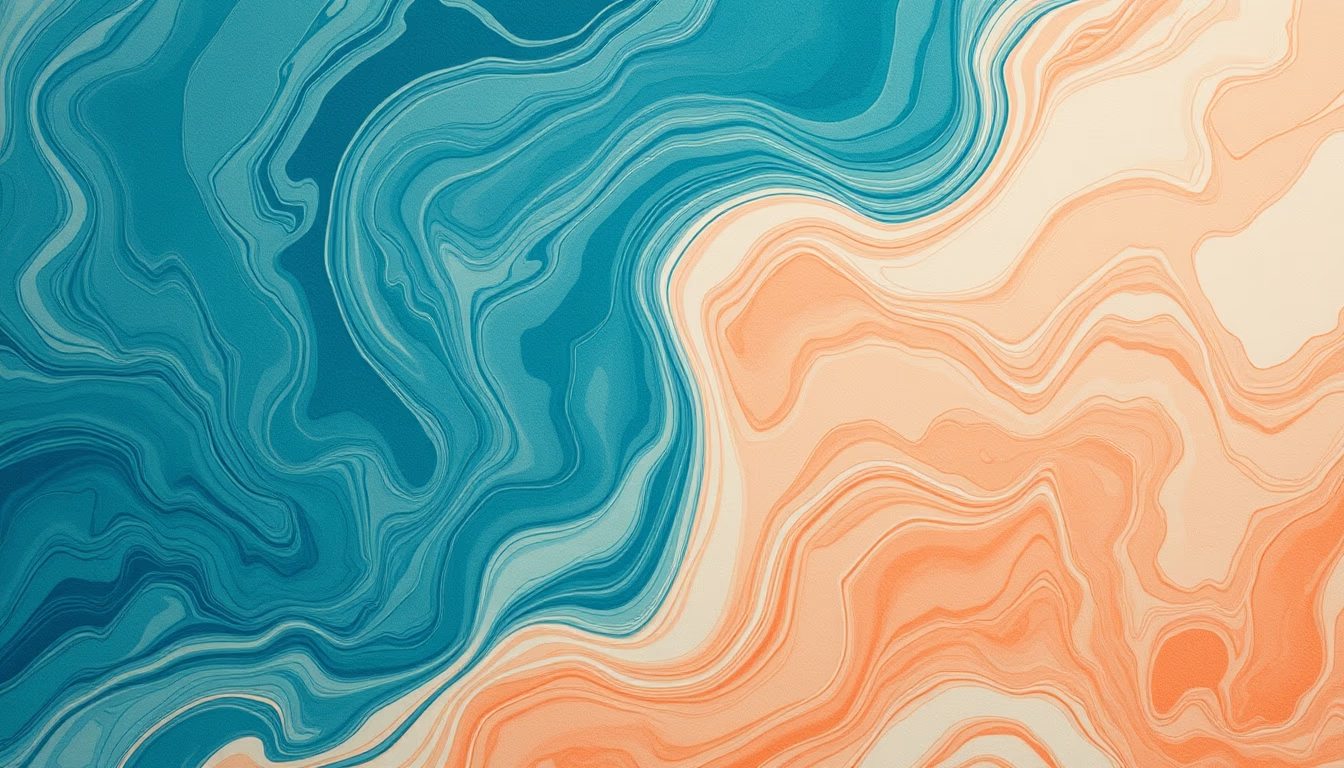
The ancient art of paper marbling creates unique patterns by floating pigments on water, resulting in abstract and organic works.
About this subject
Paper marbling, known as ebru in Turkey and suminagashi in Japan, is a decorative art form dating back to the 12th century in East Asia and later flourishing in the Ottoman Empire. The technique involves dispersing pigments on the surface of a thickened water solution, often made from carrageenan or tragacanth gum. Using tools like combs and styluses, the artist manipulates the colors to create intricate swirls and patterns. A sheet of paper is then gently laid onto the water, transferring the design. Each piece is unique because the pigment dispersion cannot be exactly replicated.
Historically, marbled paper was used for bookbinding, endpapers, and official documents to prevent forgery, functioning as a kind of watermark. In the Ottoman Empire, ebru became a highly respected craft, with masters passing down techniques through generations. Today, UNESCO recognizes ebru as Intangible Cultural Heritage of Humanity. Contemporary artists innovate by applying marbling to textiles, ceramics, and digital media, keeping the tradition alive.
The process is mesmerizing: pigments float due to surface tension and are often treated with ox gall to spread evenly. The artist's control allows for delicate florals or bold geometric abstractions. The resulting patterns have inspired modern designers in fashion, interior décor, and graphic design. Paper marbling remains a meditative and experimental practice, bridging heritage and contemporary creativity.
Frequently Asked Questions
What is the origin of paper marbling?
The technique originated in Japan in the 12th century (suminagashi) and developed in the Ottoman Empire as ebru, used to decorate books and official documents.
What materials are used in paper marbling?
Oil-based paints or special pigments, water thickened with carrageenan or tragacanth gum, and tools like combs and styluses to create patterns.
How do the colors float on the water?
Pigments float due to surface tension; the artist manipulates them to form patterns, which are transferred to paper by gently laying it on top.
Direct URL
https://pub-c7d6a6ea828543ac903a74a341ccb2e1.r2.dev/imagens/paper-marbling-water-rembrandt-lighting-dramatic-shadows-fresh1.avifHow to credit
Include a visible link back to UtilizAí. Copy one of the snippets below:
<a href="https://xn--utiliza-eza.com/en/midia/imagens/paper-marbling-water-rembrandt-lighting-dramatic-shadows-fresh1">Paper marbling water</a> by <a href="https://xn--utiliza-eza.com">UtilizAí</a>, licensed under <a href="https://creativecommons.org/licenses/by/4.0/">CC BY 4.0</a>.
[Paper marbling water](https://xn--utiliza-eza.com/en/midia/imagens/paper-marbling-water-rembrandt-lighting-dramatic-shadows-fresh1) by [UtilizAí](https://xn--utiliza-eza.com), CC BY 4.0
License: CC-BY-4.0