Paper marbling water
1344×768 · AVIF · CC BY 4.0
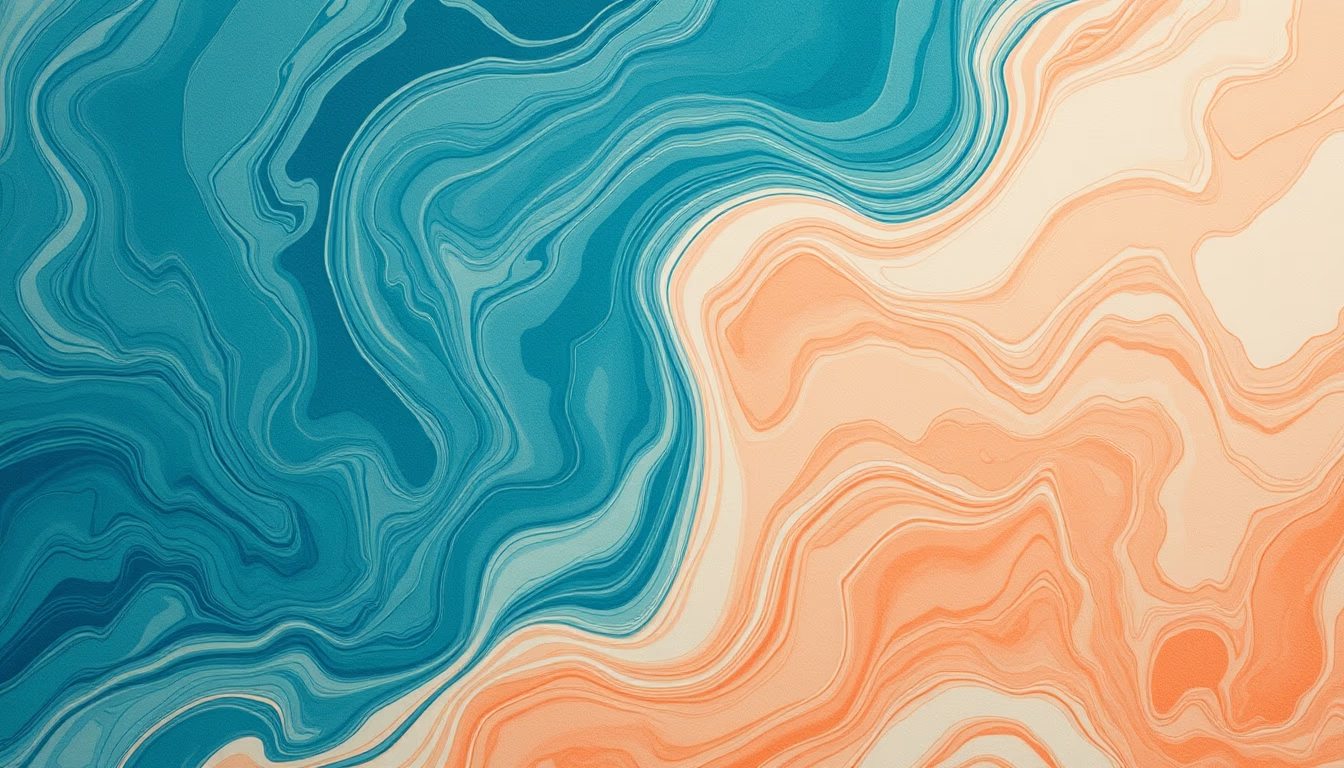
The paper marbling technique, which uses water as a surface to create unique patterns, has ancient origins in Japan and Turkey.
About this subject
Paper marbling, known as suminagashi in Japan and ebru in Turkey, is an art form where special inks are floated on the surface of water and then transferred onto paper. The inks, made from natural pigments and binders, are carefully placed on the water, where they spread into organic patterns. The artist uses tools like combs, sticks, or blowing techniques to manipulate the colors, creating designs that resemble marble veins, hence the name.
The technique originated in Japan during the 12th century, used to decorate silk paper, and later spread through the Islamic world, especially the Ottoman Empire, where it became a refined art form. In Europe, marbling arrived in the 17th century and was widely employed in book endpapers and luxury bindings. Each pattern is unique, depending on factors such as water viscosity, ink density, and the artist's movements.
Today, paper marbling is practiced as a hobby and art form worldwide. Beyond paper, the technique can be applied to fabric, wood, and other surfaces. Modern variations use acrylic paints and water additives like carrageenan (extracted from red algae), which thickens the water for better pattern control. The resulting pieces are highly valued in scrapbooking, invitations, abstract art, and restoration of antique books.
Interestingly, every piece is irreproducible: the conditions at the moment, water temperature, air humidity, ink concentration, never repeat exactly. This makes marbling a classic example of ephemeral art immortalized on paper. Art schools and online courses teach the technique, and communities on Instagram and Pinterest share thousands of variations, proving that this centuries-old tradition remains alive and innovative.
Frequently Asked Questions
How does the paper marbling technique work?
The technique involves floating special inks on the surface of water, where they spread. The artist manipulates the patterns using tools like combs or sticks, and then transfers the design onto paper or other material.
What materials are needed for paper marbling?
You need: a shallow tray with water, special marbling inks (oil-based or acrylic), a thickener like carrageenan, combs or sticks for creating patterns, and paper or fabric to receive the print.
What is the historical origin of paper marbling?
The technique originated in Japan in the 12th century (suminagashi) and was also developed in the Ottoman Empire (ebru). It reached Europe in the 17th century, where it was widely used for book bindings.
Direct URL
https://pub-c7d6a6ea828543ac903a74a341ccb2e1.r2.dev/imagens/paper-marbling-water-isometric-flat-lay-fresh18.avifHow to credit
Include a visible link back to UtilizAí. Copy one of the snippets below:
<a href="https://xn--utiliza-eza.com/en/midia/imagens/paper-marbling-water-isometric-flat-lay-fresh18">Paper marbling water</a> by <a href="https://xn--utiliza-eza.com">UtilizAí</a>, licensed under <a href="https://creativecommons.org/licenses/by/4.0/">CC BY 4.0</a>.
[Paper marbling water](https://xn--utiliza-eza.com/en/midia/imagens/paper-marbling-water-isometric-flat-lay-fresh18) by [UtilizAí](https://xn--utiliza-eza.com), CC BY 4.0
License: CC-BY-4.0