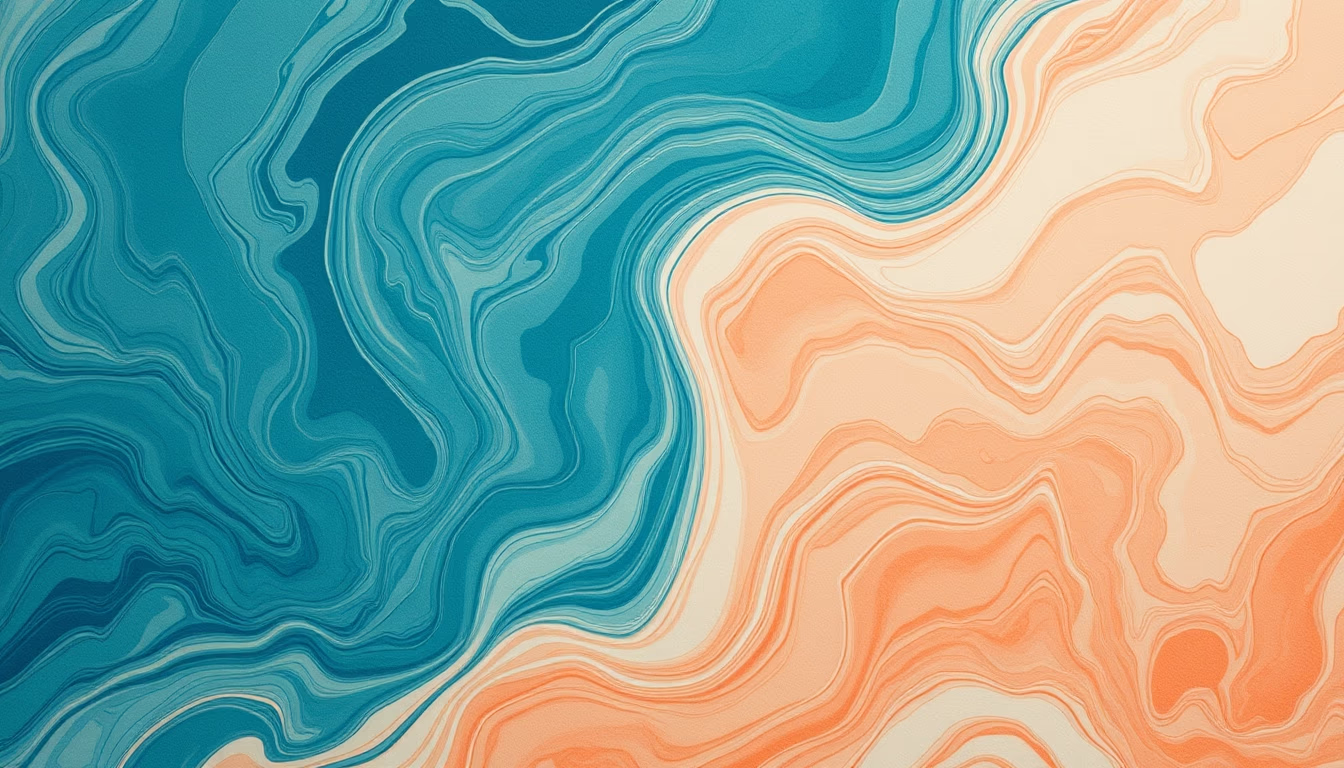
Paper marbling water
1344×768 · AVIF · CC BY 4.0
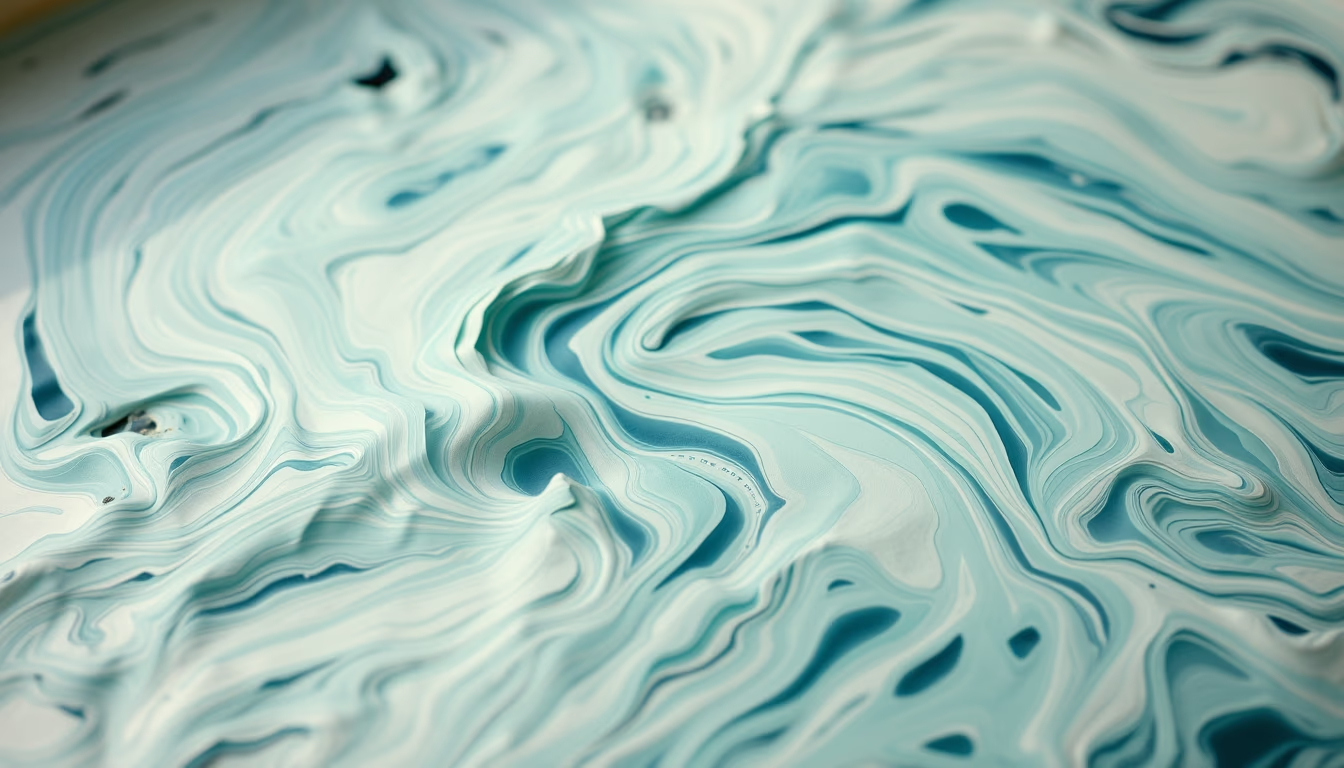
The paper marbling technique, which uses a water surface prepared with size to create unique patterns, has ancient origins in Japan and Turkey.
About this subject
Paper marbling, also known as suminagashi in Japan and ebru in Turkey, is an ancient art form that transforms the water surface into an ephemeral canvas. The process begins by preparing a water bath with a thickening agent, typically carrageenan extracted from seaweed or gum tragacanth, which increases viscosity and allows paints to float without mixing. Drops of paint, made from natural or synthetic pigments, are gently deposited onto the water, creating concentric circles. Using combs, styluses, or blowing, the artist manipulates the colors to form veins, waves, flowers, or other abstract designs. Finally, a sheet of paper, traditionally cotton or linen, is laid carefully onto the water, capturing the pattern before being lifted and dried. Each piece is unique, as the movement of the paints cannot be exactly replicated.
The technique originated in Japan around the 12th century with suminagashi, where sumi ink was used to create concentric rings symbolizing ocean waves and the fluidity of life. Later, in Persia and the Ottoman Empire, ebru flourished, especially in the 16th century, used to decorate the borders of manuscripts and official documents. The word ebru derives from Persian 'ebri', meaning 'like a cloud', or 'aber', meaning 'water for the face'. Combined with Islamic calligraphy, marbling became a symbol of beauty and delicacy.
With expanding trade routes, the technique reached Europe in the 17th century, where it was adopted by Italian, German, and French bookbinders who used it to cover the interiors of rare books. In England, the process was refined with the addition of 'size' made from flax seed or alum, creating more defined patterns. Today, contemporary artists explore marbling in decorative papers, notebook covers, design objects, and even fabrics, keeping alive this tradition that demands patience and precision.
Water plays a central role: its surface tension is altered by the thickener, creating an environment where paints float until transferred to the support. Factors such as temperature, humidity, and the type of size influence the outcome, making marbling as much a science as a creative art. Although modern kits exist, many artisans still prepare their own sizes and paints, following centuries-old recipes.
Frequently Asked Questions
What is paper marbling?
It is a handmade technique that creates colorful patterns on a viscous water surface, then transfers them to paper. Paints float on the water and are manipulated before printing onto the support.
What are the historical origins of marbling?
The technique originated in Japan in the 12th century (suminagashi) and later developed in the Ottoman Empire and Persia (ebru), reaching Europe in the 17th century.
What role does water play in the marbling process?
Water is thickened with agents like carrageenan to create a viscous film that holds the paints on the surface, allowing patterns to form and then be transferred to paper.
Direct URL
https://pub-c7d6a6ea828543ac903a74a341ccb2e1.r2.dev/imagens/paper-marbling-water-documentary-photography-fresh2.avifHow to credit
Include a visible link back to UtilizAí. Copy one of the snippets below:
<a href="https://xn--utiliza-eza.com/en/midia/imagens/paper-marbling-water-documentary-photography-fresh2">Paper marbling water</a> by <a href="https://xn--utiliza-eza.com">UtilizAí</a>, licensed under <a href="https://creativecommons.org/licenses/by/4.0/">CC BY 4.0</a>.
[Paper marbling water](https://xn--utiliza-eza.com/en/midia/imagens/paper-marbling-water-documentary-photography-fresh2) by [UtilizAí](https://xn--utiliza-eza.com), CC BY 4.0
License: CC-BY-4.0