Paper marbling water
1344×768 · AVIF · CC BY 4.0
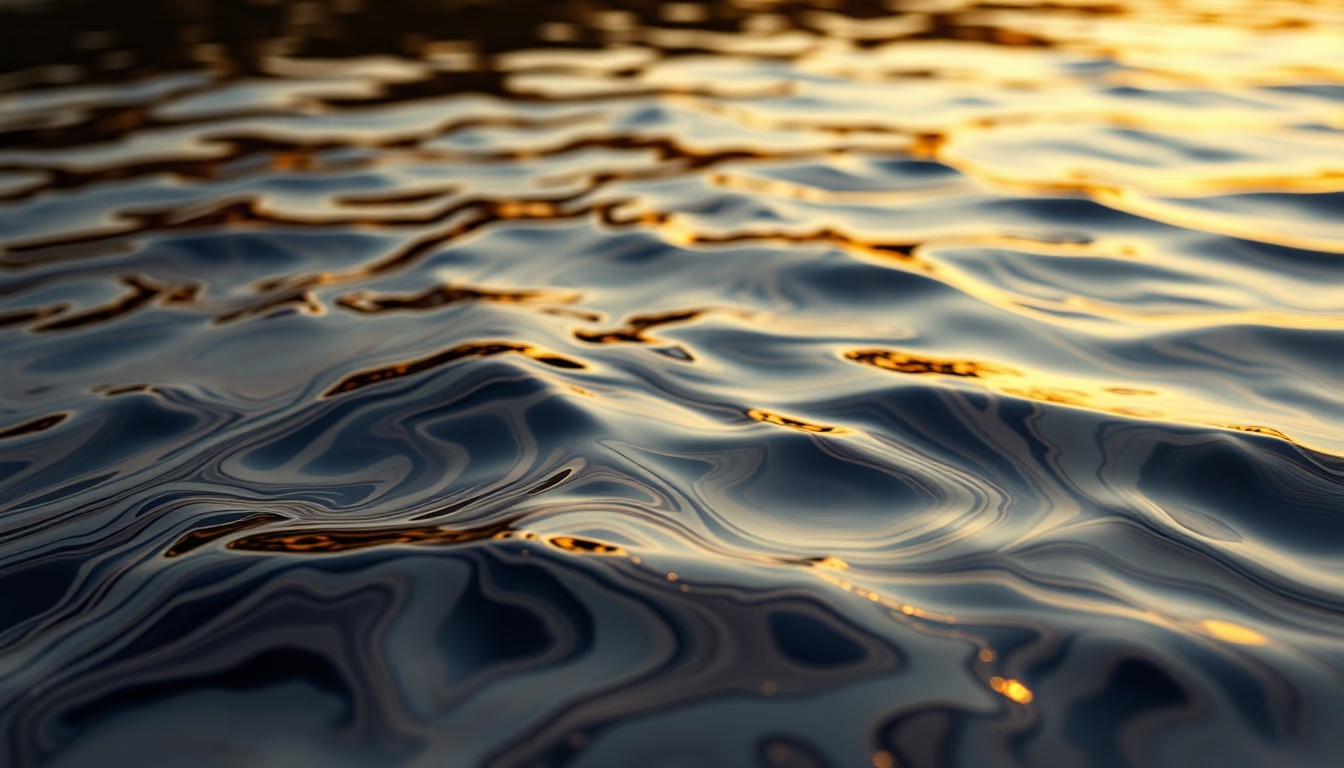
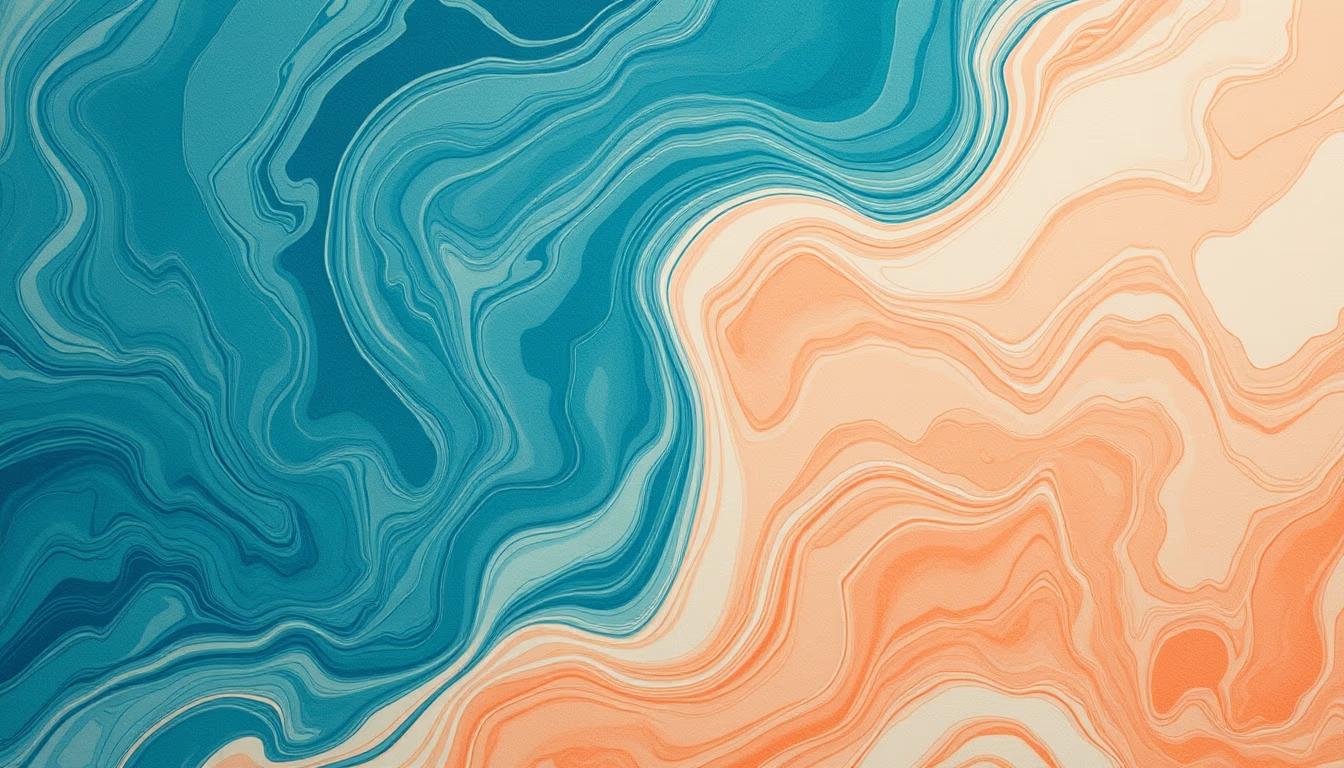
The technique of paper marbling, using water as a foundation to create unique patterns, merges art and science in an ancient process.
About this subject
Paper marbling, also known as suminagashi in Japan or ebru in Turkey, is an ancient art form that uses the surface of water as a canvas. In this process, inks are spread over a bath of viscous water, forming patterns that are later transferred onto a sheet of paper. The technique demands precise control of surface tension and viscosity, often achieved by adding carrageenan or vegetable gum. Each piece is unique because the movement of inks on water is unpredictable, creating designs that resemble marble, waves, or clouds.
Historically, marbling originated in 12th-century Japan, where it was used to decorate calligraphy papers. Later, it was adopted by the Ottoman Empire and Persia, flourishing in Europe from the 17th century onward. Artists such as Turkish ebru masters developed specific tools, including combs and needles, to create intricate patterns. Today, the practice is preserved as intangible cultural heritage by UNESCO in the case of Turkish ebru.
In the global context, paper marbling has influenced bookbinding, contemporary art, and even digital design techniques. Modern artists explore variations with acrylic inks and hydrocolors, experimenting on supports like fabric and wood. The image captures the moment when inks are being spread on water before transfer, an instant of pure fluid creativity.
Interestingly, the term "marbling" derives from the resemblance to natural marble veins. The science behind the phenomenon involves differences in density and surface tension, causing ink drops to expand without fully mixing. This balance between chaos and control fascinates artists and viewers alike, turning each piece into an ephemeral work of art frozen on paper.
Frequently Asked Questions
How did paper marbling originate?
Paper marbling originated in 12th-century Japan as suminagashi, used to decorate calligraphy papers. It later developed in the Ottoman Empire (ebru) and Europe from the 17th century.
What is the difference between ebru and suminagashi?
Though both are forms of marbling, Turkish ebru typically uses thicker paints and tools like combs to create geometric patterns, while Japanese suminagashi favors concentric circles and subtle colors.
Can I do paper marbling at home?
Yes, with basic materials like diluted acrylic paint, water, a tray, and paper. Adding glue or methylcellulose to water increases viscosity, making pattern formation easier. Many online tutorials guide the process step by step.
Direct URL
https://pub-c7d6a6ea828543ac903a74a341ccb2e1.r2.dev/imagens/paper-marbling-water-cinematic-wide-shot-fresh3.avifHow to credit
Include a visible link back to UtilizAí. Copy one of the snippets below:
<a href="https://xn--utiliza-eza.com/en/midia/imagens/paper-marbling-water-cinematic-wide-shot-fresh3">Paper marbling water</a> by <a href="https://xn--utiliza-eza.com">UtilizAí</a>, licensed under <a href="https://creativecommons.org/licenses/by/4.0/">CC BY 4.0</a>.
[Paper marbling water](https://xn--utiliza-eza.com/en/midia/imagens/paper-marbling-water-cinematic-wide-shot-fresh3) by [UtilizAí](https://xn--utiliza-eza.com), CC BY 4.0
License: CC-BY-4.0