Paper marbling water
1344×768 · AVIF · CC BY 4.0
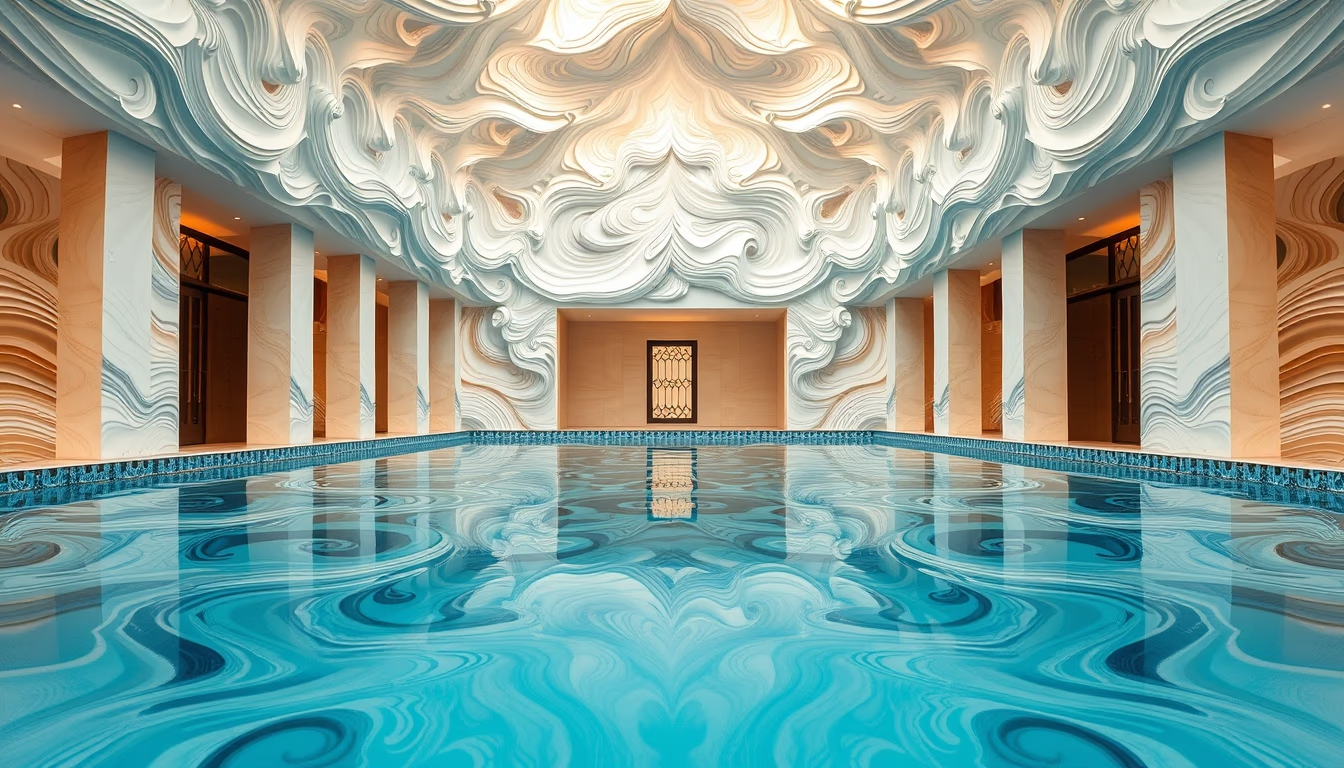
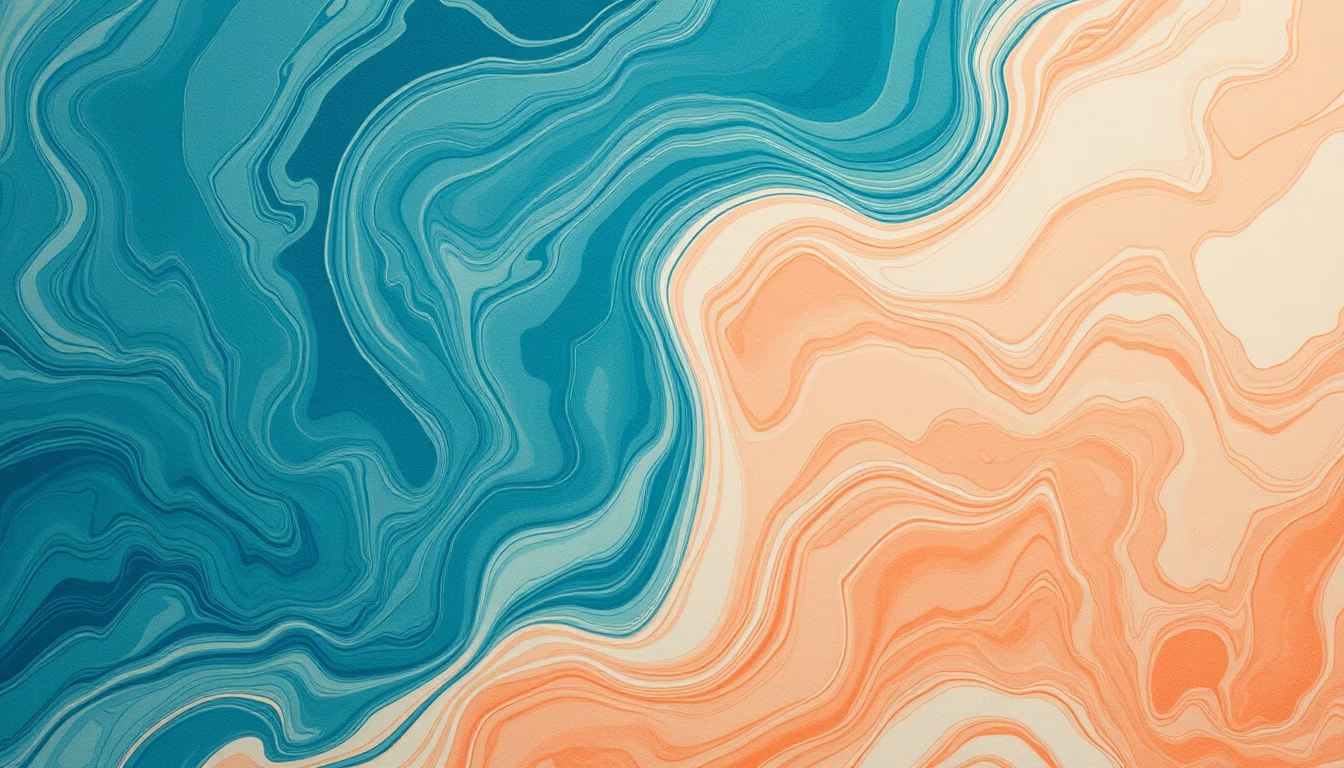
The art of paper marbling creates patterns that mimic water, combining an ancient technique of floating inks and transferring them onto paper.
About this subject
Paper marbling is a craft technique where inks are floated on the surface of a viscous liquid, usually water with additives like vegetable gum, and then transferred onto paper. The result is fluid patterns that resemble waves, whirlpools, and water veins, hence the name "marbling." The technique has ancient roots, with records in 12th-century Japan (suminagashi, meaning "floating ink") and 15th-century Turkey (ebru, the "art of clouds"). Each culture developed specific variations, but the principle remains the same: ink spreads on water and, with gentle agitation or blowing, forms organic and unpredictable patterns.
The process requires skill and patience. The artisan prepares a tray with water and adds a thickener, such as carrageenan (extracted from seaweed), which allows the inks to float without dissolving. Drop by drop, colors are placed on the surface and manipulated with combs, sticks, or blowing to create designs like spirals, concentric waves, or stripes. A sheet of paper is then gently laid on the water, absorbing the inks. After removal and drying, the paper is ready for use.
Historically, paper marbling was widely used in bookbinding in Europe, especially between the 17th and 19th centuries, to cover boards and endpapers. In Turkey, ebru is recognized by UNESCO as an Intangible Cultural Heritage of Humanity. Today, the technique is practiced by contemporary artists who explore new color combinations and applications, from decorative papers to art installations. The unpredictability of the pattern, which never repeats exactly, is one of the greatest fascinations of this art.
Interestingly, although the name evokes marble, the main inspiration is moving water. The patterns created can resemble sea waves, river whirlpools, or wet stone textures. Many artists deliberately seek this fluidity, controlling the traces to a certain extent but always leaving room for chance.
Frequently Asked Questions
What is paper marbling?
Paper marbling is a craft technique that creates decorative patterns by floating inks on water and transferring them onto paper. The result mimics textures of water, marble, or clouds.
What is the origin of paper marbling?
The technique originated in Japan (suminagashi, 12th century) and Turkey (ebru, 15th century). It later spread to Europe, where it was widely used in bookbinding between the 17th and 19th centuries.
How is paper marbling done?
Inks are dripped onto a water surface thickened with an agent like carrageenan. Using tools, the artisan creates patterns. Then a sheet of paper is placed on the water to absorb the inks, producing the final design.
Direct URL
https://pub-c7d6a6ea828543ac903a74a341ccb2e1.r2.dev/imagens/paper-marbling-water-architectural-photography-fresh13.avifHow to credit
Include a visible link back to UtilizAí. Copy one of the snippets below:
<a href="https://xn--utiliza-eza.com/en/midia/imagens/paper-marbling-water-architectural-photography-fresh13">Paper marbling water</a> by <a href="https://xn--utiliza-eza.com">UtilizAí</a>, licensed under <a href="https://creativecommons.org/licenses/by/4.0/">CC BY 4.0</a>.
[Paper marbling water](https://xn--utiliza-eza.com/en/midia/imagens/paper-marbling-water-architectural-photography-fresh13) by [UtilizAí](https://xn--utiliza-eza.com), CC BY 4.0
License: CC-BY-4.0