Paint roller and tray
1344×768 · AVIF · CC BY 4.0
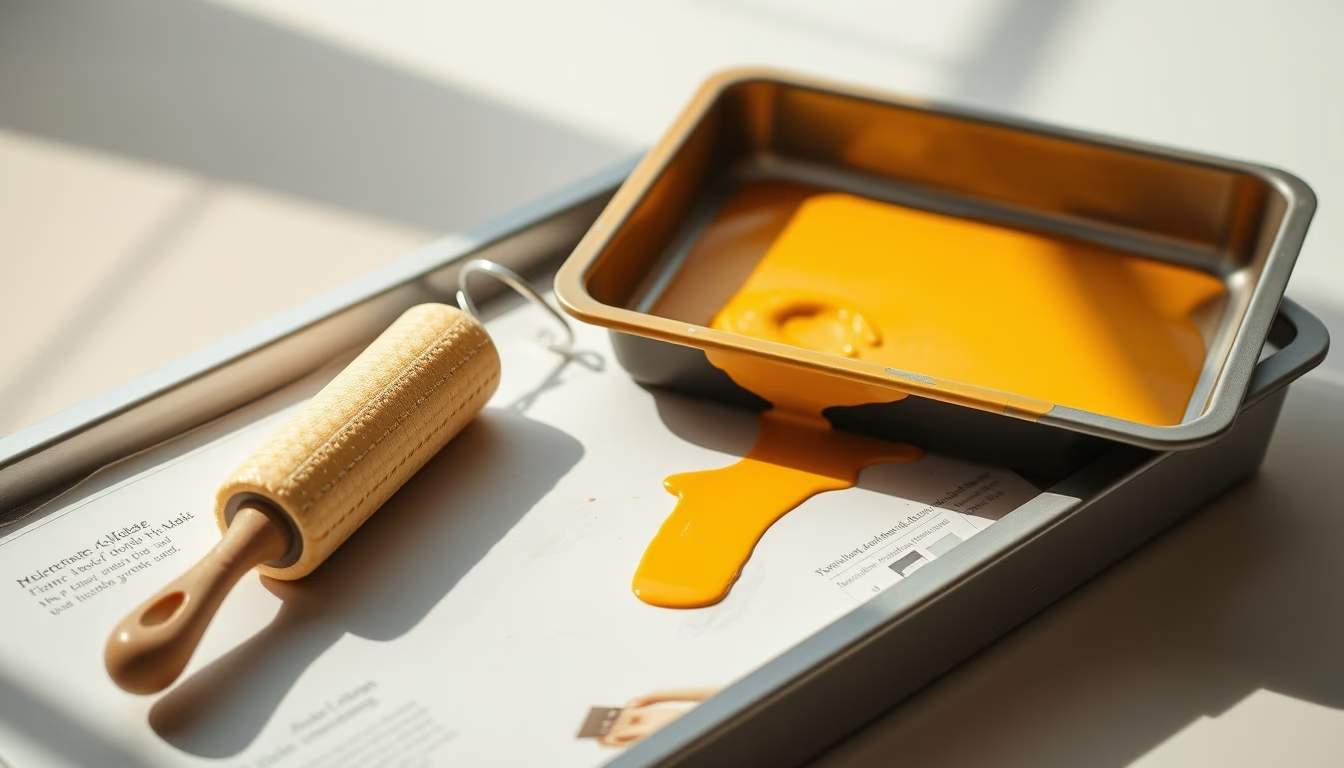
The paint roller and tray form an essential set for applying paint quickly and uniformly across large surfaces.
About this subject
The modern paint roller was invented in 1940 by Canadian Norman Breakey, who sought a more efficient alternative to traditional brushes. The tray was subsequently designed to hold paint and allow the roller to be loaded evenly, preventing excess drips. This set became one of the most popular tools in the paint market, boosting the do-it-yourself (DIY) movement in home renovations.
Rollers consist of a frame (handle and metal structure) and a cover (the part that absorbs and transfers paint). Covers vary in material and nap length, which determine the final texture. Natural wool covers work best with oil-based paints, while synthetic ones (polyester or nylon) perform well with latex acrylic paints. The nap size can be short (for smooth surfaces) or long (for rough textures).
The paint tray typically features an inclined area with ridges, where the roller is pressed to remove excess paint and distribute it evenly. This design reduces waste and facilitates control during application. Proper use of the set prevents drips and ensures a professional finish. Interestingly, before the roller, painting walls was a slow and tiring job done solely with brushes.
For best results, choose the roller size according to the area to be painted. Wide rollers (e.g., 9 inches) cover more surface quickly but require more practice. Maintenance is also crucial: after use, clean the roller immediately with the appropriate solvent (water for latex, mineral spirits for enamel) and store it in a plastic bag to prevent drying. This simple invention transformed the painting industry, democratizing access to home improvement and decoration.
Frequently Asked Questions
How do I choose the right paint roller for different paint types?
For latex acrylic paints, use synthetic rollers (polyester or nylon). For oil-based paints, choose natural wool rollers. The nap length depends on the surface: short nap for smooth walls, long nap for rough textures.
What is the difference between a standard tray and a tray with a grid?
A tray with a grid (or ridges) helps remove excess paint from the roller more evenly, reducing drips and ensuring better control during application. A standard tray is simpler but requires more care to load the roller properly.
How should I clean and store my paint roller?
Clean the roller immediately after use with the appropriate solvent (water for latex paints, mineral spirits for enamels). Dry it thoroughly and store it in a sealed plastic bag to prevent drying. For short-term reuse, you can wrap it in plastic wrap without washing.
Direct URL
https://pub-c7d6a6ea828543ac903a74a341ccb2e1.r2.dev/imagens/paint-roller-and-tray-magazine-editorial-p2.avifHow to credit
Include a visible link back to UtilizAí. Copy one of the snippets below:
<a href="https://xn--utiliza-eza.com/en/midia/imagens/paint-roller-and-tray-magazine-editorial-p2">Paint roller and tray</a> by <a href="https://xn--utiliza-eza.com">UtilizAí</a>, licensed under <a href="https://creativecommons.org/licenses/by/4.0/">CC BY 4.0</a>.
[Paint roller and tray](https://xn--utiliza-eza.com/en/midia/imagens/paint-roller-and-tray-magazine-editorial-p2) by [UtilizAí](https://xn--utiliza-eza.com), CC BY 4.0
License: CC-BY-4.0