Pagoda roof japanese
1344×768 · AVIF · CC BY 4.0
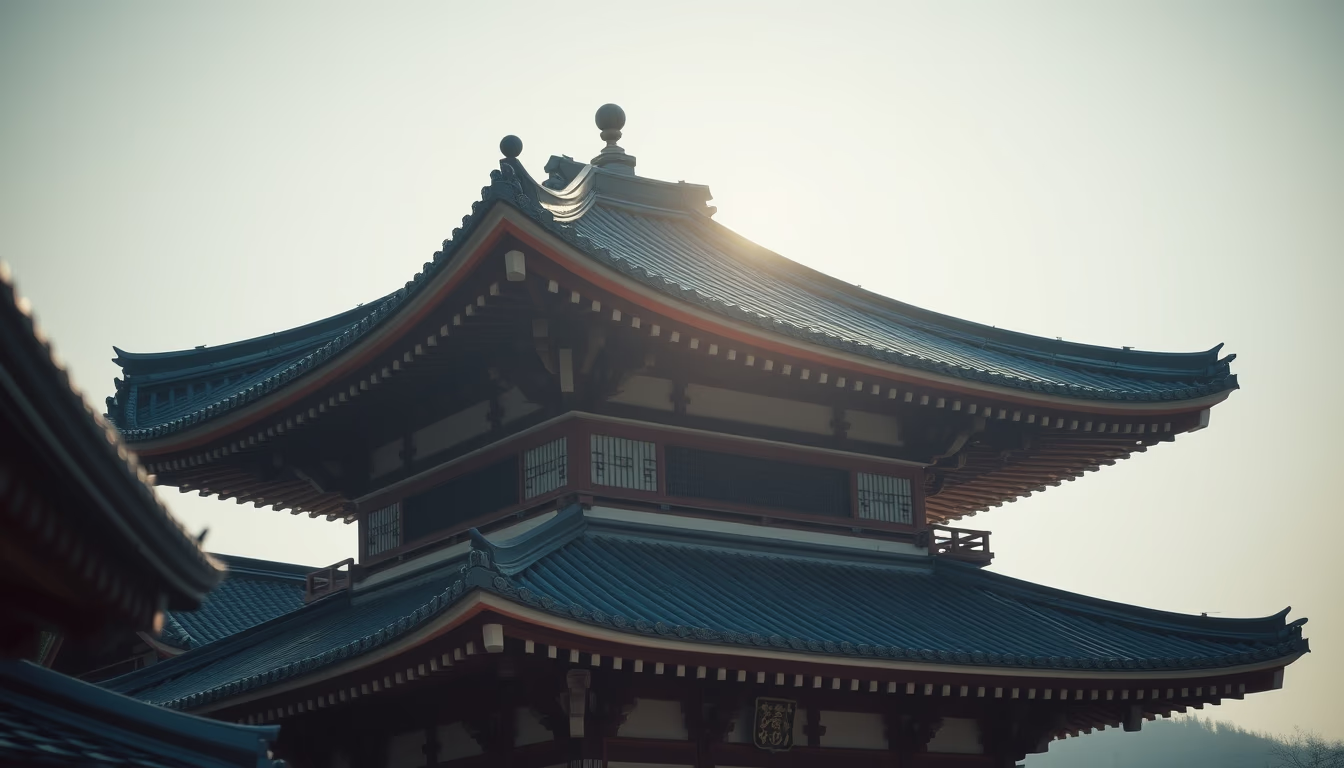
Japanese pagoda roofs, with their elegant curves and multiple eaves, are iconic features of Buddhist architecture and historic landmarks in Japan.
About this subject
Japanese pagoda roofs, known as Irimoya-zukuri or Hōgyō-zukuri depending on the style, are among the most recognizable expressions of traditional Japanese architecture. They are characterized by gently curving eaves that sweep upward, forming graceful lines reminiscent of bird wings. These roofs typically cover multi-storied wooden pagodas, such as the famous Yasaka Pagoda (Yasaka-no-to) in Kyoto, which stands five stories tall at over 46 meters and dates back to the 6th century.
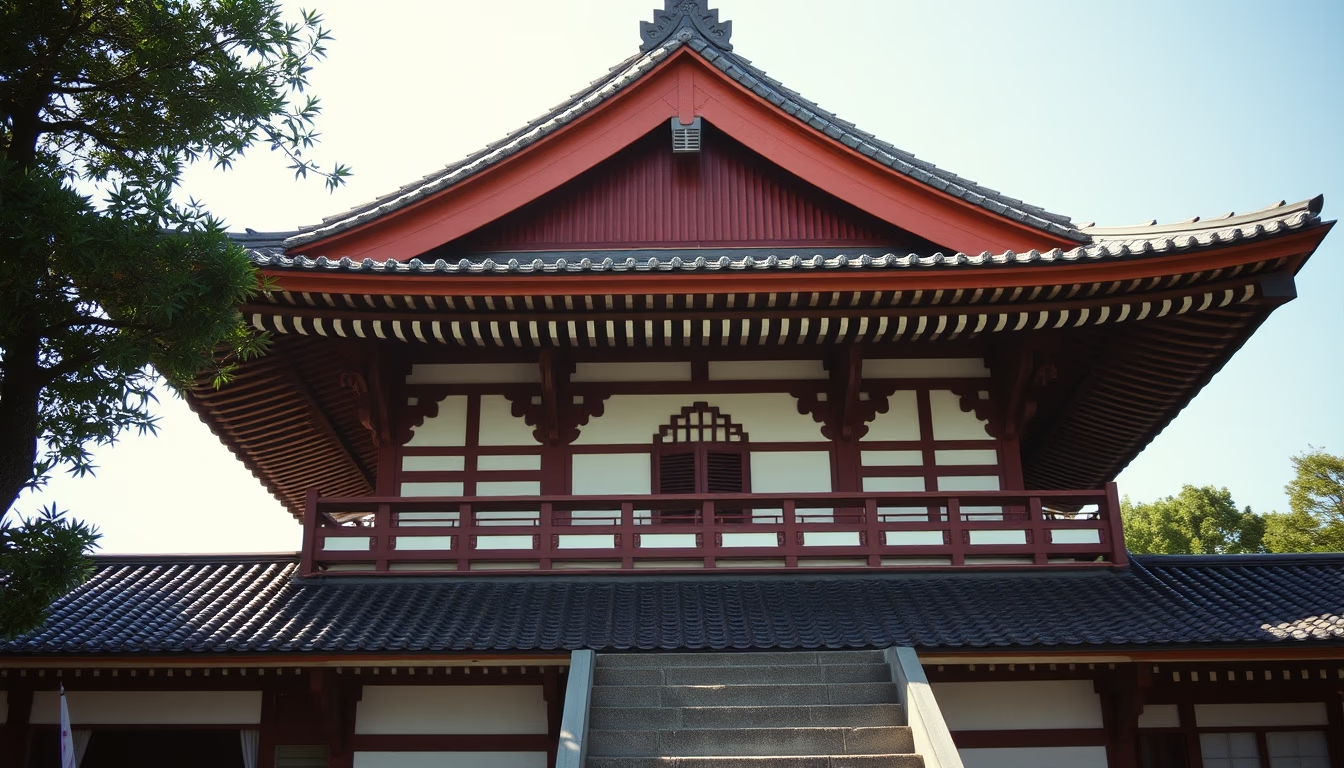
The complex structure uses joinery without nails, a technique called kumiki, which enables resilience against Japan's frequent earthquakes. Roof tiles are usually glazed ceramic (kawara), colored grey or orange, and the eaves are supported by brackets known as tokyō. Every detail carries symbolic meaning: the curvature represents the protection of Buddha's teachings, while odd numbers of stories (3, 5) reflect cosmological concepts.
Historically, pagodas were introduced from China along with Buddhism in the 6th century, but Japanese artisans adapted the design, making the roofs wider and more curved to suit the rainy climate. Notable examples include the To-ji Pagoda in Kyoto (55 meters, the tallest in Japan) and the Horyu-ji Pagoda, one of the oldest wooden buildings in the world, dating to 607 AD.
Culturally, the pagoda symbolizes the connection between heaven and earth, and its roof is often topped with a spire (sōrin) representing the continuity of the dharma. Even in modern temples, roof designs preserve these traditions, making them a timeless element of the Japanese landscape.
Frequently Asked Questions
What is the function of a pagoda in Japanese culture?
Pagodas are Buddhist towers that house sacred relics and serve as sites for meditation and worship. Symbolically, they represent the connection between heaven and earth, with stories symbolizing stages toward enlightenment.
Why are Japanese pagoda roofs curved?
The curvature of the eaves is both functional and symbolic. Functionally, it helps deflect rainwater away from wooden walls. Symbolically, the upward curve represents protection and spiritual guidance, reflecting Chinese architectural influences adapted to Japan.
How many stories does a traditional Japanese pagoda have?
Japanese pagodas usually have an odd number of stories, such as 3 or 5. The number 5 is common, symbolizing the five elements (earth, water, fire, wind, and void). The topmost element is the sōrin, a decorative spire.
Direct URL
https://pub-c7d6a6ea828543ac903a74a341ccb2e1.r2.dev/imagens/pagoda-roof-japanese-lo-fi-disposable-camera-p4.avifHow to credit
Include a visible link back to UtilizAí. Copy one of the snippets below:
<a href="https://xn--utiliza-eza.com/en/midia/imagens/pagoda-roof-japanese-lo-fi-disposable-camera-p4">Pagoda roof japanese</a> by <a href="https://xn--utiliza-eza.com">UtilizAí</a>, licensed under <a href="https://creativecommons.org/licenses/by/4.0/">CC BY 4.0</a>.
[Pagoda roof japanese](https://xn--utiliza-eza.com/en/midia/imagens/pagoda-roof-japanese-lo-fi-disposable-camera-p4) by [UtilizAí](https://xn--utiliza-eza.com), CC BY 4.0
License: CC-BY-4.0