Pagoda roof japanese
1344×768 · AVIF · CC BY 4.0
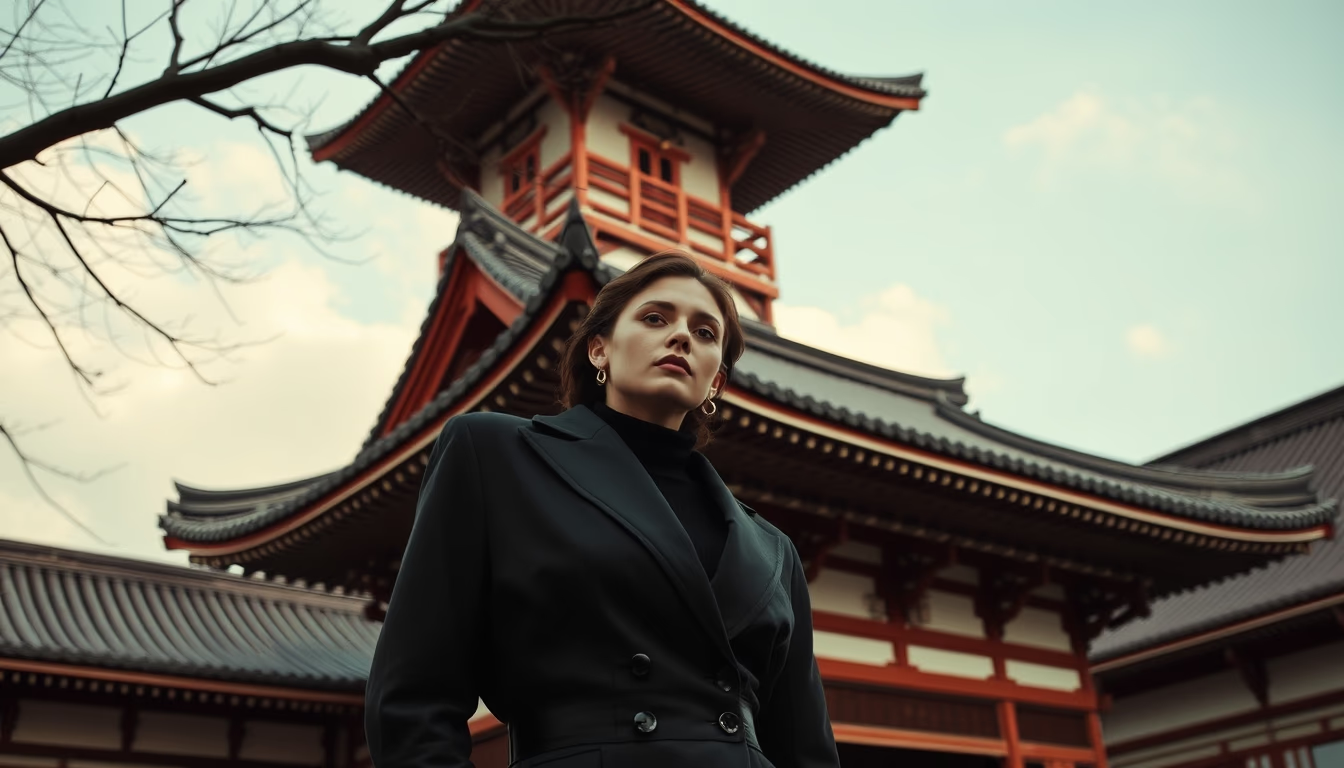
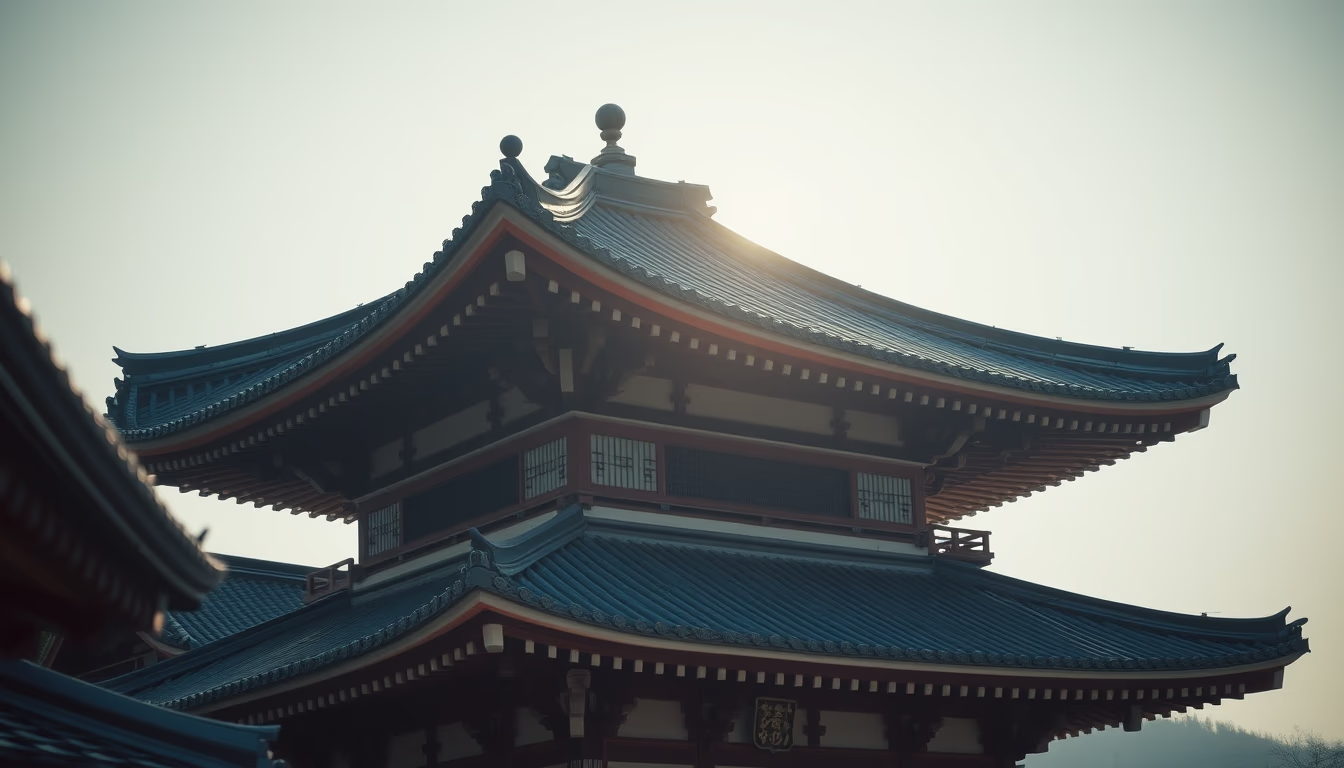
Japanese pagoda roof: iconic architectural structure blending Buddhist tradition and ancient construction techniques.
About this subject
The Japanese pagoda roof is one of the most recognizable elements of East Asian architecture. Originating from Indian stupas and adapted via China and Korea, the Japanese pagoda (tō) emerged during the Asuka period (538, 710 AD) with the introduction of Buddhism. Its multi-eaved structure, usually in odd numbers (3, 5, or 7 stories), is not merely decorative: each tier represents Buddhist cosmological elements (earth, water, fire, air, and void).
Construction relies on complex wooden joinery without nails, allowing flexibility during earthquakes. The roof is covered with ceramic tiles (kawara) or Japanese cypress (hinoki), with distinct curves that aid rainwater drainage. The roof tip often features a sōrin, a metal spire symbolizing the world axis.
Famous pagodas include Hōryū-ji (Nara, 7th century), considered the world's oldest wooden building, and Tō-ji (Kyoto, 9th century). Contrary to popular belief, pagodas were not used for dwelling but to house sacred relics. The steep eaves also prevent snow accumulation in harsh winters.
In pop culture, the pagoda has become a symbol of exoticism and serenity, often used in zen gardens and contemporary fashion as a print or architectural motif. Its elegant silhouette even influenced Western architects like Frank Lloyd Wright.
Frequently Asked Questions
What was the original function of a Japanese pagoda?
Japanese pagodas were built to house Buddhist relics, such as fragments of Buddha's bones or sutras. They served as sacred monuments and pilgrimage sites, not as dwellings.
Why are pagoda roofs curved upward?
The upward curve, called mune in Japanese design, helps direct rainwater away from the walls. Additionally, it is believed to ward off evil spirits, as they supposedly travel only in straight lines.
How many stories does a typical Japanese pagoda have?
Most pagodas have 3 or 5 stories, but 7-story examples exist. The odd number is symbolic, representing impermanence and the pursuit of spiritual balance.
Direct URL
https://pub-c7d6a6ea828543ac903a74a341ccb2e1.r2.dev/imagens/pagoda-roof-japanese-high-fashion-editorial-p1.avifHow to credit
Include a visible link back to UtilizAí. Copy one of the snippets below:
<a href="https://xn--utiliza-eza.com/en/midia/imagens/pagoda-roof-japanese-high-fashion-editorial-p1">Pagoda roof japanese</a> by <a href="https://xn--utiliza-eza.com">UtilizAí</a>, licensed under <a href="https://creativecommons.org/licenses/by/4.0/">CC BY 4.0</a>.
[Pagoda roof japanese](https://xn--utiliza-eza.com/en/midia/imagens/pagoda-roof-japanese-high-fashion-editorial-p1) by [UtilizAí](https://xn--utiliza-eza.com), CC BY 4.0
License: CC-BY-4.0