Pacific ocean waves
1344×768 · AVIF · CC BY 4.0
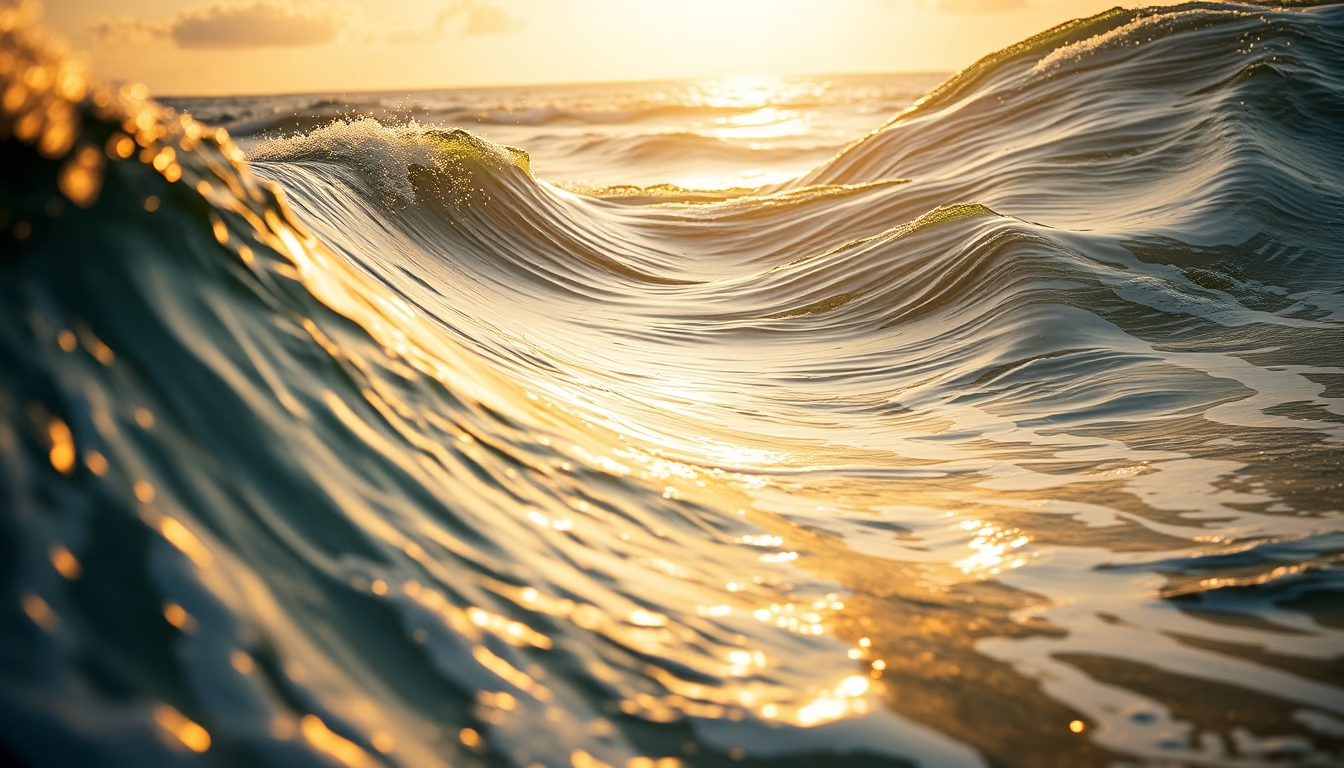
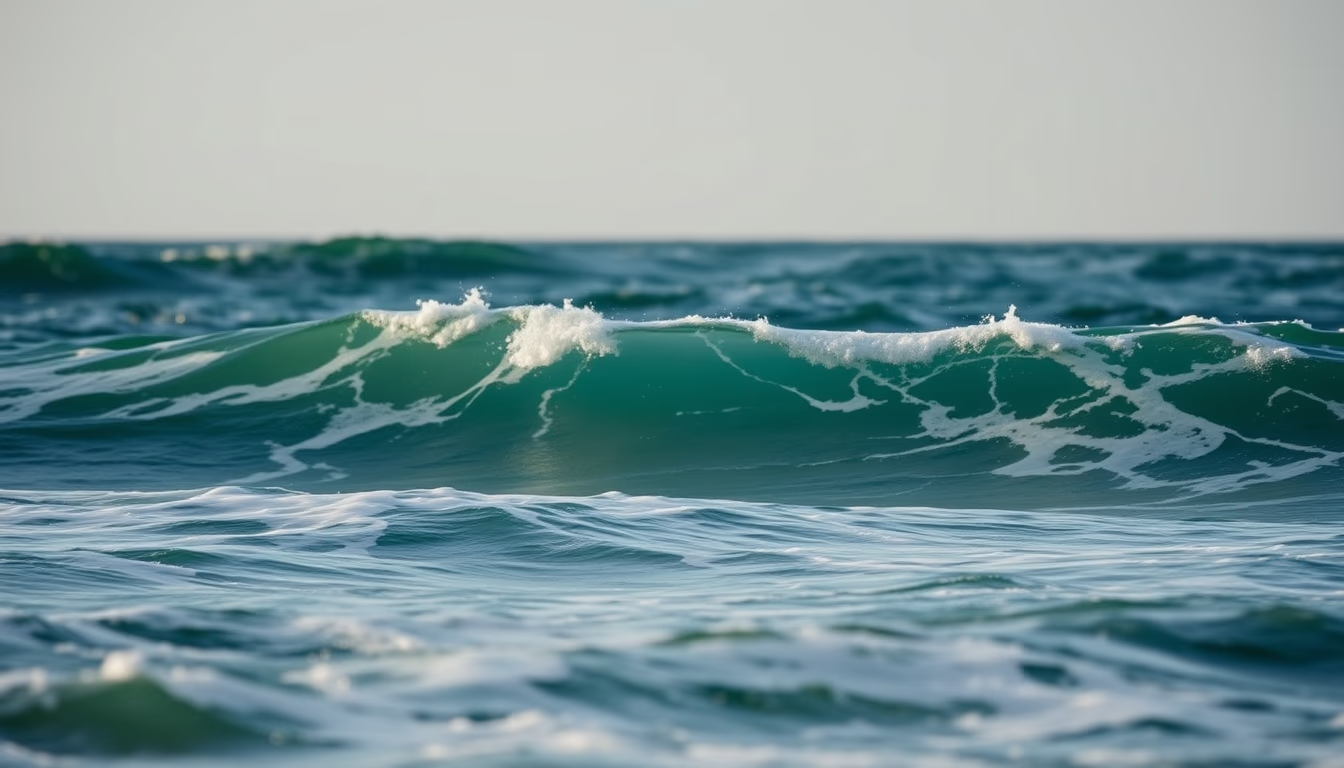
Waves of the Pacific Ocean, the largest and deepest ocean on Earth, shape coastlines, drive global climate, and inspire coastal cultures.
About this subject
The Pacific Ocean spans approximately 165 million square kilometers and contains the Mariana Trench, the deepest point on Earth. Its waves are generated by winds blowing over vast expanses of water, forming swells that travel thousands of kilometers before reaching the shores of Asia, the Americas, and Oceania. The energy of these waves is determined by fetch, the distance over which the wind blows, and wind duration. In the North Pacific, winter storms produce waves exceeding 15 meters in height.
Notable wave types in the Pacific include long, regular swells that feed famous surf breaks in Hawaii, such as Jaws on Maui, and giant waves along the Pacific coasts of Mexico and Peru, driven by cold fronts. The El Niño-Southern Oscillation (ENSO) alters wave dynamics by shifting wind patterns, increasing storm frequency and wave height in some regions while decreasing them in others. In Japan, typhoon-generated swells can cause severe erosion or benefit local surfing. The Pacific also hosts seismic tsunami waves, traveling at speeds up to 800 km/h; the 2011 Japan tsunami originated from a subduction zone in the Northwest Pacific.
Internal waves, occurring between water layers of different densities, are common in the tropical Pacific, mixing nutrients and affecting marine life. The Chilean coast, bathed by the Pacific, boasts one of the world's highest wave energy potentials, ideal for tidal power generation. For centuries, Polynesian navigators developed techniques to read swells and currents for voyaging across the Pacific. Today, surf tourism generates billions of dollars in countries like Indonesia, Australia, and Costa Rica, where iconic waves at Uluwatu and Pipeline draw global surfers. Protecting these coastal ecosystems is crucial for wave quality and marine biodiversity.
Frequently Asked Questions
Why are Pacific Ocean waves considered the largest in the world?
Due to the ocean’s vast expanse, winds can generate swells with long fetch, producing high‑energy waves. Regions like the North Pacific and Hawaii frequently see waves above 10 meters, and while Nazaré (Atlantic) has record giants, the Pacific produces the largest regular swells.
How does El Niño affect Pacific waves?
El Niño warms equatorial Pacific waters, altering wind patterns. This can increase wave height along the Americas’ west coast and decrease it in the western Pacific, as well as change storm frequency and swell generation.
What is the difference between a wind wave and a swell?
Wind waves are locally generated by wind, with short periods and irregular crests. Swells are waves that have traveled away from their generation area, featuring smooth, uniform crests, longer periods, and higher energy. In the Pacific, swells can travel thousands of kilometers.
Direct URL
https://pub-c7d6a6ea828543ac903a74a341ccb2e1.r2.dev/imagens/pacific-ocean-waves-travel-photography-p0.avifHow to credit
Include a visible link back to UtilizAí. Copy one of the snippets below:
<a href="https://xn--utiliza-eza.com/en/midia/imagens/pacific-ocean-waves-travel-photography-p0">Pacific ocean waves</a> by <a href="https://xn--utiliza-eza.com">UtilizAí</a>, licensed under <a href="https://creativecommons.org/licenses/by/4.0/">CC BY 4.0</a>.
[Pacific ocean waves](https://xn--utiliza-eza.com/en/midia/imagens/pacific-ocean-waves-travel-photography-p0) by [UtilizAí](https://xn--utiliza-eza.com), CC BY 4.0
License: CC-BY-4.0