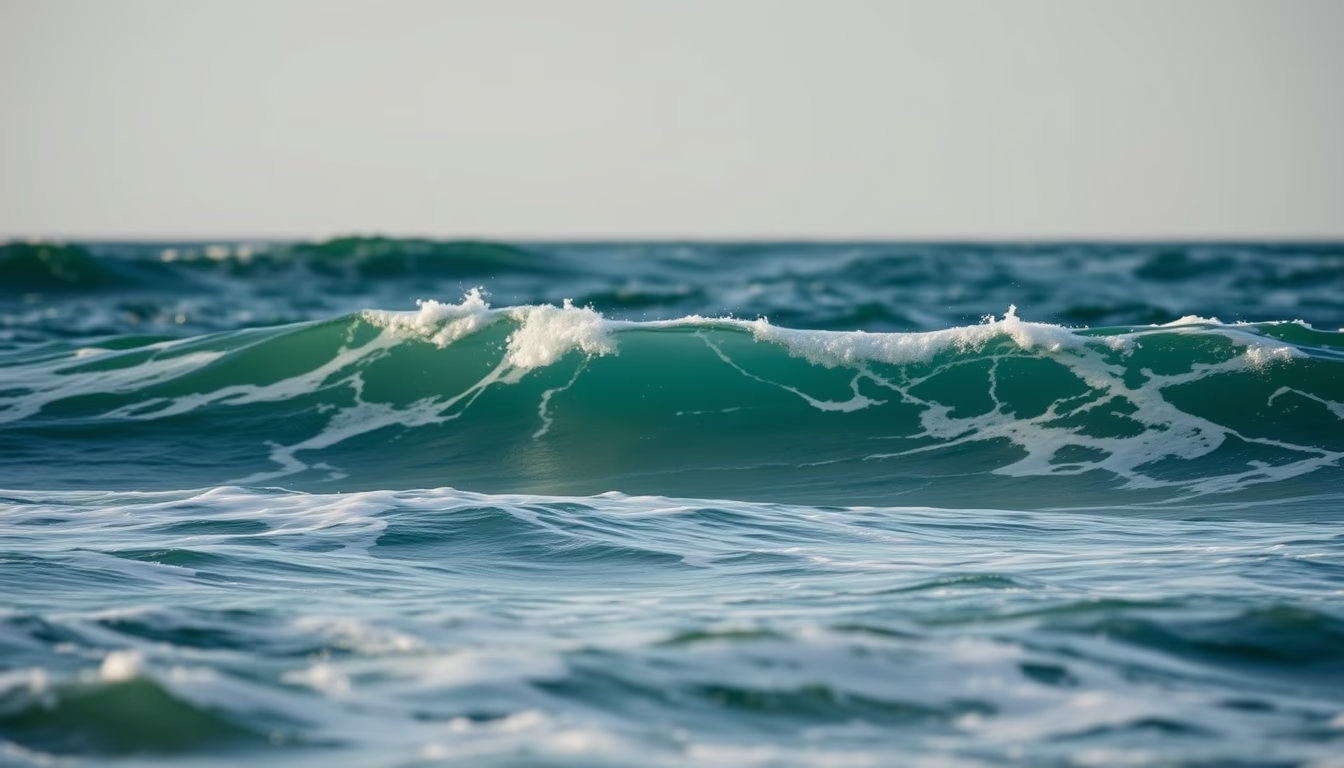
Pacific ocean waves
1344×768 · AVIF · CC BY 4.0
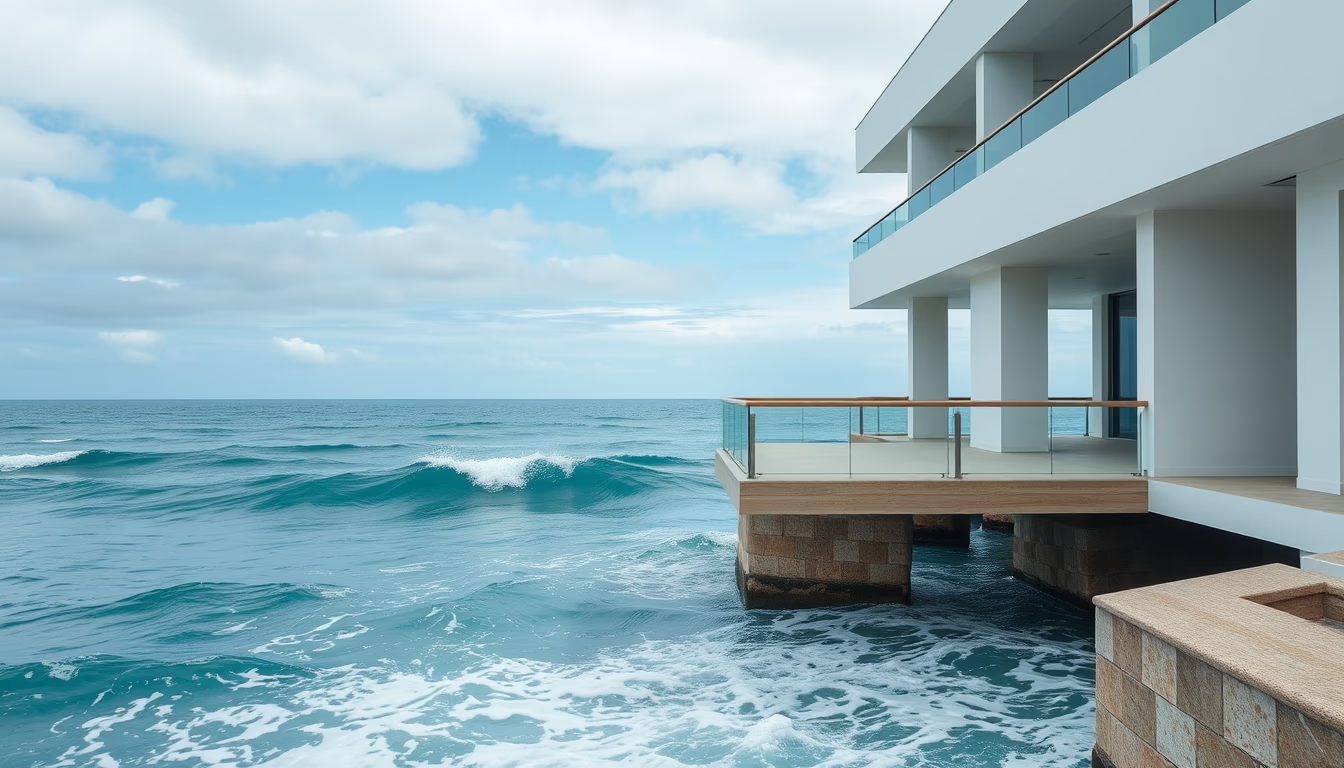
Pacific Ocean waves: characteristics, formation, and importance for global climate and coastal culture.
About this subject
The Pacific Ocean, the largest and deepest ocean on Earth, covers approximately 63 million square miles and hosts wave systems that influence everything from global climate to the daily lives of coastal communities. Pacific waves are generated by winds blowing across vast expanses of open water, often traveling thousands of kilometers unimpeded. This process, known as fetch, allows the formation of powerful swells that, upon reaching shorelines, can exceed heights of 30 meters in regions such as Alaska and Hawaii.
The western coasts of the Americas, washed by the Pacific, are famous for world‑renowned surf breaks. In California, beaches like Mavericks and Pipeline attract surfers seeking challenging barrel waves. In Peru, Pacific waves support one of the oldest surf cultures in the world, documented in pre‑Columbian ceramics depicting people riding the waters. In Japan, Pacific waves are celebrated in ukiyo‑e art, most notably in Hokusai's "The Great Wave off Kanagawa," which captures the sea's power and beauty.
Beyond cultural impact, Pacific waves play a crucial role in climate regulation. They transport heat from the tropics to the poles, influencing phenomena such as El Niño and La Niña. Wave energy is also a promising renewable source: pilot projects in Australia and Chile aim to convert water motion into electricity. However, wave action also causes coastal erosion, requiring adaptation strategies in cities like Sydney and San Francisco, where natural and artificial barriers are used to protect infrastructure.
Interestingly, Pacific waves follow seasonal patterns. During the Northern Hemisphere winter, storms in the North Pacific generate swells that travel thousands of kilometers, reaching Hawaiian and Mexican beaches. In summer, the South Pacific produces waves that break on coasts of Indonesia and Tasmania. These cyclic movements are monitored by oceanographic buoys that provide data for surf forecasts and tsunami warnings, demonstrating how the study of waves is vital for both safety and recreation.
Frequently Asked Questions
What causes waves in the Pacific Ocean?
Waves in the Pacific are primarily caused by wind blowing across the water surface. The longer the wind fetch and the stronger the wind, the larger the waves. Additionally, undersea earthquakes can generate tsunamis, which are high‑energy waves.
What is the largest wave ever recorded in the Pacific?
The largest wave ever recorded in the Pacific was about 30 meters high, measured off the coast of Alaska in 2020. However, tsunami‑generated waves can be much larger, such as the 1958 Lituya Bay event that reached 524 meters.
How do Pacific waves influence surfing?
Pacific waves create some of the world's best surf breaks, such as Pipeline in Hawaii and Jeffreys Bay in South Africa. Currents and seafloor geography shape perfect barreling waves for professional surfing.
Direct URL
https://pub-c7d6a6ea828543ac903a74a341ccb2e1.r2.dev/imagens/pacific-ocean-waves-architectural-photography-p3.avifHow to credit
Include a visible link back to UtilizAí. Copy one of the snippets below:
<a href="https://xn--utiliza-eza.com/en/midia/imagens/pacific-ocean-waves-architectural-photography-p3">Pacific ocean waves</a> by <a href="https://xn--utiliza-eza.com">UtilizAí</a>, licensed under <a href="https://creativecommons.org/licenses/by/4.0/">CC BY 4.0</a>.
[Pacific ocean waves](https://xn--utiliza-eza.com/en/midia/imagens/pacific-ocean-waves-architectural-photography-p3) by [UtilizAí](https://xn--utiliza-eza.com), CC BY 4.0
License: CC-BY-4.0