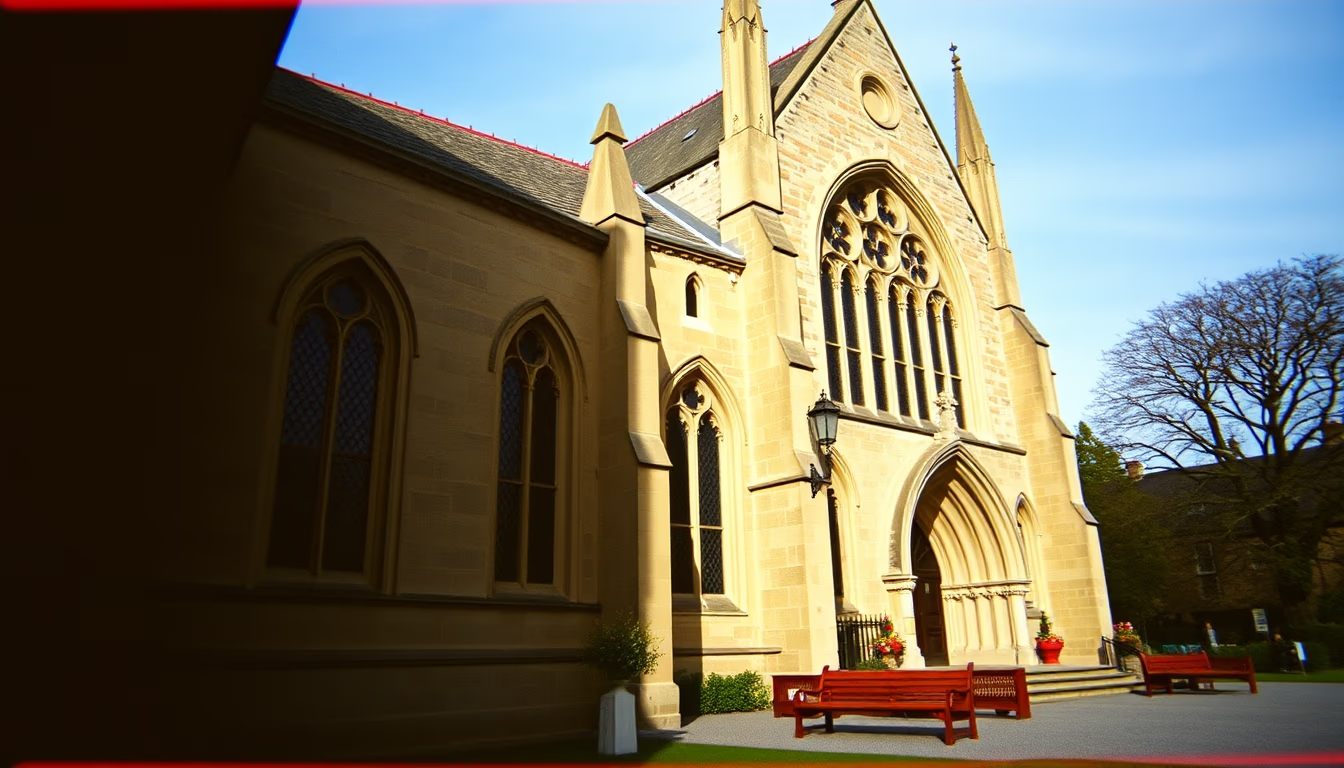
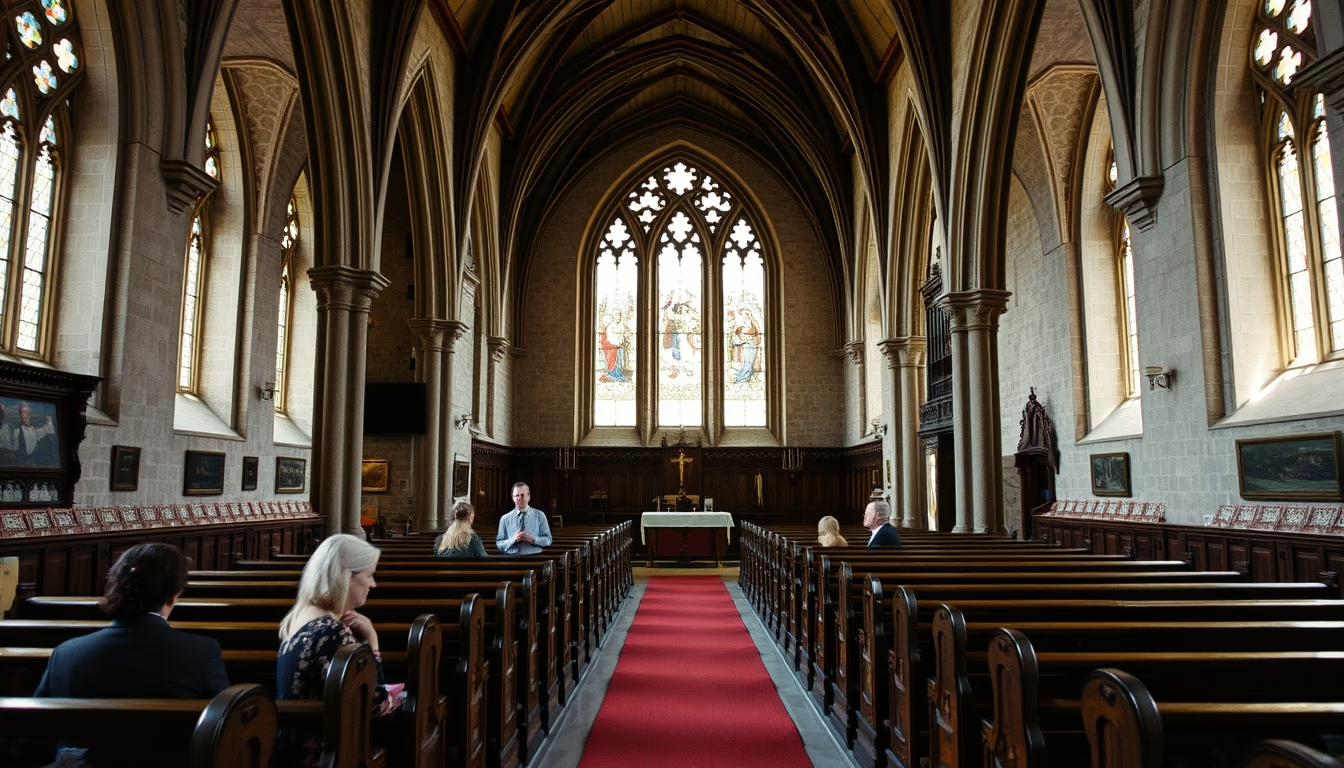
Oxford college quad
1344×768 · AVIF · CC BY 4.0

Grass-covered courtyards surrounded by historic buildings are the hallmark of Oxford colleges, England, dating back to the 13th century.
About this subject
The traditional quadrangles (quads) of Oxford University's colleges are central open spaces, typically grassed, surrounded by residential wings, libraries, and chapels. They serve as meeting points, outdoor study areas, and stages for academic ceremonies such as matriculation and graduation. Each college has its own quad, with architecture reflecting centuries of history, from Perpendicular Gothic to Neoclassical. The oldest, Merton College, founded in 1264, features one of the earliest quads, Mob Quad, completed in the late 14th century. Christ Church boasts the largest, Tom Quad, with a central fountain and an imposing tower. Meticulous lawn maintenance is a tradition: many areas are restricted to college members and access is controlled to preserve the pristine look. Interestingly, the term 'quad' is short for 'quadrangle', used since medieval times for enclosed courtyards in monasteries and universities. In Oxford, these spaces are not merely aesthetic; they symbolize community life and separation from the outside world, fostering an academic focus. During summer, quads fill with students and tourists, but the tradition of not stepping on grass in certain places is still respected. Some colleges, like St John's, have formal gardens and fountains, while others, like New College, preserve medieval walls. An aerial view of a quad reveals symmetry and architectural care, with stone pathways connecting different wings. These courtyards are frequent settings in films and series such as Harry Potter and Brideshead Revisited, reinforcing Oxford's iconic image in global imagination.
Frequently Asked Questions
What is the oldest quad in Oxford?
Mob Quad at Merton College is considered the oldest quad, completed around 1378, and one of the earliest examples of a closed university courtyard.
Why are Oxford quads grassy rather than paved?
The tradition dates back to medieval cloisters, where green spaces symbolized the Garden of Eden and provided a peaceful study environment. Today, the grass is maintained to preserve historical aesthetics.
Is it allowed to walk on the grass in Oxford quads?
In most colleges, only members (fellows and students) may walk on the central grass; visitors must stay on paths. Some quads have designated areas for general use.
Direct URL
https://pub-c7d6a6ea828543ac903a74a341ccb2e1.r2.dev/imagens/oxford-college-quad-aerial-drone-shot-fresh11.avifHow to credit
Include a visible link back to UtilizAí. Copy one of the snippets below:
<a href="https://xn--utiliza-eza.com/en/midia/imagens/oxford-college-quad-aerial-drone-shot-fresh11">Oxford college quad</a> by <a href="https://xn--utiliza-eza.com">UtilizAí</a>, licensed under <a href="https://creativecommons.org/licenses/by/4.0/">CC BY 4.0</a>.
[Oxford college quad](https://xn--utiliza-eza.com/en/midia/imagens/oxford-college-quad-aerial-drone-shot-fresh11) by [UtilizAí](https://xn--utiliza-eza.com), CC BY 4.0
License: CC-BY-4.0