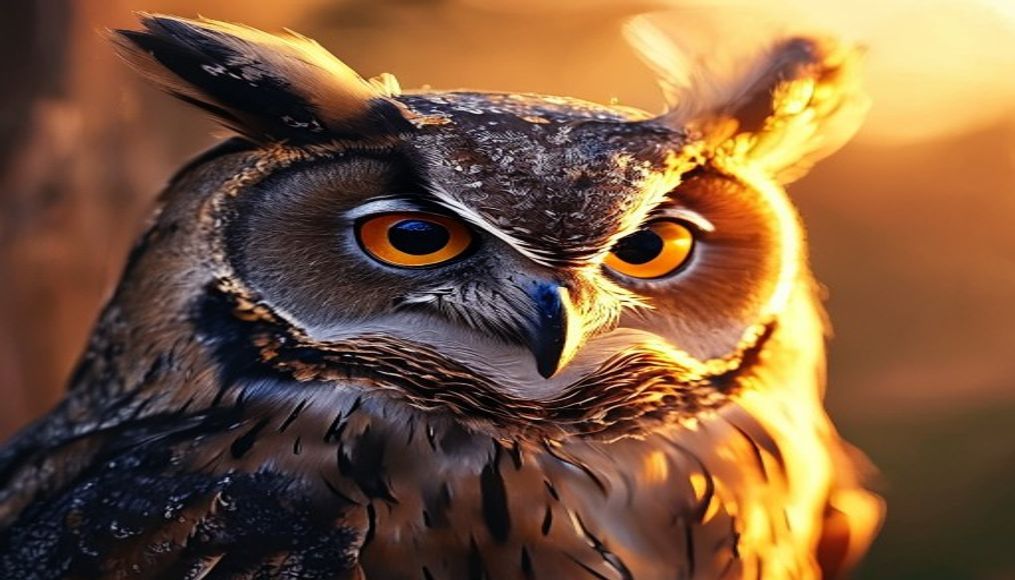
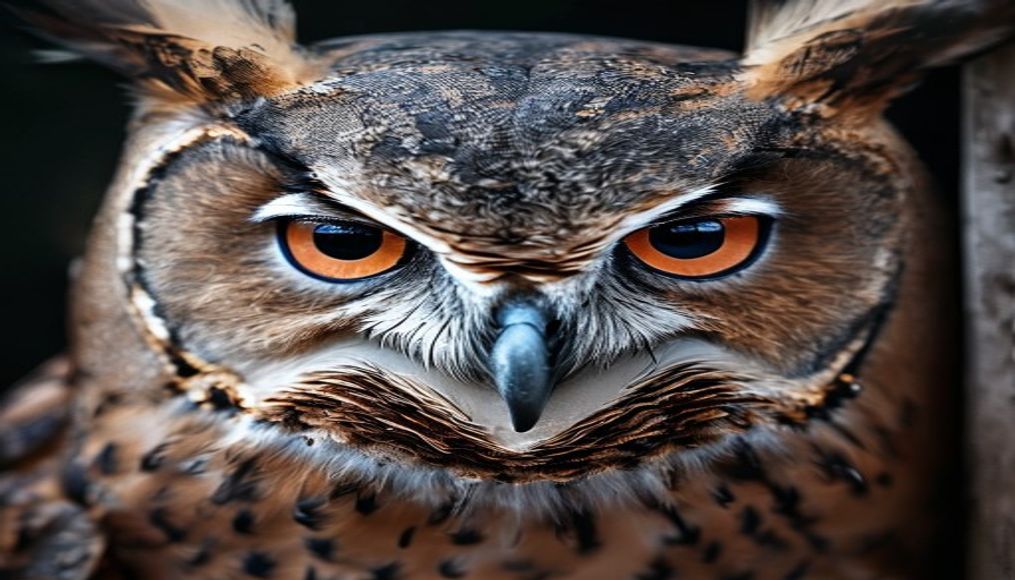
Owl barn macro face
1344×768 · AVIF · CC BY 4.0
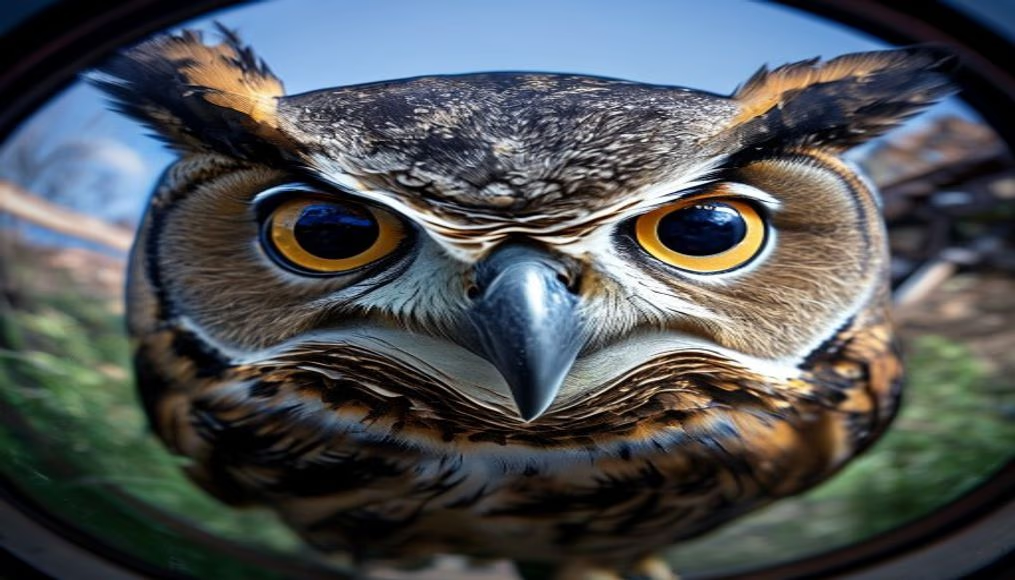
The barn owl (Tyto alba) has a heart-shaped facial disc that acts as an acoustic radar for hunting in darkness.
About this subject
The barn owl, scientifically known as Tyto alba, is one of the most widely distributed bird species in the world, found on every continent except Antarctica and most deserts. Its heart-shaped facial disc is not merely ornamental: the feathers of the disc are arranged to funnel sound waves toward the ears, which are asymmetrically placed at different heights on the skull. This asymmetry allows the owl to pinpoint the source of a sound with incredible accuracy, even in complete darkness. Studies have shown that barn owls can locate a mouse under snow or leaf litter solely by the rustling noises it makes.
Complementing its acute hearing, the barn owl has large eyes adapted for low-light vision, but they are fixed in their sockets, forcing the owl to rotate its head up to 270 degrees. Its feathers are soft and have fringed edges on the flight feathers, which eliminate aerodynamic noise and enable silent flight, critical for ambushing prey such as rodents, small marsupials, and insects.
In Brazil, barn owls inhabit open and rural areas, often nesting in human structures like barns and church towers, hence their common name. They benefit from rodent populations in agricultural areas but suffer from pesticide use and habitat loss. A fun fact: contrary to popular belief, barn owls do not hoot like other owls; instead, they emit a harsh, raspy screech or a long hissing call.
Culturally, the barn owl is often associated with wisdom, but also with superstition. In some Brazilian folklore, its screech is considered an omen of death, though there is no scientific basis. Currently, the species is listed as Least Concern by the IUCN, but local populations may be threatened by urbanization and secondary poisoning from rodenticides.
Frequently Asked Questions
Why does the barn owl have a heart-shaped face?
The heart-shaped facial disc consists of stiff feathers that act as a parabolic reflector, funneling sound waves toward the owl's asymmetrical ears. This enables the owl to pinpoint the exact location of faint sounds, like a mouse rustling in the undergrowth.
How can barn owls hunt in complete darkness?
They combine extremely precise hearing with silent flight. The flight feathers have serrated edges that break up airflow, eliminating noise. This allows the owl to glide and dive undetected, relying solely on sound to locate prey.
Are barn owls common in Brazil?
Yes, they are found throughout Brazil, especially in open areas, pastures, and near rural buildings. However, pesticide use and habitat loss can locally reduce their populations.
Direct URL
https://pub-c7d6a6ea828543ac903a74a341ccb2e1.r2.dev/imagens/owl-barn-macro-face-fish-eye-wide-angle-p1.avifHow to credit
Include a visible link back to UtilizAí. Copy one of the snippets below:
<a href="https://xn--utiliza-eza.com/en/midia/imagens/owl-barn-macro-face-fish-eye-wide-angle-p1">Owl barn macro face</a> by <a href="https://xn--utiliza-eza.com">UtilizAí</a>, licensed under <a href="https://creativecommons.org/licenses/by/4.0/">CC BY 4.0</a>.
[Owl barn macro face](https://xn--utiliza-eza.com/en/midia/imagens/owl-barn-macro-face-fish-eye-wide-angle-p1) by [UtilizAí](https://xn--utiliza-eza.com), CC BY 4.0
License: CC-BY-4.0