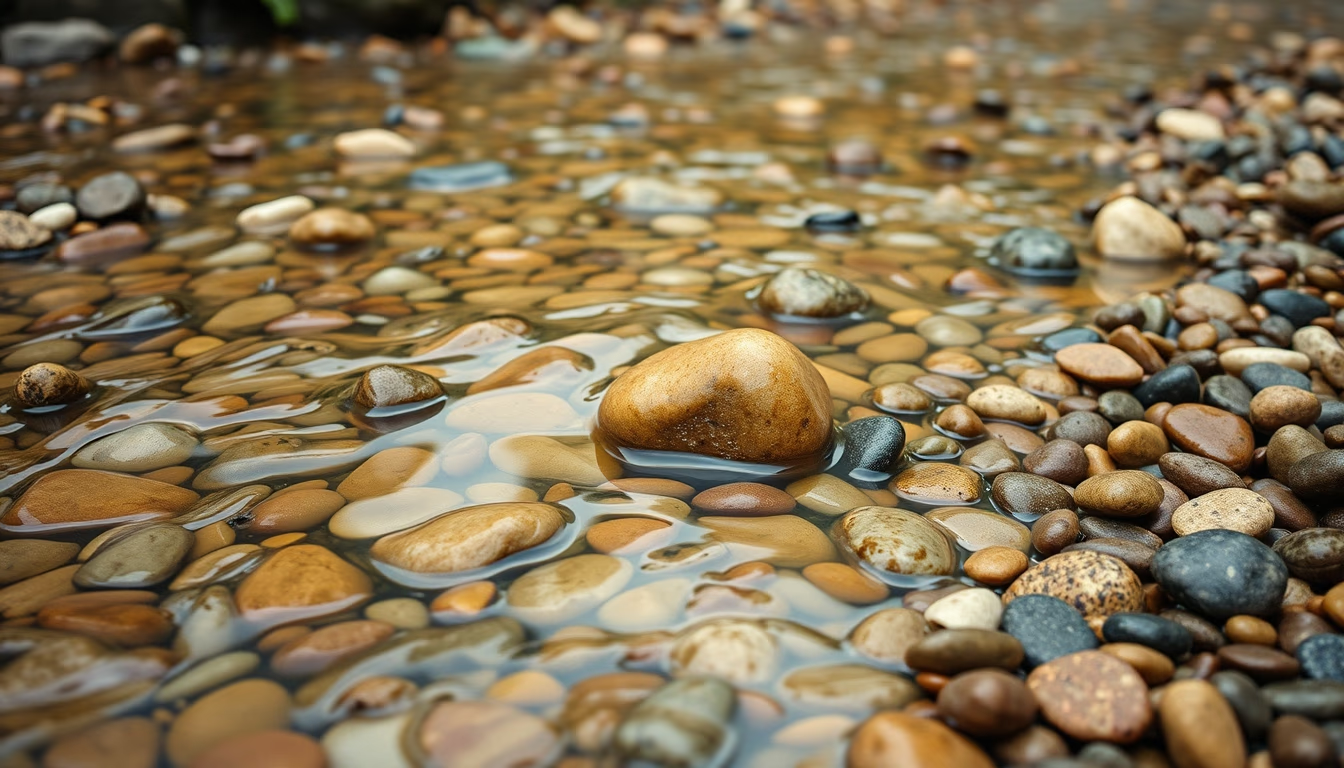
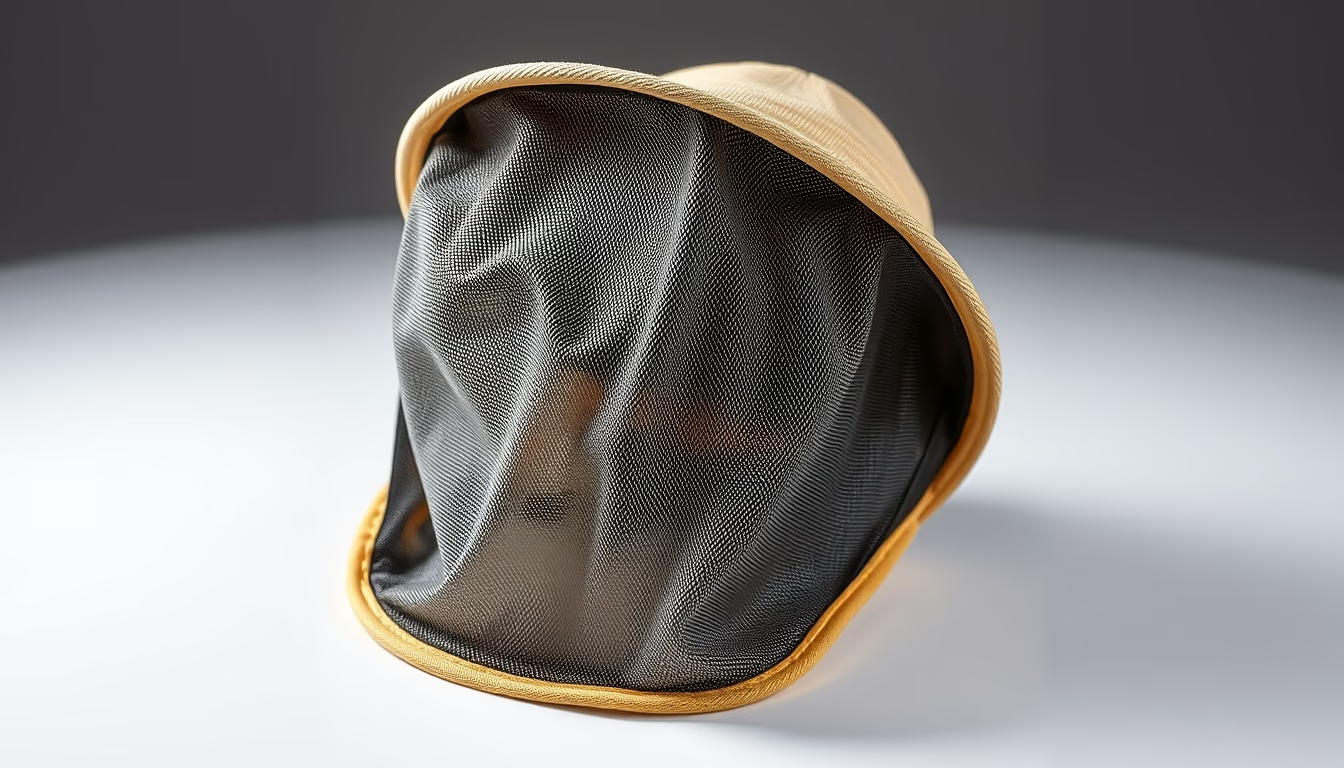
Osmosis membrane diagram
1344×768 · AVIF · CC BY 4.0

Osmosis membrane diagram illustrates water movement across a semipermeable barrier, crucial for cellular processes and industrial applications.
About this subject
Osmosis is a passive process where water moves from a region of lower solute concentration to higher solute concentration across a semipermeable membrane. This phenomenon is vital for maintaining cellular homeostasis, allowing cells to regulate their volume and osmotic pressure. For instance, plant roots absorb water from soil via osmosis, while human kidneys use this principle to reabsorb water and concentrate urine.
In educational contexts, osmosis membrane diagrams are often depicted in isometric or flat lay styles to facilitate visualization of water and solute molecules. These illustrations highlight the direction of flow and the selective nature of the membrane. The plasma membrane, composed of a lipid bilayer with proteins, allows water passage through aquaporins, specific channels that accelerate transport.
Osmosis has important practical applications. In desalination, reverse osmosis uses pressure to force water through a membrane, removing salts and impurities. In food preservation, salting and curing use osmosis to dehydrate microorganisms. There are also medical considerations, such as intravenous solutions with controlled tonicity to avoid cell damage.
In Brazil, osmosis is commonly studied in biology and chemistry classes in high school, with simple experiments using eggs or potatoes. Understanding this process is fundamental for fields like physiology, agriculture, and environmental engineering. Membrane diagrams, especially in modern formats like isometric flat lay, make learning more accessible and visual.
Frequently Asked Questions
What is osmosis?
Osmosis is the movement of water across a semipermeable membrane from an area of low solute concentration to high solute concentration, without energy expenditure.
Why is osmosis important for cells?
Osmosis regulates cell volume and osmotic pressure, crucial for cell survival, water absorption in plants, and kidney function.
How does reverse osmosis work?
Reverse osmosis applies external pressure to force water through a membrane against the concentration gradient, used for water purification and desalination.
Direct URL
https://pub-c7d6a6ea828543ac903a74a341ccb2e1.r2.dev/imagens/osmosis-membrane-diagram-isometric-flat-lay-p9.avifHow to credit
Include a visible link back to UtilizAí. Copy one of the snippets below:
<a href="https://xn--utiliza-eza.com/en/midia/imagens/osmosis-membrane-diagram-isometric-flat-lay-p9">Osmosis membrane diagram</a> by <a href="https://xn--utiliza-eza.com">UtilizAí</a>, licensed under <a href="https://creativecommons.org/licenses/by/4.0/">CC BY 4.0</a>.
[Osmosis membrane diagram](https://xn--utiliza-eza.com/en/midia/imagens/osmosis-membrane-diagram-isometric-flat-lay-p9) by [UtilizAí](https://xn--utiliza-eza.com), CC BY 4.0
License: CC-BY-4.0