Oscilloscope display waveform
1344×768 · AVIF · CC BY 4.0
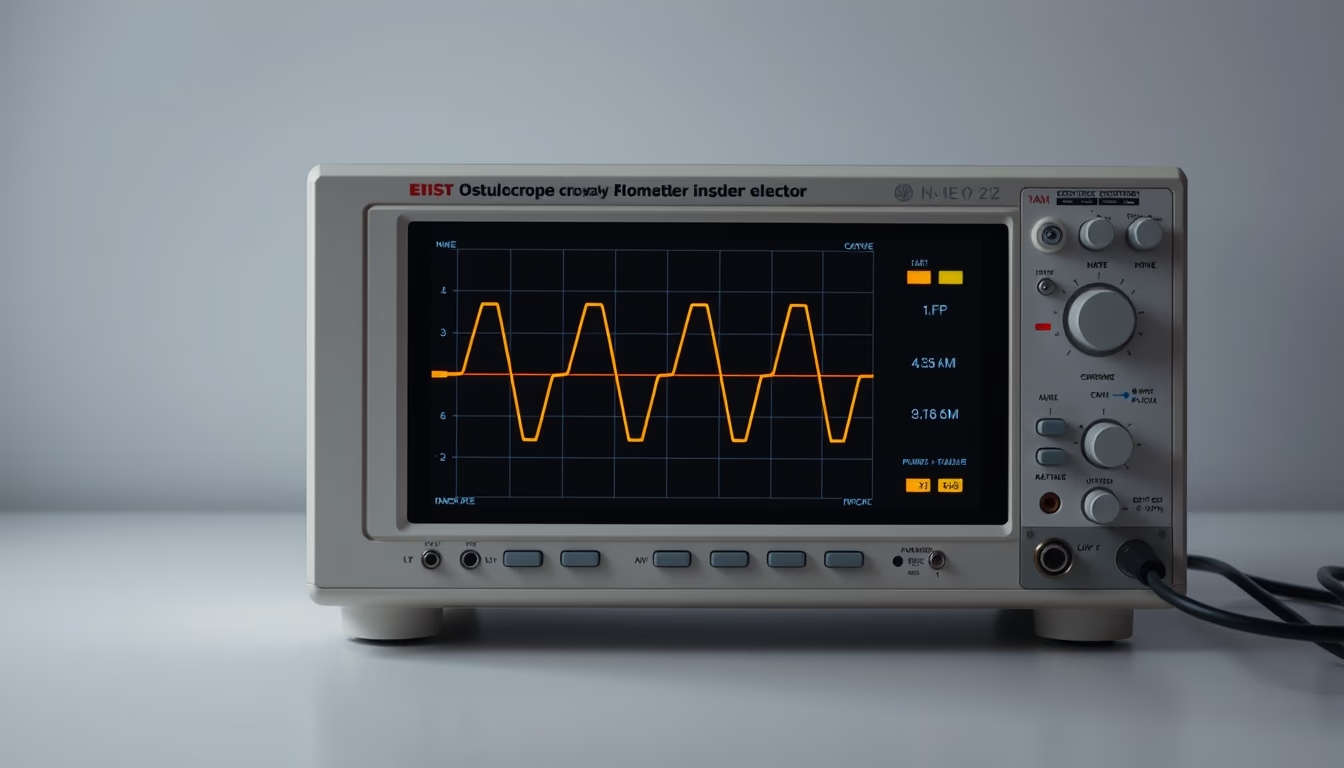
An oscilloscope is an electronic instrument that displays waveforms of electrical signals, enabling measurement of voltage, frequency, and time.
About this subject
An oscilloscope is a crucial instrument in electronics and electrical engineering, used to visualize how electrical signals vary over time. Its screen displays a waveform, with voltage on the vertical axis and time on the horizontal axis. These graphs allow engineers to identify characteristics such as amplitude, period, frequency, and signal distortions.
There are two main types of oscilloscopes: analog and digital. In analog models, the waveform is generated by an electron beam striking a phosphorescent screen, while digital oscilloscopes sample the signal and convert it into data displayed on an LCD or LED screen. Digital models offer advanced features like waveform storage, spectrum analysis, and automatic measurements.
Oscilloscopes are essential for debugging electronic circuits, testing power supplies, analyzing audio and video signals, and developing embedded systems. Common waveforms include sine waves (typical of alternating current), square waves (common in digital signals), and sawtooth waves (used in monitor sweeps).
The accuracy of an oscilloscope depends on its bandwidth, sampling rate, and vertical resolution. Modern instruments can capture high-frequency signals up to several gigahertz, making them indispensable in research laboratories and industrial maintenance.
Frequently Asked Questions
How does an oscilloscope work?
An oscilloscope measures the voltage of an electrical signal over time and displays it as a waveform on the screen. It uses probes to capture the signal, amplifiers to adjust the scale, and a trigger system to synchronize the image.
What do the lines on an oscilloscope screen mean?
The vertical line represents voltage, while the horizontal line represents time. The shape of the curve shows how the voltage changes, allowing measurement of frequency, amplitude, and distortions.
What is the difference between an analog and digital oscilloscope?
An analog oscilloscope displays the waveform in real time using a cathode-ray tube. A digital oscilloscope samples the signal, converts it to numerical data, and displays it on a screen, enabling storage and further analysis.
Direct URL
https://pub-c7d6a6ea828543ac903a74a341ccb2e1.r2.dev/imagens/oscilloscope-display-waveform-studio-still-life-p2.avifHow to credit
Include a visible link back to UtilizAí. Copy one of the snippets below:
<a href="https://xn--utiliza-eza.com/en/midia/imagens/oscilloscope-display-waveform-studio-still-life-p2">Oscilloscope display waveform</a> by <a href="https://xn--utiliza-eza.com">UtilizAí</a>, licensed under <a href="https://creativecommons.org/licenses/by/4.0/">CC BY 4.0</a>.
[Oscilloscope display waveform](https://xn--utiliza-eza.com/en/midia/imagens/oscilloscope-display-waveform-studio-still-life-p2) by [UtilizAí](https://xn--utiliza-eza.com), CC BY 4.0
License: CC-BY-4.0