Origami crane paper white
1344×768 · AVIF · CC BY 4.0
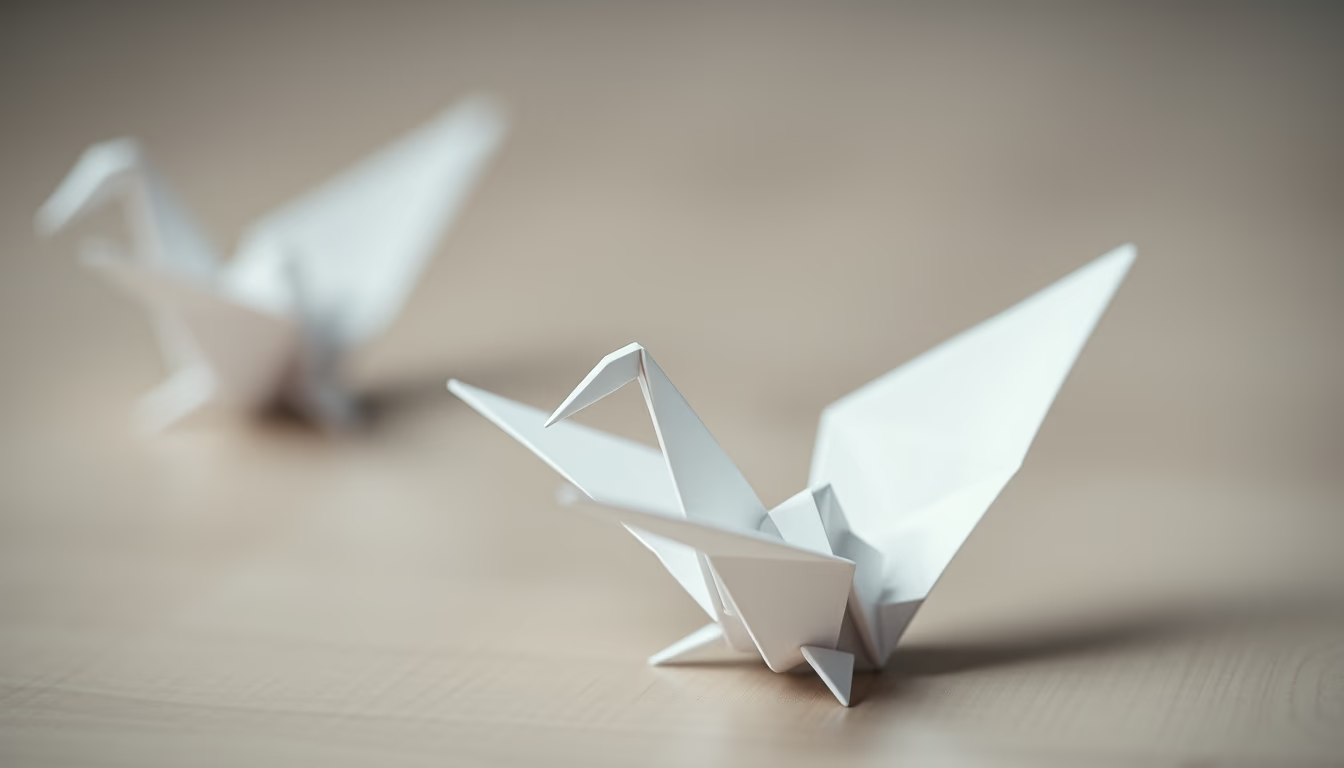
The origami crane, a symbol of peace and longevity in Japan, takes shape with precision from a single sheet of white paper.
About this subject
The origami crane is one of the most recognizable figures in Japanese paper folding art. Its creation dates back to the Edo period (1603, 1868), when paper became widely available in Japan. The word "tsuru" means crane, a bird that in Japanese culture symbolizes good fortune, health, and longevity. Unlike other folds, the crane is made from a single square sheet of paper without cuts, following a sequence of folds that require precision and patience.
Legend says that anyone who folds a thousand cranes (senbazuru) will have a wish granted. This tradition gained worldwide fame through the story of Sadako Sasaki, a victim of the Hiroshima atomic bombing, who attempted to fold a thousand cranes while battling leukemia. Today, the crane is an international symbol of the peace movement, and senbazuru displays adorn memorials like the Hiroshima Peace Park.
Technically, the crane is considered an intermediate-level model, requiring mastery of folds such as valley, mountain, and reverse folds. White paper, as seen in the image, is traditionally used for its purity, but colored versions are also common. Origami enhances fine motor skills and concentration, practiced by people of all ages worldwide as a hobby or therapy.
Frequently Asked Questions
What is the origin of the origami crane?
The origami crane originated in the Edo period (1603, 1868) in Japan, when paper became widely available. The earliest known written diagram of a crane is in the 1797 book "Hiden Senbazuru Orikata."
What does the legend of a thousand cranes mean?
The senbazuru legend states that folding a thousand paper cranes grants one wish. It symbolizes perseverance and hope, strongly associated with peace after the story of Sadako Sasaki.
What type of paper is used to make an origami crane?
Traditionally, a thin square sheet of origami paper (kami) measuring about 15 cm x 15 cm is used. White is classic, but colored or patterned papers are common. The paper must be able to hold creases without tearing.
Direct URL
https://pub-c7d6a6ea828543ac903a74a341ccb2e1.r2.dev/imagens/origami-crane-paper-white-tilt-shift-miniature-fresh5.avifHow to credit
Include a visible link back to UtilizAí. Copy one of the snippets below:
<a href="https://xn--utiliza-eza.com/en/midia/imagens/origami-crane-paper-white-tilt-shift-miniature-fresh5">Origami crane paper white</a> by <a href="https://xn--utiliza-eza.com">UtilizAí</a>, licensed under <a href="https://creativecommons.org/licenses/by/4.0/">CC BY 4.0</a>.
[Origami crane paper white](https://xn--utiliza-eza.com/en/midia/imagens/origami-crane-paper-white-tilt-shift-miniature-fresh5) by [UtilizAí](https://xn--utiliza-eza.com), CC BY 4.0
License: CC-BY-4.0