Origami crane paper white
1344×768 · AVIF · CC BY 4.0
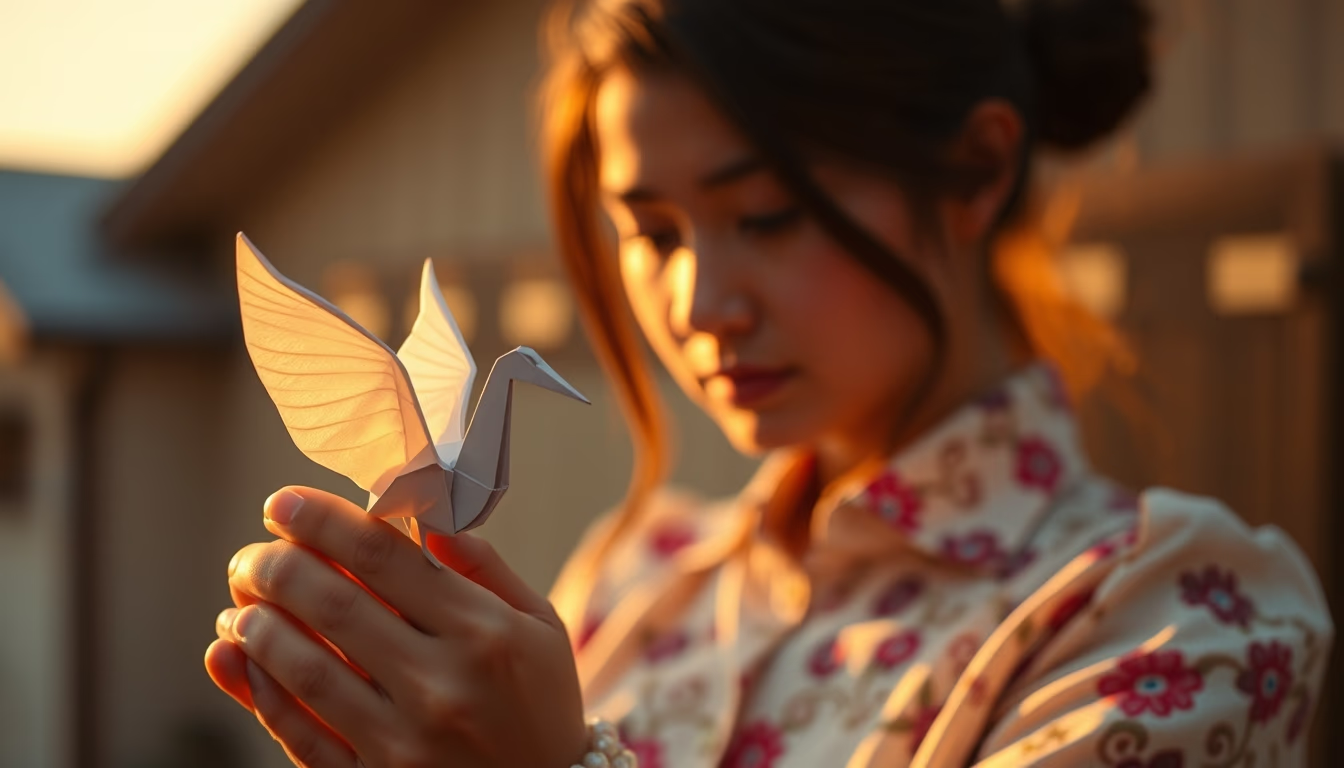
The tsuru, a classic Japanese origami crane, is an ancient symbol of peace, longevity, and good luck, transcending cultures.
About this subject
Origami, the Japanese art of paper folding, has the tsuru (crane) as its most iconic model. According to tradition, folding one thousand cranes (senbazuru) grants a wish. This practice gained global recognition through Sadako Sasaki, a Japanese girl affected by the Hiroshima atomic bomb, who folded hundreds of cranes while battling leukemia, turning the bird into a universal peace symbol.
The choice of white in a tsuru carries additional meaning. In Japan, white represents purity, simplicity, and the divine, often used in Shinto ceremonies and funerals. In origami, white paper can be traditional washi, handmade from plant fibers like kozo (mulberry), which gives durability and a unique texture to the folds.
The crane appears in various Eastern cultures. In China, it is associated with immortality and wisdom; in Korea, it symbolizes longevity. Folding a tsuru is considered intermediate, requiring precision for balanced wings and tail. Variations include the flapping-wing crane or the inflatable crane, expanding creative possibilities.
With globalization, origami has transcended the East and is now practiced worldwide as an educational, therapeutic, and artistic tool. The white tsuru, in particular, is often used in peace campaigns, memorials, and exhibitions, keeping alive the message of hope that comes from Japanese tradition.
Frequently Asked Questions
What is the origin of the origami tsuru?
The origami tsuru originated in Japan during the Edo period (1603-1868). The tradition was influenced by the folk tale 'The Legend of the Thousand Cranes', associating the bird with good luck and wish fulfillment.
Why is the tsuru a symbol of peace?
The tsuru became a global peace symbol after the story of Sadako Sasaki, a Hiroshima bombing victim. She folded a thousand cranes as a wish for recovery, and since then, origami represents the fight for peace and against nuclear weapons.
How many folds are required to make a traditional tsuru?
The classic tsuru requires about 20 to 30 folds, depending on technique and precision. The model is based on the 'bird base', one of the fundamental origami patterns.
Direct URL
https://pub-c7d6a6ea828543ac903a74a341ccb2e1.r2.dev/imagens/origami-crane-paper-white-cinematic-wide-shot-fresh8.avifHow to credit
Include a visible link back to UtilizAí. Copy one of the snippets below:
<a href="https://xn--utiliza-eza.com/en/midia/imagens/origami-crane-paper-white-cinematic-wide-shot-fresh8">Origami crane paper white</a> by <a href="https://xn--utiliza-eza.com">UtilizAí</a>, licensed under <a href="https://creativecommons.org/licenses/by/4.0/">CC BY 4.0</a>.
[Origami crane paper white](https://xn--utiliza-eza.com/en/midia/imagens/origami-crane-paper-white-cinematic-wide-shot-fresh8) by [UtilizAí](https://xn--utiliza-eza.com), CC BY 4.0
License: CC-BY-4.0