Organic compost bin
1344×768 · AVIF · CC BY 4.0
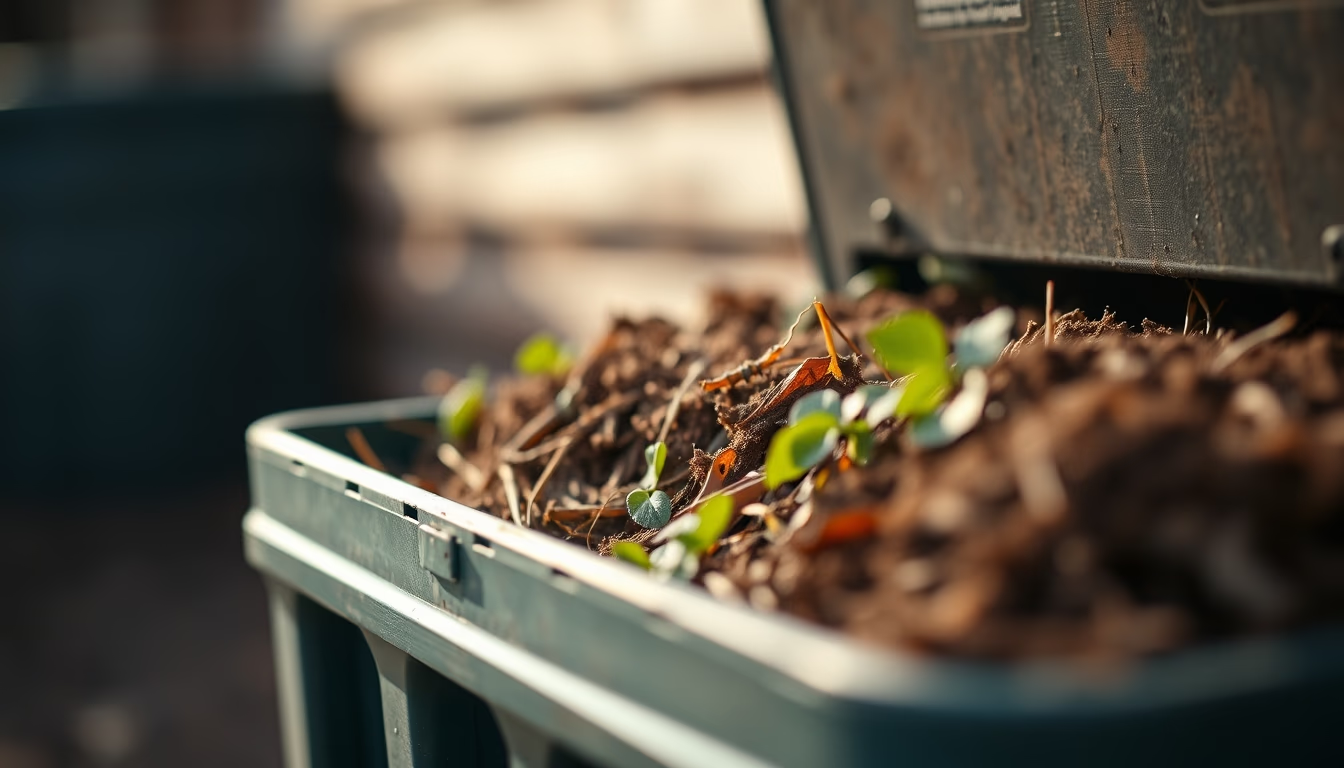
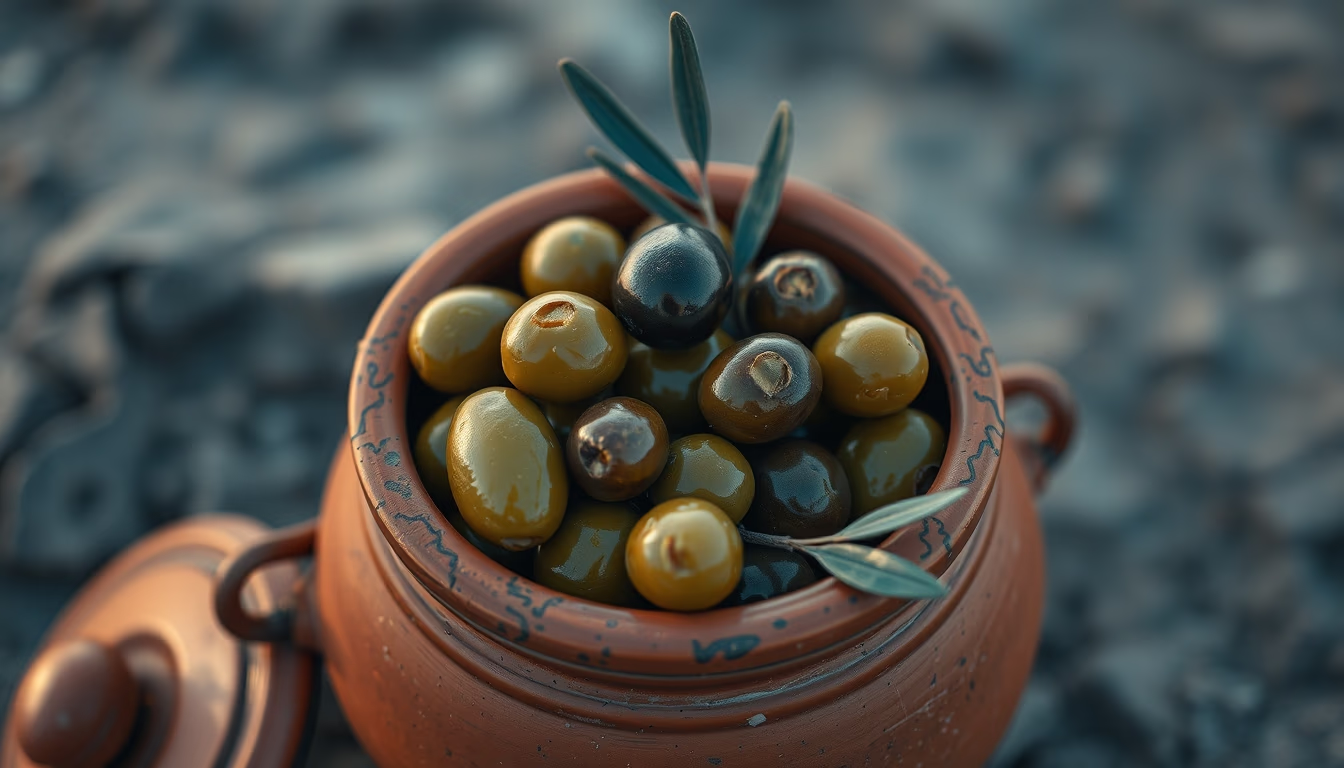
The organic compost bin converts household waste into nutrient-rich fertilizer for plants, reducing landfill waste.
About this subject
Organic composting is a natural process where microorganisms, worms, and other decomposers break down materials like fruit and vegetable scraps, eggshells, coffee grounds, and dry leaves inside a bin. This transformation yields humus or mature compost, an excellent organic fertilizer for gardens, vegetable patches, and potted plants. The use of home compost bins has grown globally, including in Brazil, as a sustainable way to reduce organic waste sent to landfills, where it would generate methane, a potent greenhouse gas.
There are various compost bin models, from small-scale vermicomposters (with red wiggler worms) suitable for apartments to larger outdoor bins for yards and farms. The right choice depends on available space and waste volume. An effective bin requires good aeration, moisture control, and a system to separate fresh waste from finished compost. It is important to balance carbon-rich materials (dry leaves, sawdust, cardboard) with nitrogen-rich ones (food scraps, grass clippings), roughly in a 3:1 ratio.
The resulting compost is rich in nutrients like nitrogen, phosphorus, and potassium, and improves soil structure by enhancing water retention and beneficial microbial activity. Using this natural fertilizer reduces dependence on chemical fertilizers, which can leach into groundwater and degrade soil over time. Moreover, composting fosters awareness about responsible waste management and closes the nutrient loop. In Brazil, community and municipal programs have promoted composting in schools, markets, and homes as part of solid waste policies.
Interestingly, the time needed to turn waste into finished compost ranges from 60 to 90 days, depending on temperature, moisture, and turning frequency. With a well-managed bin, a family of four can divert up to 50% of its household waste from landfills, producing high-quality fertilizer for their plants and contributing to climate change mitigation.
Frequently Asked Questions
What can be put into an organic compost bin?
You can add fruit and vegetable scraps, eggshells, coffee grounds, tea bags, dry leaves, grass clippings, untreated wood shavings, and shredded cardboard. Avoid meat, dairy, oils, and cooked foods as they attract pests.
What is the difference between composting and vermicomposting?
Traditional composting relies on microorganisms and fungi to break down organic matter, while vermicomposting uses worms, which speed up the process and produce nutrient-rich humus and liquid fertilizer. Vermicomposting is ideal for small spaces.
How do I know when the compost is ready to use?
Ready compost smells like damp earth, is dark and crumbly with no recognizable original materials. It typically takes 60 to 90 days. A simple test: put a sample in a sealed bag for a few days; if there is no foul odor, it's mature.
Direct URL
https://pub-c7d6a6ea828543ac903a74a341ccb2e1.r2.dev/imagens/organic-compost-bin-macro-closeup-p5.avifHow to credit
Include a visible link back to UtilizAí. Copy one of the snippets below:
<a href="https://xn--utiliza-eza.com/en/midia/imagens/organic-compost-bin-macro-closeup-p5">Organic compost bin</a> by <a href="https://xn--utiliza-eza.com">UtilizAí</a>, licensed under <a href="https://creativecommons.org/licenses/by/4.0/">CC BY 4.0</a>.
[Organic compost bin](https://xn--utiliza-eza.com/en/midia/imagens/organic-compost-bin-macro-closeup-p5) by [UtilizAí](https://xn--utiliza-eza.com), CC BY 4.0
License: CC-BY-4.0