Organic compost bin
1344×768 · AVIF · CC BY 4.0
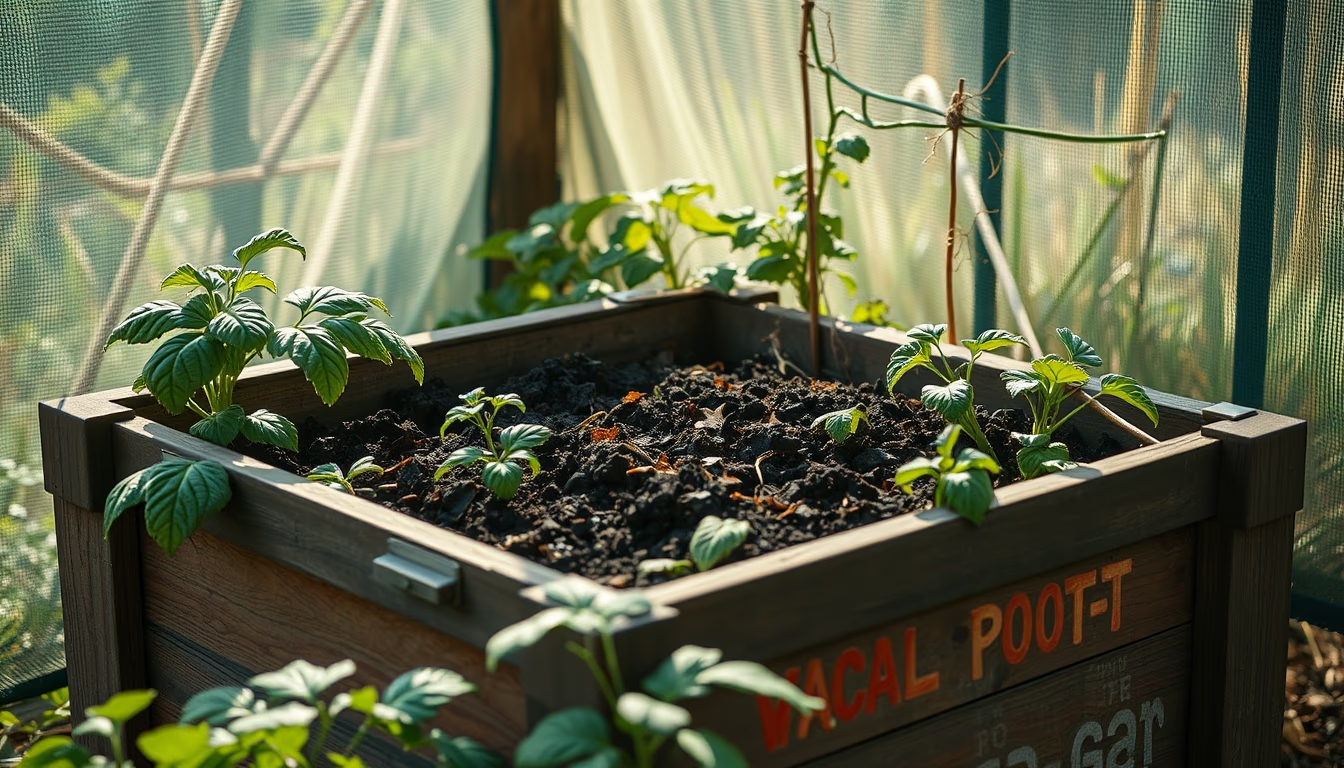
Organic composting turns kitchen and garden waste into nutrient-rich soil amendment, cutting landfill waste significantly.
About this subject
Composting is an aerobic biological process where microorganisms break down organic matter like fruit and vegetable scraps, eggshells, and plant trimmings, producing a natural fertilizer called compost. This method is used worldwide in home gardens, farms, and large municipal facilities. Compost bins come in various types, from simple piles to rotating drums and worm systems, each with specific advantages.
Interest in composting has risen in many countries, driven by urban sustainability efforts. Globally, organic waste makes up a large portion of municipal solid waste, yet much ends up in landfills where it generates methane, a potent greenhouse gas. Home composting can cut landfill waste by up to 30% while producing a nutrient-rich soil conditioner that improves water retention and soil biological activity.
Composting efficiency depends on factors like the carbon-to-nitrogen ratio (ideal 25:1 to 30:1), aeration, moisture, and temperature. Carbon-rich materials such as dry leaves and sawdust combine with nitrogen-rich materials like food scraps and grass clippings. The process takes from two months to a year, depending on the method and care. Mature compost smells like earth and has a uniform texture, ready to nourish plants naturally without chemicals.
Frequently Asked Questions
What can be put into an organic compost bin?
Fruit and vegetable scraps, eggshells, coffee grounds, tea bags, dry leaves, grass clippings, small twigs, and untreated sawdust. Avoid meat, dairy, oils, and diseased plants.
How long does it take for compost to be ready?
It depends on the method and care. In aerated systems with proper C/N ratio, it can be ready in 2 to 4 months. Passive methods may take 6 to 12 months.
Does composting produce bad odors?
No, if managed properly. Foul smell (like rotten eggs) indicates anaerobic decomposition, usually from excess moisture or lack of aeration. Adding dry materials and turning the pile fixes it.
Direct URL
https://pub-c7d6a6ea828543ac903a74a341ccb2e1.r2.dev/imagens/organic-compost-bin-documentary-photography-p1.avifHow to credit
Include a visible link back to UtilizAí. Copy one of the snippets below:
<a href="https://xn--utiliza-eza.com/en/midia/imagens/organic-compost-bin-documentary-photography-p1">Organic compost bin</a> by <a href="https://xn--utiliza-eza.com">UtilizAí</a>, licensed under <a href="https://creativecommons.org/licenses/by/4.0/">CC BY 4.0</a>.
[Organic compost bin](https://xn--utiliza-eza.com/en/midia/imagens/organic-compost-bin-documentary-photography-p1) by [UtilizAí](https://xn--utiliza-eza.com), CC BY 4.0
License: CC-BY-4.0