Organ on chip device
1344×768 · AVIF · CC BY 4.0
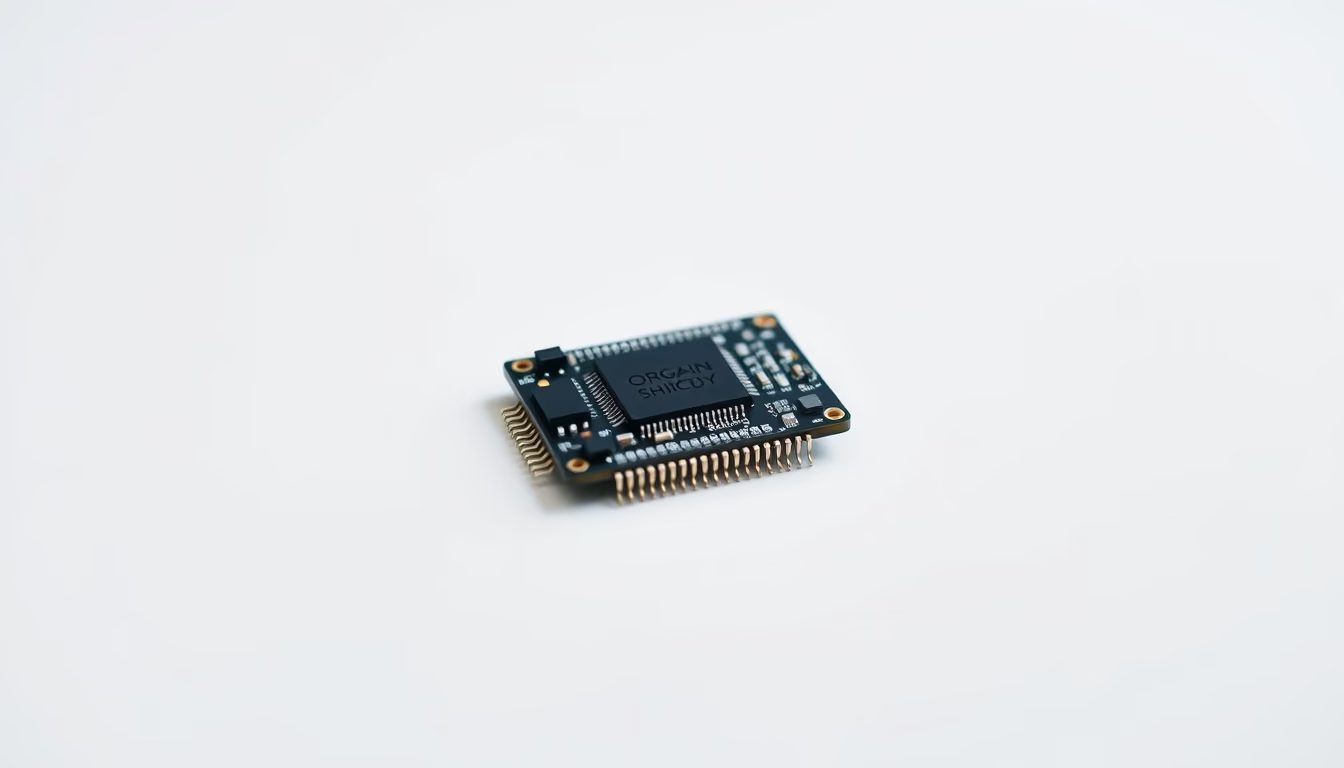
Organ-on-a-chip devices are microstructures that mimic human organ functions, revolutionizing drug testing and reducing animal experimentation.
About this subject
Organ-on-a-chip devices are microfluidic platforms that recreate human organ physiological environments at a reduced scale. Composed of channels lined with living cells, these chips mimic functions such as lung respiration, heartbeats, or liver metabolism. The technology was pioneered by researchers at the Wyss Institute, notably Donald Ingber, who created the first lung-on-a-chip in 2010. Since then, versions for liver, kidney, intestine, and even the blood-brain barrier have been developed.
The primary application lies in the pharmaceutical industry: chips allow testing of compound efficacy and toxicity with greater precision than animal models, reducing costs and accelerating discoveries. The global organ-on-a-chip market is estimated to reach US$ 1.2 billion by 2030, driven by regulatory agencies such as the FDA, which in the US approved the Modernization Act 2.0 in 2022, encouraging alternatives to animal experimentation.
Moreover, devices can be customized with cells from individual patients, paving the way for personalized medicine. Scientists have used chips to model diseases such as cystic fibrosis, COVID-19, and cancer, replicating tumor microenvironments. A single chip can connect multiple organs, creating a “body-on-a-chip” that simulates systemic interactions, such as drug metabolism in the liver and its effects on the heart.
In Brazil, laboratories such as the Institute of Biomedical Sciences at USP have developed chips to study tropical diseases like Zika and dengue, as well as testing national drugs. The technology still faces challenges, including manufacturing standardization and integration with real-time sensors, but it promises to transform biomedical research in the next decade.
Frequently Asked Questions
What is an organ-on-a-chip device?
It is a microfluidic platform containing living cells arranged in channels that mimic the structure and function of human organs, allowing drug testing and disease studies in a controlled environment.
How can organ-on-a-chip replace animal testing?
Chips replicate human physiological responses more accurately, reducing the need for animal models. They also enable testing with human cells, increasing clinical relevance and lowering costs.
Which organs can be simulated with this technology?
Chips have been developed for lung, liver, kidney, heart, intestine, blood-brain barrier, and even multiple interconnected organs, forming a 'body-on-a-chip' system.
Direct URL
https://pub-c7d6a6ea828543ac903a74a341ccb2e1.r2.dev/imagens/organ-on-chip-device-commercial-product-photography-p12.avifHow to credit
Include a visible link back to UtilizAí. Copy one of the snippets below:
<a href="https://xn--utiliza-eza.com/en/midia/imagens/organ-on-chip-device-commercial-product-photography-p12">Organ on chip device</a> by <a href="https://xn--utiliza-eza.com">UtilizAí</a>, licensed under <a href="https://creativecommons.org/licenses/by/4.0/">CC BY 4.0</a>.
[Organ on chip device](https://xn--utiliza-eza.com/en/midia/imagens/organ-on-chip-device-commercial-product-photography-p12) by [UtilizAí](https://xn--utiliza-eza.com), CC BY 4.0
License: CC-BY-4.0