Orange grove with truck collecting fresh fruit
1344×768 · AVIF · CC BY 4.0
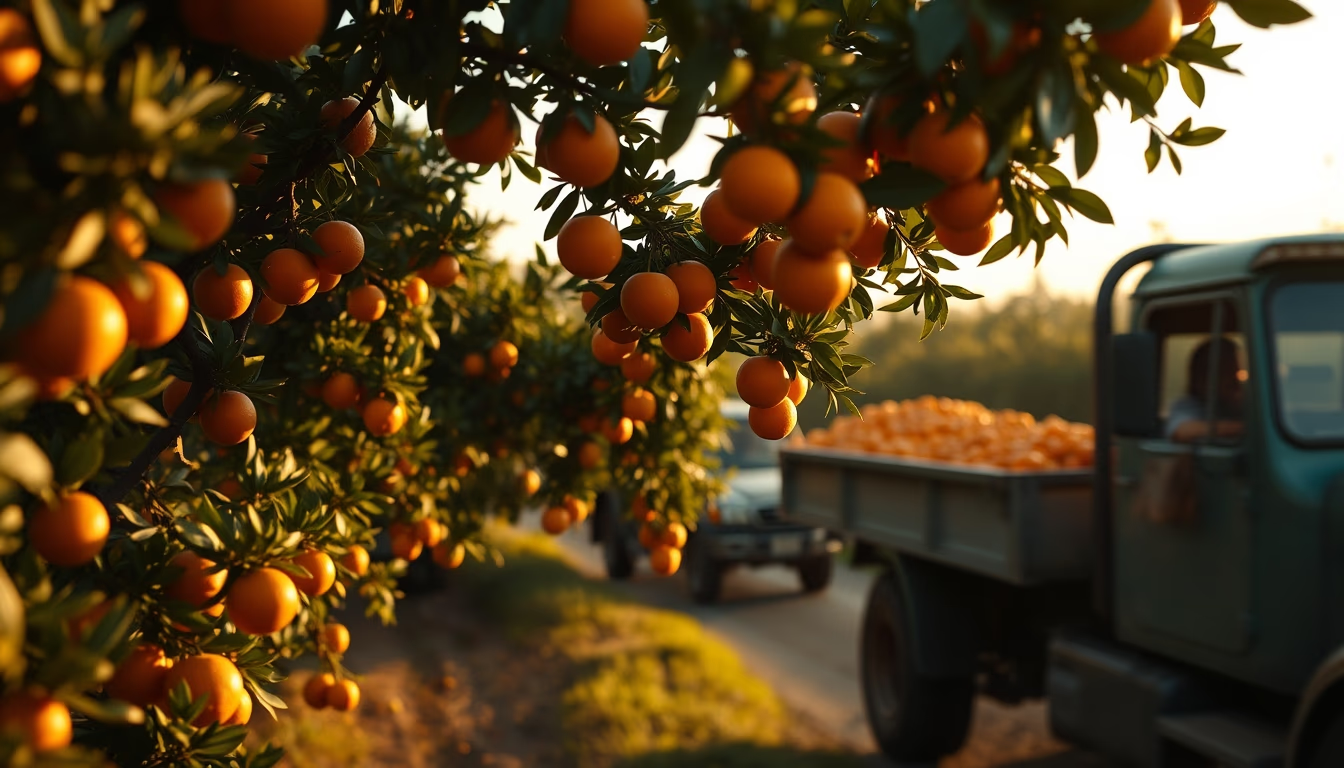
Orange grove with a truck collecting fresh fruit in the late afternoon, a typical scene in Brazilian citrus farming.
About this subject
Brazil is the world's largest orange producer, accounting for about 30% of global production, with the state of São Paulo responsible for roughly 80% of national output. Harvesting typically occurs from May to January, depending on the variety, and oranges destined for the juice industry are picked either mechanically or by hand, as shown in the image. The truck in the grove collects the freshly harvested fruit, which is transported to packing houses or juice factories within 24 hours to ensure freshness.
Brazilian citrus farming employs thousands of rural workers, many in family-run operations. The grove depicted, with extensive rows of orange trees, is typical of subtropical regions such as São Paulo's citrus belt. The 'Pera Rio' orange is the most planted variety in Brazil, representing about 40% of production, followed by 'Valencia' and 'Natal'. Brazil is also the world leader in exports of frozen concentrated orange juice, mainly supplying Europe and the United States.
Harvesting in the late afternoon is strategic to avoid intense heat and preserve fruit quality, as oranges lose water quickly under strong sun. The truck, usually with a capacity of 10 to 15 tons, travels along the grove's lanes while workers deposit oranges into boxes or directly into the truck bed. Efficient logistics are crucial to reduce post-harvest losses, which in Brazil range from 10 to 15% due to factors like mechanical damage and lack of refrigeration.
Beyond juice, Brazilian oranges are consumed fresh and used to produce essential oils, animal feed, and organic compost. The sector faces challenges such as greening (HLB), a disease affecting groves worldwide, and price fluctuations in the international market. The image captures a productive and organized moment, representing the strength of Brazilian agribusiness.
Frequently Asked Questions
What is the best time to harvest oranges in Brazil?
Orange harvesting in Brazil varies by variety but mainly occurs from May to January. The 'Pera Rio' orange is harvested from May to October, while 'Valencia' goes from October to January.
Why is harvesting done in the late afternoon?
Late afternoon harvesting avoids intense heat, reducing water loss from the fruit and preserving its quality. It also provides safer and more comfortable working conditions for laborers.
How important is the truck in the harvesting process?
The truck is crucial for quickly transporting harvested oranges to processing facilities, minimizing post-harvest losses. Efficient logistics ensure the fruit arrives fresh within 24 hours.
Direct URL
https://pub-c7d6a6ea828543ac903a74a341ccb2e1.r2.dev/imagens/orange-grove-with-truck-collecting-fresh-fruit-wide-late-afternoon-3.avifHow to credit
Include a visible link back to UtilizAí. Copy one of the snippets below:
<a href="https://xn--utiliza-eza.com/en/midia/imagens/orange-grove-with-truck-collecting-fresh-fruit-wide-late-afternoon-3">Orange grove with truck collecting fresh fruit</a> by <a href="https://xn--utiliza-eza.com">UtilizAí</a>, licensed under <a href="https://creativecommons.org/licenses/by/4.0/">CC BY 4.0</a>.
[Orange grove with truck collecting fresh fruit](https://xn--utiliza-eza.com/en/midia/imagens/orange-grove-with-truck-collecting-fresh-fruit-wide-late-afternoon-3) by [UtilizAí](https://xn--utiliza-eza.com), CC BY 4.0
License: CC-BY-4.0