Orange grove with truck collecting fresh fruit
1344×768 · AVIF · CC BY 4.0
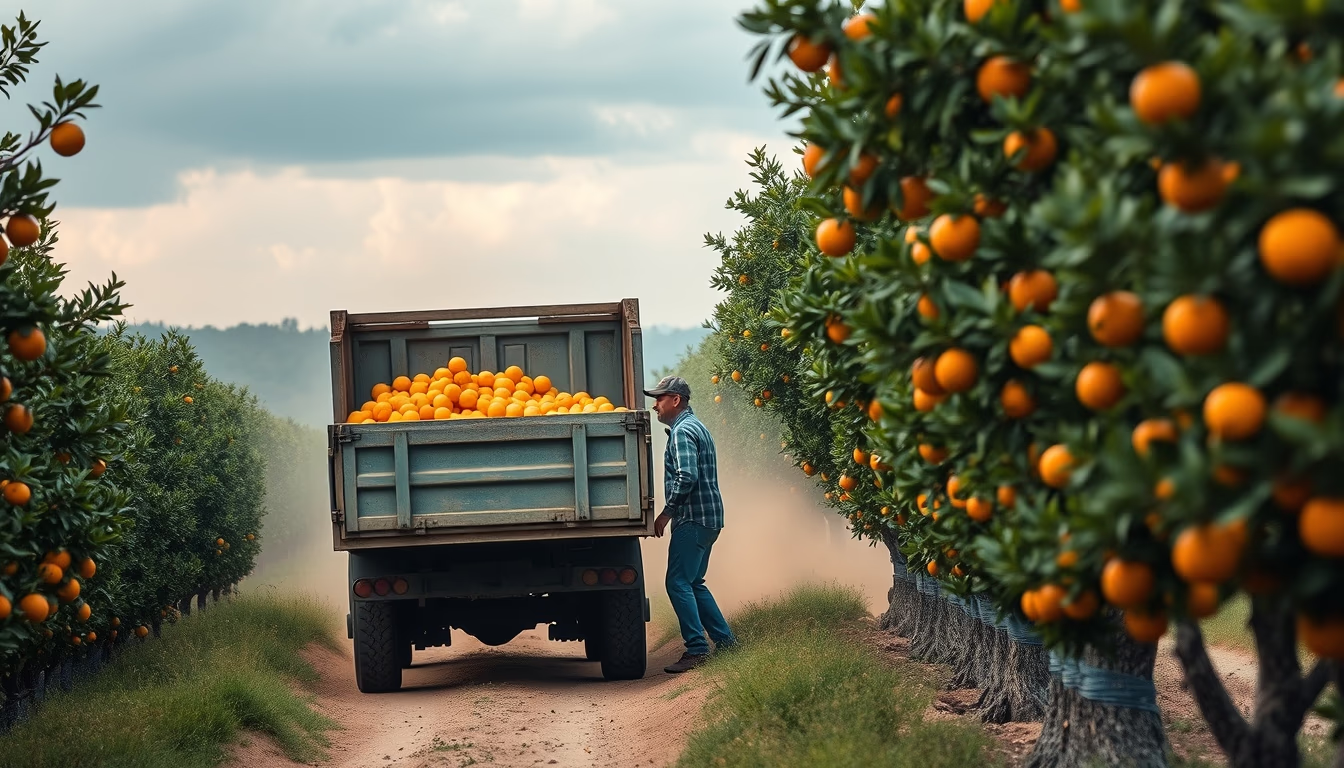
A truck loaded with fresh oranges moves through a grove on an overcast day, highlighting mechanized harvesting in Brazilian agribusiness.
About this subject
Brazil is the world's largest orange producer, accounting for about 30% of global production and 80% of the frozen concentrated orange juice market. São Paulo state concentrates approximately 80% of national output, with highlights in the regions of Araraquara, Bebedouro, and Matão. Mechanized harvesting, as depicted in the image with the truck moving through the grove, is increasingly common in large properties, reducing costs and increasing efficiency. Tractors and adapted trucks for transporting orange crates are equipped with hydraulic systems that speed up loading.
Oranges were introduced to Brazil by Portuguese colonizers in the 16th century, but commercial-scale production began in the late 19th century, driven by European immigration and the development of varieties such as Pera, Natal, and Valencia. The subtropical climate and sandy soil of the interior of São Paulo are ideal for cultivation, and the use of rootstocks resistant to pests, such as the Rangpur lime, helped expand planted areas. Currently, the country has over 600,000 hectares of orange groves, generating about 200,000 direct and indirect jobs.
Harvesting on overcast days is common during autumn and winter, when mild temperatures favor fruit quality. The harvest season varies by variety: Pera oranges are harvested from May to December, while Valencia goes from June to January. The fruit is destined for both the domestic market and export, with China and the United States being the main buyers of Brazilian juice. Transport logistics are crucial, with refrigerated trucks maintaining ideal temperatures to prevent losses.
Despite success, the sector faces challenges such as greening, a bacterial disease affecting groves, and competition from other producing countries like the United States and India. Research by Embrapa and Fundecitrus develops more resistant varieties and sustainable management techniques. The image of the truck in the grove symbolizes the strength of Brazilian agribusiness, combining tradition and innovation to supply one of the most consumed fruits worldwide.
Frequently Asked Questions
What is the largest orange-producing region in Brazil?
São Paulo state is the largest producer, accounting for about 80% of national production, especially in the regions of Araraquara, Bebedouro, and Matão.
How does mechanized harvesting benefit orange growers?
Mechanized harvesting reduces labor costs and increases efficiency, allowing large groves to be harvested quickly with fewer losses.
What are the main orange varieties grown in Brazil?
The main varieties are Pera, Natal, and Valencia. Pera is the most planted, representing about 40% of production, and is harvested from May to December.
Direct URL
https://pub-c7d6a6ea828543ac903a74a341ccb2e1.r2.dev/imagens/orange-grove-with-truck-collecting-fresh-fruit-editorial-overcast-daytime-5.avifHow to credit
Include a visible link back to UtilizAí. Copy one of the snippets below:
<a href="https://xn--utiliza-eza.com/en/midia/imagens/orange-grove-with-truck-collecting-fresh-fruit-editorial-overcast-daytime-5">Orange grove with truck collecting fresh fruit</a> by <a href="https://xn--utiliza-eza.com">UtilizAí</a>, licensed under <a href="https://creativecommons.org/licenses/by/4.0/">CC BY 4.0</a>.
[Orange grove with truck collecting fresh fruit](https://xn--utiliza-eza.com/en/midia/imagens/orange-grove-with-truck-collecting-fresh-fruit-editorial-overcast-daytime-5) by [UtilizAí](https://xn--utiliza-eza.com), CC BY 4.0
License: CC-BY-4.0