Orange grove with truck collecting fresh fruit
1344×768 · AVIF · CC BY 4.0
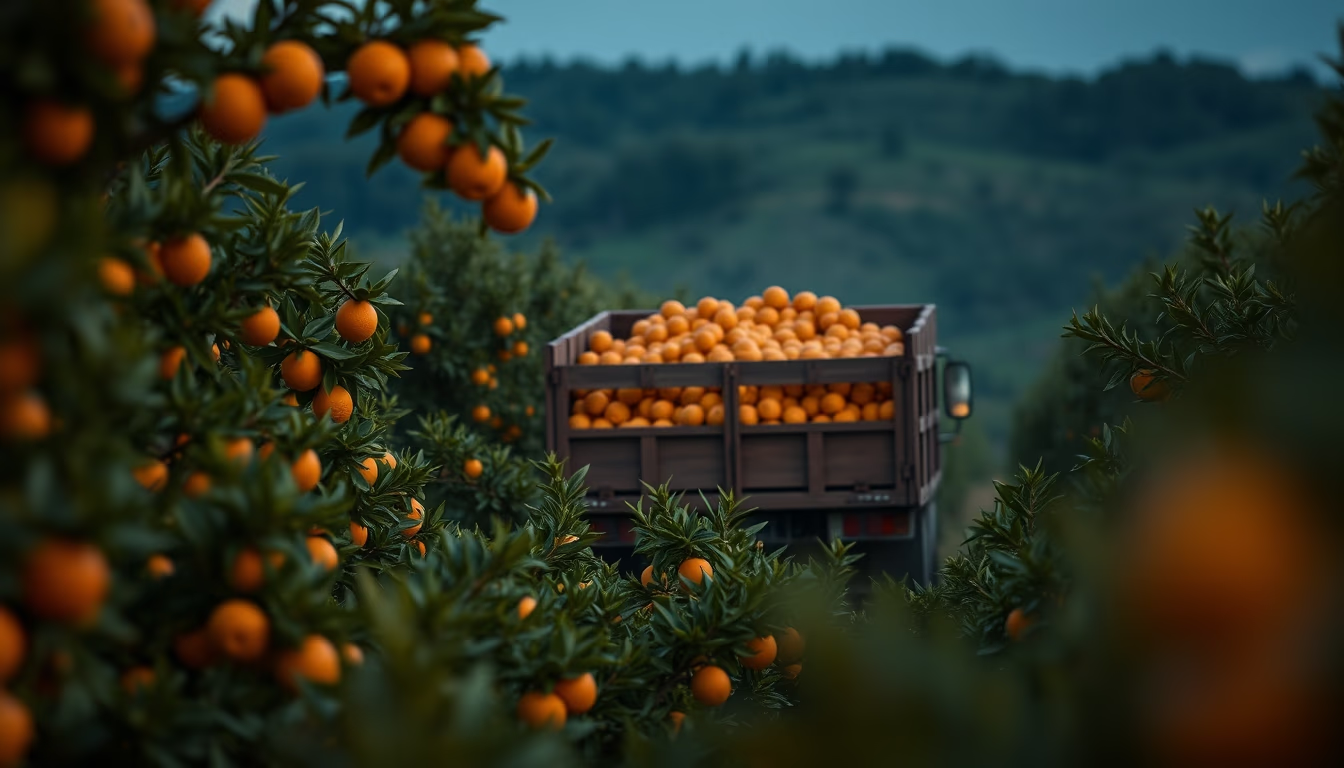
Brazilian orange groves supply the global market: see how mechanized harvesting works in the field.
About this subject
Brazil is the world's largest orange producer, accounting for about 30% of global production and 80% of the frozen concentrated orange juice market. The state of São Paulo concentrates approximately 80% of the country's orange groves, with emphasis on the regions of Araraquara, Bebedouro, and Matão. Mechanized harvesting, as shown in the scene, has become common on large farms, reducing costs and increasing efficiency. Special trucks travel through the rows of trees while workers or machines collect ripe fruit, which is taken directly to processing industries.
The 'Pera' orange is the most planted variety in Brazil, representing about 50% of production, followed by 'Valência' and 'Natal'. The harvest period varies by region but generally occurs between May and January. The tropical climate and fertile soil of the Brazilian citrus belt allow for two harvests per year in some areas. Besides juice, oranges are used to produce essential oils, animal feed, and byproducts like pulp.
Logistics is critical: after harvesting, fruits are transported in refrigerated trucks to prevent losses. Brazil exports orange juice to over 100 countries, with the European Union and the United States as main buyers. The sector generates millions of direct and indirect jobs, from cultivation to distribution. Mechanization, while efficient, also raises debates about its impact on rural employment and environmental sustainability.
Fun fact: Brazil produces about 16 million tons of oranges per year, enough to fill over 6,000 Olympic swimming pools with juice. Brazilian citrus farming faces challenges such as greening (huanglongbing), a disease affecting orchards, and climate fluctuations, but it remains a pillar of national agribusiness.
Frequently Asked Questions
What is the main orange-producing region in Brazil?
The state of São Paulo accounts for about 80% of national production, with emphasis on the regions of Araraquara, Bebedouro, and Matão.
How does mechanized orange harvesting work?
Special trucks travel through the rows of trees while workers or machines collect ripe fruit, which is taken directly to processing industries.
What are the main challenges of Brazilian citrus farming?
The main challenges include greening (huanglongbing), a disease affecting orchards, climate fluctuations, and the impact of mechanization on rural employment.
Direct URL
https://pub-c7d6a6ea828543ac903a74a341ccb2e1.r2.dev/imagens/orange-grove-with-truck-collecting-fresh-fruit-closeup-twilight-5.avifHow to credit
Include a visible link back to UtilizAí. Copy one of the snippets below:
<a href="https://xn--utiliza-eza.com/en/midia/imagens/orange-grove-with-truck-collecting-fresh-fruit-closeup-twilight-5">Orange grove with truck collecting fresh fruit</a> by <a href="https://xn--utiliza-eza.com">UtilizAí</a>, licensed under <a href="https://creativecommons.org/licenses/by/4.0/">CC BY 4.0</a>.
[Orange grove with truck collecting fresh fruit](https://xn--utiliza-eza.com/en/midia/imagens/orange-grove-with-truck-collecting-fresh-fruit-closeup-twilight-5) by [UtilizAí](https://xn--utiliza-eza.com), CC BY 4.0
License: CC-BY-4.0