Opal play of color
1344×768 · AVIF · CC BY 4.0

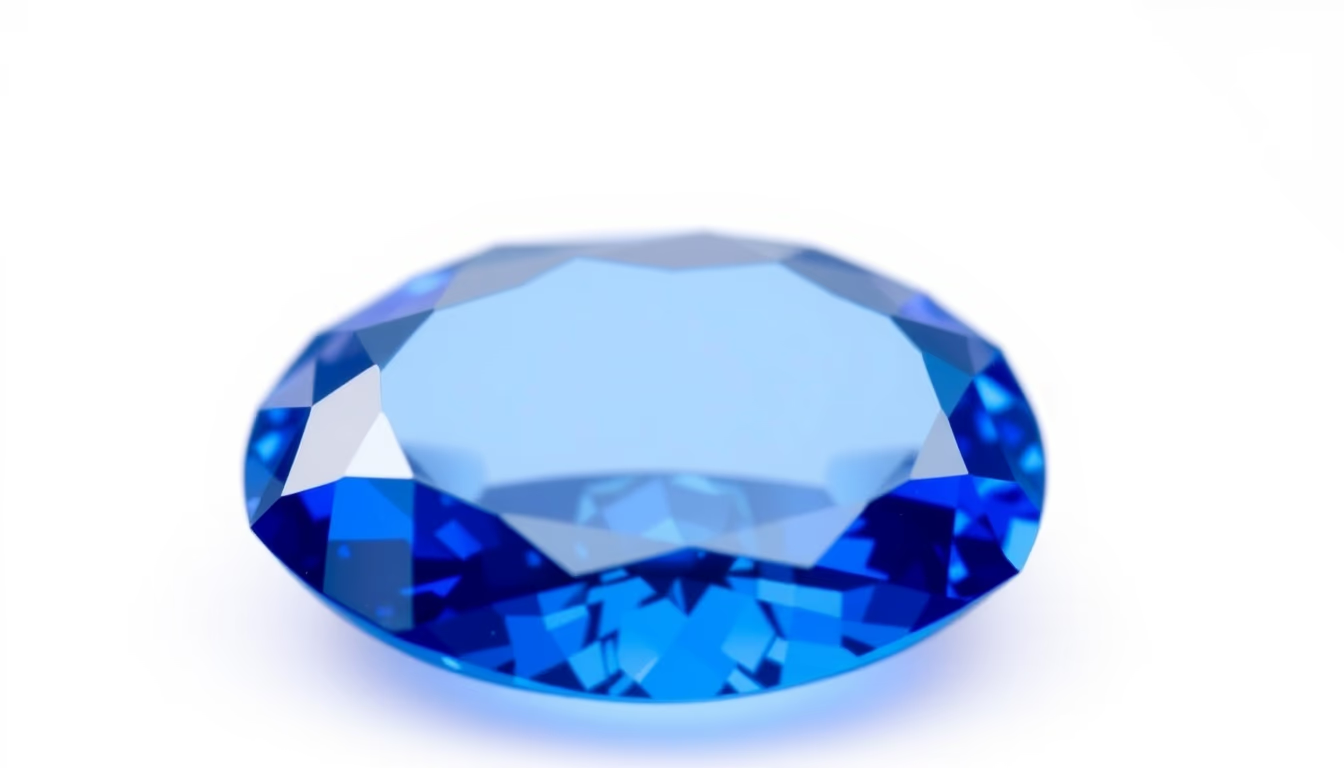
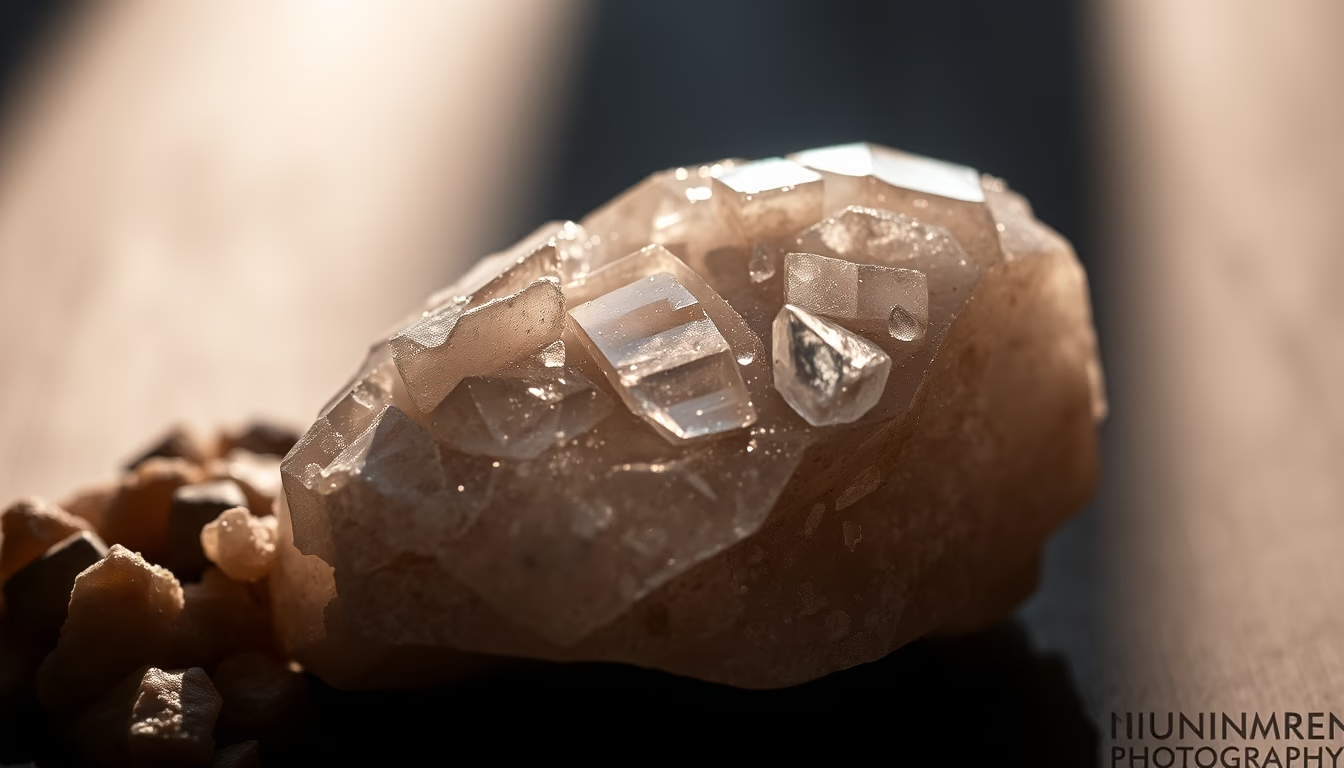
Opals display a unique optical phenomenon called play of color, with iridescent flashes that dance as light and viewing angle change.
About this subject
The play of color in opals is a visual spectacle caused by the diffraction of light through tiny silica spheres arranged in a regular three-dimensional structure. These spheres, with diameters between 150 and 300 nanometers, form a grid that separates white light into its component colors, producing the characteristic iridescent patterns. The more uniform the size and arrangement of the spheres, the more intense and vibrant the effect.
Precious opals exhibiting this phenomenon are found in only a few regions worldwide, with Australia accounting for approximately 95% of global production. The most famous deposits are in Lightning Ridge (known for black opals), Coober Pedy (white opals), and Andamooka. Other sources include Mexico (fire opals), Brazil (especially in Piauí and Ceará), and Ethiopia, whose hydrophane opals have recently gained market share.
The value of an opal is primarily determined by the intensity and variety of colors in its play of color, along with pattern clarity and absence of fractures. Patterns such as flash (large color patches), pinfire (small dots), and harlequin (checkerboard mosaic) are particularly prized. Unlike other gemstones, opals are not crystalline but rather a hydrated silica gel (with 5 to 20% water), making them relatively fragile and sensitive to sudden changes in temperature and humidity.
Interestingly, the word "opal" derives from the Sanskrit "upala," meaning "precious stone." In ancient Rome, it was considered a symbol of purity and hope, while in Arabic culture it was believed to fall from the sky during thunderstorms. Despite its beauty, opals suffered from superstitions in the 19th century, being associated with bad luck due to a novel by Sir Walter Scott. Today, they are widely appreciated as unique and fascinating gems.
Frequently Asked Questions
What causes the play of color in opals?
The play of color is caused by the diffraction of light as it passes through tiny silica spheres (150 to 300 nm) arranged in a regular three-dimensional structure. This separates white light into its spectral colors, creating iridescent flashes.
Where are the main opals with play of color found?
Australia produces about 95% of precious opals, notably from Lightning Ridge (black opals), Coober Pedy (white), and Andamooka. Other sources include Mexico (fire opals), Brazil (Piauí and Ceará), and Ethiopia.
Are opals fragile?
Yes, opals are relatively fragile because they contain 5 to 20% water and lack a crystalline structure. They are sensitive to thermal shock, sudden humidity changes, and can fracture easily.
Direct URL
https://pub-c7d6a6ea828543ac903a74a341ccb2e1.r2.dev/imagens/opal-play-of-color-aerial-drone-shot-p3.avifHow to credit
Include a visible link back to UtilizAí. Copy one of the snippets below:
<a href="https://xn--utiliza-eza.com/en/midia/imagens/opal-play-of-color-aerial-drone-shot-p3">Opal play of color</a> by <a href="https://xn--utiliza-eza.com">UtilizAí</a>, licensed under <a href="https://creativecommons.org/licenses/by/4.0/">CC BY 4.0</a>.
[Opal play of color](https://xn--utiliza-eza.com/en/midia/imagens/opal-play-of-color-aerial-drone-shot-p3) by [UtilizAí](https://xn--utiliza-eza.com), CC BY 4.0
License: CC-BY-4.0