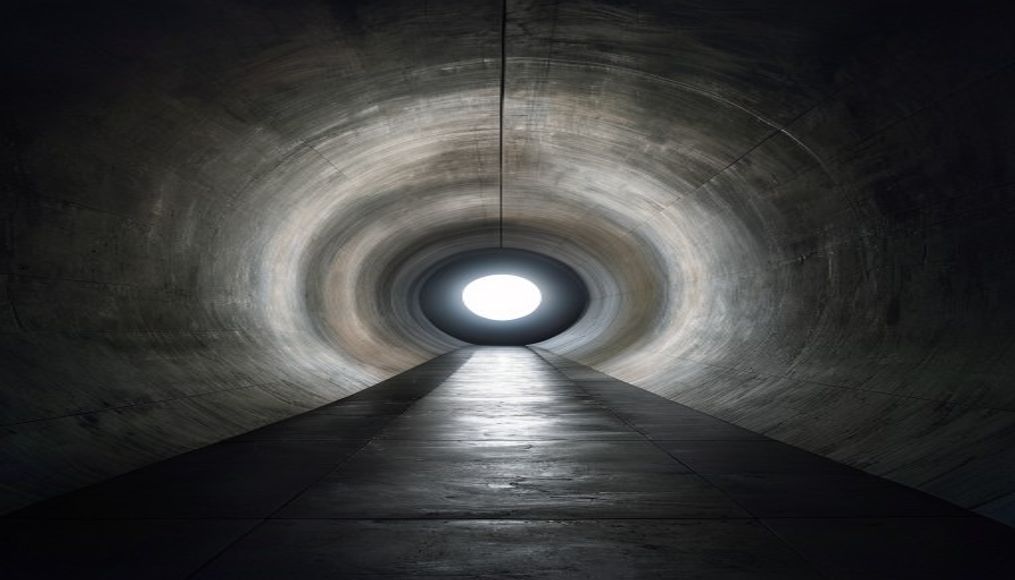
Oort cloud comets
1344×768 · AVIF · CC BY 4.0

The Oort Cloud is the most distant region of the Solar System, home to billions of comets that occasionally visit the inner planets.
About this subject
The Oort Cloud is a hypothetical structure surrounding the Solar System at distances between 2,000 and 200,000 astronomical units (AU) from the Sun. It was proposed by Dutch astronomer Jan Oort in 1950 to explain the origin of long-period comets such as Hale-Bopp and Hyakutake. Unlike the Kuiper Belt, which extends from 30 to 50 AU, the Oort Cloud is spherical and much more extensive, potentially containing trillions of cometary nuclei with diameters larger than 1 km.
Comets from the Oort Cloud have extremely eccentric orbits and may take thousands or even millions of years to complete one revolution around the Sun. When a gravitational perturbation, such as a passing star or galactic tide, alters their trajectory, they can be sent toward the inner Solar System. It is believed that the Oort Cloud formed from debris left over from the formation of the giant planets, which were ejected to great distances by gravitational interactions.
Despite its theoretical importance, the Oort Cloud has never been directly observed due to its vast distance and low luminosity. Its existence is inferred from comet orbit studies and dynamical simulations. Knowledge of this region helps scientists understand the primitive composition of the Solar System and the processes that led to its current configuration. Future missions, such as the Interstellar Probe, may provide more precise data about this remote frontier.
Frequently Asked Questions
How far away is the Oort Cloud from the Sun?
The Oort Cloud starts at about 2,000 AU and may extend up to 200,000 AU from the Sun. One AU is the average distance between Earth and the Sun, roughly 150 million kilometers.
How do Oort Cloud comets reach the inner Solar System?
Gravitational perturbations, such as passing stars or the galactic tide, can alter the orbits of Oort Cloud objects, causing them to fall toward the Sun.
Why has the Oort Cloud never been photographed?
It is extremely distant, and its constituent objects are small and dark, reflecting little sunlight. They are also spread over a vast region, making direct detection unfeasible with current technology.
Direct URL
https://pub-c7d6a6ea828543ac903a74a341ccb2e1.r2.dev/imagens/oort-cloud-comets-fine-art-photography-p1.avifHow to credit
Include a visible link back to UtilizAí. Copy one of the snippets below:
<a href="https://xn--utiliza-eza.com/en/midia/imagens/oort-cloud-comets-fine-art-photography-p1">Oort cloud comets</a> by <a href="https://xn--utiliza-eza.com">UtilizAí</a>, licensed under <a href="https://creativecommons.org/licenses/by/4.0/">CC BY 4.0</a>.
[Oort cloud comets](https://xn--utiliza-eza.com/en/midia/imagens/oort-cloud-comets-fine-art-photography-p1) by [UtilizAí](https://xn--utiliza-eza.com), CC BY 4.0
License: CC-BY-4.0