Olive press traditional stone
1344×768 · AVIF · CC BY 4.0
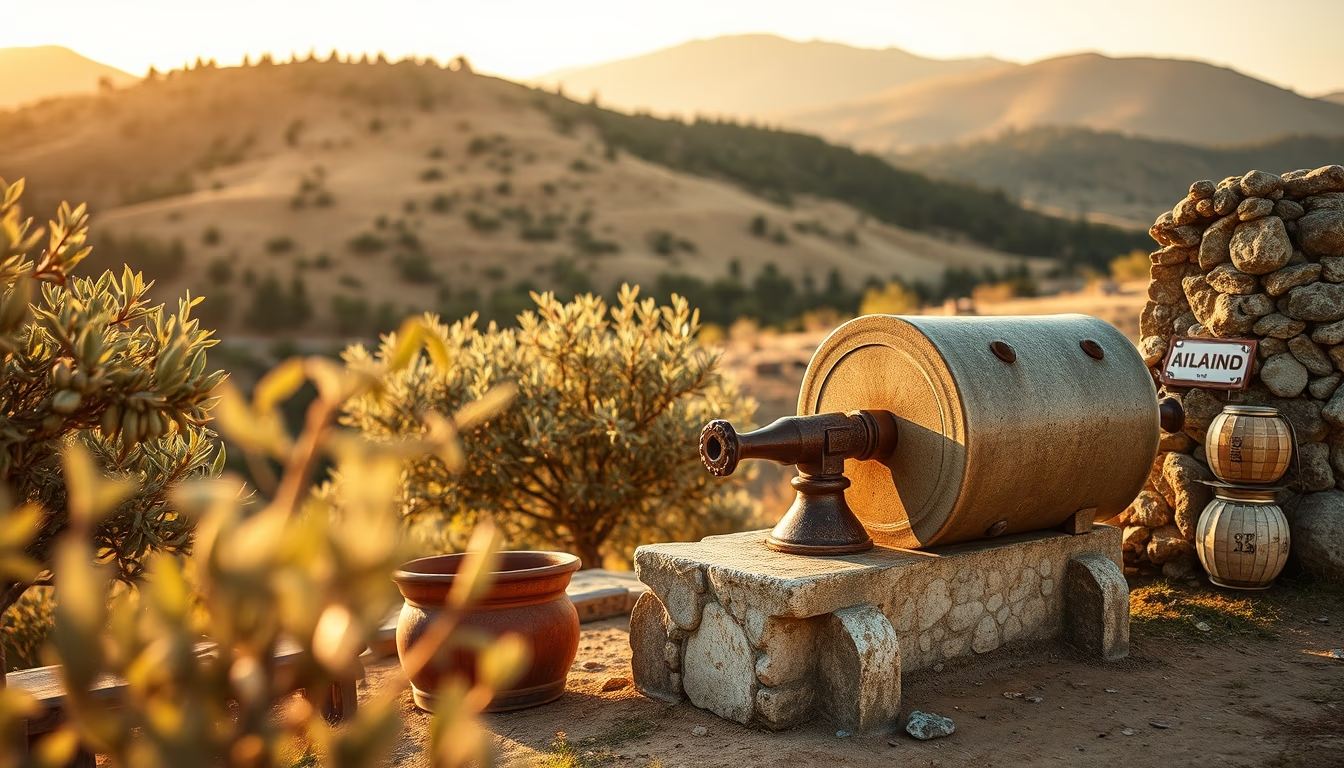
Traditional stone press used for centuries in olive oil production, a symbol of Mediterranean culture and artisanal agriculture.
About this subject
Traditional stone presses, also known as stone mills or olive crushers, are ancient devices used for extracting olive oil. Their origins trace back to Mediterranean civilizations such as the Phoenicians, Greeks, and Romans. The process involves crushing olives with a large rotating stone wheel, typically powered by animal or human force, creating a paste that is then pressed to separate the oil. This artisanal method preserves the flavor and nutritional properties of the oil, and is still valued in small-scale production in Italy, Greece, Portugal, and Spain.
In Brazil, stone presses are less common but can be found among Italian and Portuguese immigrant communities that maintain the tradition. The town of Santa Maria da Vitória, in Bahia, houses a historic stone mill from the 19th century used to produce palm oil (azeite de dendê). The stone press also holds strong tourist appeal, often photographed during travels to rural Italy and Greece, where olive groves and wineries offer guided tours.
The cultural significance of this equipment extends beyond production: it symbolizes humanity's connection to the land and rural sustainability. In many regions, olive harvesting and pressing are community events, celebrated with festivals and rituals. The stone press enables low-temperature extraction, preserving fatty acids and antioxidants in the oil, resulting in high-quality olive oil. Today, with industrialization, stone presses are recognized as historical heritage and symbols of resistance for family farming.
Frequently Asked Questions
How does a traditional stone olive press work?
A traditional stone press uses a large rotating stone wheel to crush olives into a paste, which is then placed in bags and pressed to extract oil. The process is slow and manual but preserves the original flavor.
Where can I see a stone press in operation today?
They can be found in olive-producing regions like Italy, Greece, Portugal, and Spain, often on rural properties open to visitors. In Brazil, historical examples exist in immigrant communities, such as Santa Maria da Vitória (Bahia).
What is the difference between stone-pressed and industrial olive oil?
Stone-pressed olive oil is cold-extracted without heat or chemicals, retaining nutrients and flavor. Industrial methods use faster thermal and mechanical processes, sometimes compromising quality.
Direct URL
https://pub-c7d6a6ea828543ac903a74a341ccb2e1.r2.dev/imagens/olive-press-traditional-stone-travel-photography-p2.avifHow to credit
Include a visible link back to UtilizAí. Copy one of the snippets below:
<a href="https://xn--utiliza-eza.com/en/midia/imagens/olive-press-traditional-stone-travel-photography-p2">Olive press traditional stone</a> by <a href="https://xn--utiliza-eza.com">UtilizAí</a>, licensed under <a href="https://creativecommons.org/licenses/by/4.0/">CC BY 4.0</a>.
[Olive press traditional stone](https://xn--utiliza-eza.com/en/midia/imagens/olive-press-traditional-stone-travel-photography-p2) by [UtilizAí](https://xn--utiliza-eza.com), CC BY 4.0
License: CC-BY-4.0