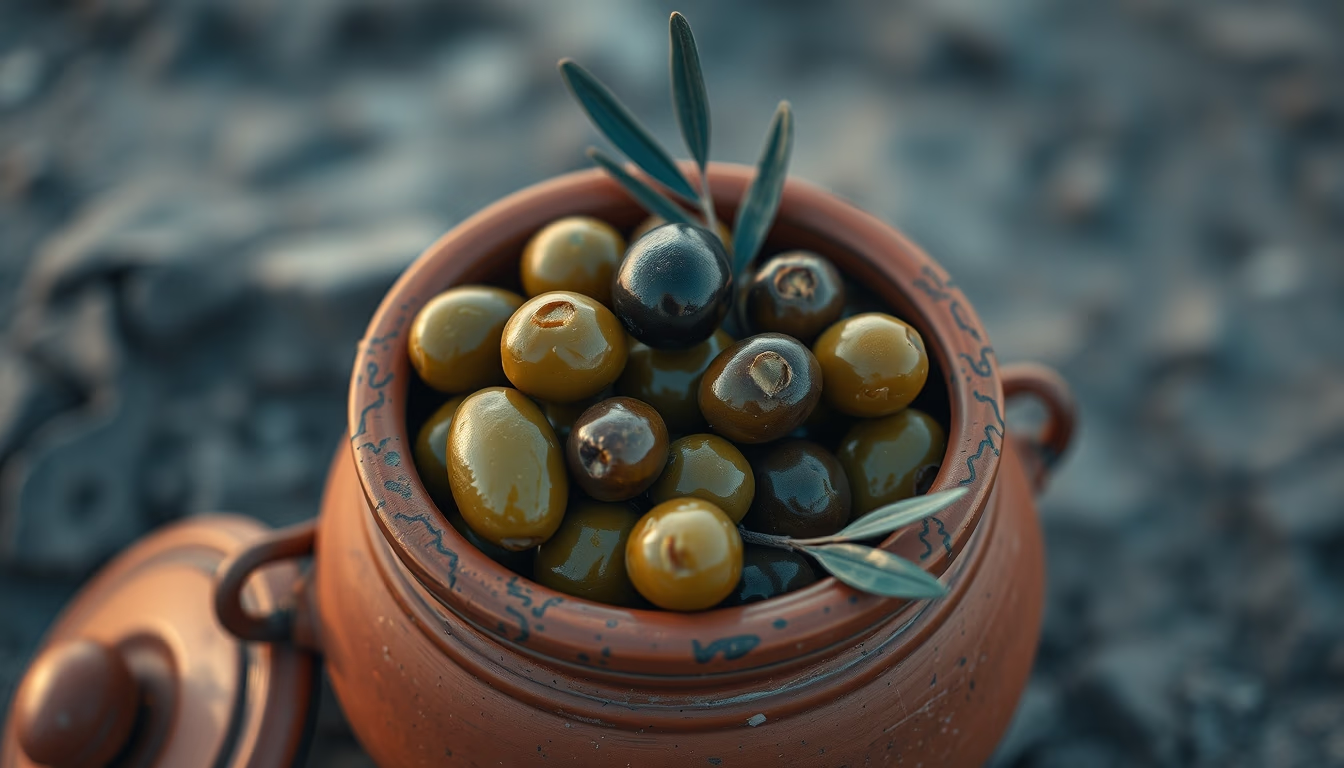
Olive press traditional stone
1344×768 · AVIF · CC BY 4.0

The traditional stone olive press is an ancient device used for extracting olive oil, essential in Mediterranean culture.
About this subject
The stone olive press is one of the oldest methods of olive oil extraction, dating back over 5,000 years. Civilizations such as the Minoans, Greeks, and Romans used large stone wheels to crush olives, extracting oil in a handmade process. The process begins with grinding olives on a stone mill, usually powered by animal or human traction. The resulting paste is then pressed in natural fiber baskets, allowing the oil to separate from water and solid residues.
This technique, known as cold extraction, preserves the organoleptic characteristics of olive oil, such as flavor and aroma, and maintains natural antioxidants. The stone used is typically granite or basalt, chosen for its hardness and its lack of flavor alteration. In regions like Andalusia in Spain and Tuscany in Italy, these presses are still used in artisanal and tourist productions, representing a cultural heritage.
Despite industrialization, the traditional stone press remains a symbol of quality and tradition. Many producers believe the manual method gives a unique character to the oil, valued by chefs and consumers. In Portugal, for example, olive oil produced in stone mills is certified as a protected designation of origin product. The slow movement of the stone and gradual pressing are crucial to extract maximum flavor without heating the product.
Interestingly, the term 'extra virgin olive oil' can only be applied to oils extracted mechanically, without chemical solvents, exactly as in the stone press. Studies show that stone grinding produces less oxidation than metal crushers, resulting in a more stable oil. Today, stone presses are preserved in museums and historic farms, and their operation is often demonstrated at agricultural fairs, keeping an ancient tradition alive.
Frequently Asked Questions
How does a traditional stone olive press work?
The press uses a large stone wheel to crush olives into a paste. This paste is placed in baskets and pressed, separating the oil from water and solids. The process is done cold, without heating, to preserve the oil's qualities.
What is the origin of the stone olive press?
The technique dates back to antiquity, used by civilizations such as the Minoans, Greeks, and Romans over 5,000 years ago. It was common throughout the Mediterranean region and spread to other areas with the expansion of olive cultivation.
Is the stone press better than modern methods?
It depends on the goal. Modern methods are faster and produce higher volume, but the artisanal stone press is valued for extracting oils with more complex flavor and lower oxidation. Many artisan producers and connoisseurs consider stone-pressed olive oil superior in quality.
Direct URL
https://pub-c7d6a6ea828543ac903a74a341ccb2e1.r2.dev/imagens/olive-press-traditional-stone-long-exposure-p9.avifHow to credit
Include a visible link back to UtilizAí. Copy one of the snippets below:
<a href="https://xn--utiliza-eza.com/en/midia/imagens/olive-press-traditional-stone-long-exposure-p9">Olive press traditional stone</a> by <a href="https://xn--utiliza-eza.com">UtilizAí</a>, licensed under <a href="https://creativecommons.org/licenses/by/4.0/">CC BY 4.0</a>.
[Olive press traditional stone](https://xn--utiliza-eza.com/en/midia/imagens/olive-press-traditional-stone-long-exposure-p9) by [UtilizAí](https://xn--utiliza-eza.com), CC BY 4.0
License: CC-BY-4.0