Olive press traditional stone
1344×768 · AVIF · CC BY 4.0
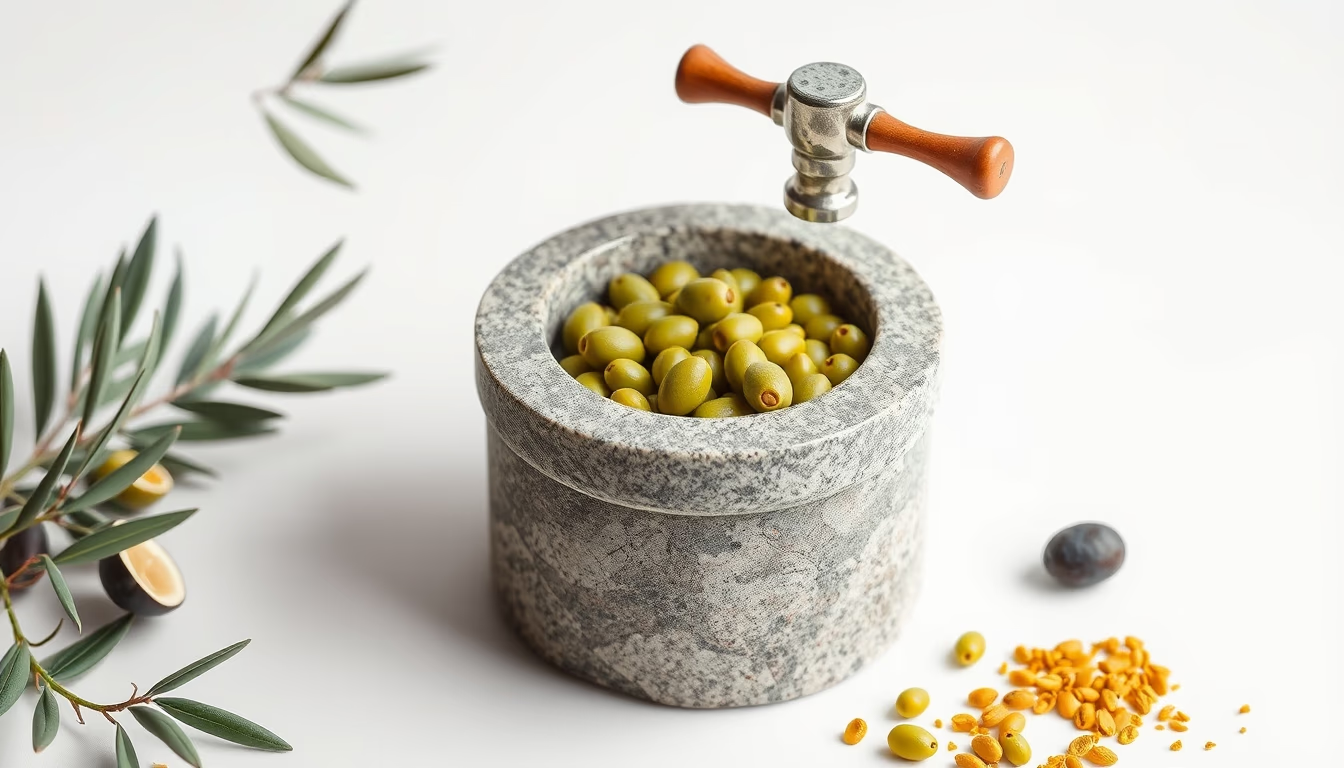
Traditional stone olive press, an ancient method of oil extraction combining rustic engineering and ancestral wisdom.
About this subject
The traditional stone olive press is one of the oldest tools in Mediterranean agriculture, with evidence of use dating back over 5,000 years. This equipment, known as 'mó' or 'lagar' in many regions, works with a large stone wheel that rotates over a stone base, crushing olives into a paste. From this paste, olive oil is extracted by pressure or decantation.
The technique spread across the Mediterranean basin, from ancient Greece to the Roman Empire, becoming fundamental to local economies and cultures. In Italy, for instance, stone presses are still found in family-run olive groves in Tuscany and Umbria, producing high-quality extra virgin olive oils. In Brazil, Italian immigration brought this knowledge to the South, especially in Rio Grande do Sul, where small producers maintain the tradition.
Compared to modern hydraulic presses, the stone press is slower and yields less oil, but many advocates argue that the resulting oil is more flavorful and better preserves antioxidant compounds. The cold-press process common in this method avoids heating the paste, retaining nutritional properties. Additionally, the use of stone gives a unique texture and aroma, prized by chefs and consumers.
Interestingly, the stone press also appears in historical contexts as a symbol of resistance and sustainability. In regions like Andalusia, in Spain, some centuries-old presses have been turned into living museums, attracting tourists interested in artisanal processes. The preservation of these techniques is an intangible cultural heritage, recognized by UNESCO in certain manifestations.
Frequently Asked Questions
How does a traditional stone olive press work?
A large stone wheel is turned manually or by animal power over a stone base, crushing the olives. The resulting paste is then pressed to extract the oil, which is separated by decantation or basic centrifugation.
What is the difference between oil from a stone press and a hydraulic press?
The stone press is slower and yields lower volume, but keeps a low temperature (cold process), better preserving aromas and antioxidants. The oil tends to be more full-bodied and flavorful, while modern presses are more efficient and faster.
Where is the traditional stone press still used today?
In small family farms in Italy (Tuscany, Umbria), Spain (Andalusia), Greece, and Portugal. In Brazil, it is found in Italian immigrant communities in the South, especially in Rio Grande do Sul.
Direct URL
https://pub-c7d6a6ea828543ac903a74a341ccb2e1.r2.dev/imagens/olive-press-traditional-stone-commercial-product-photography-p1.avifHow to credit
Include a visible link back to UtilizAí. Copy one of the snippets below:
<a href="https://xn--utiliza-eza.com/en/midia/imagens/olive-press-traditional-stone-commercial-product-photography-p1">Olive press traditional stone</a> by <a href="https://xn--utiliza-eza.com">UtilizAí</a>, licensed under <a href="https://creativecommons.org/licenses/by/4.0/">CC BY 4.0</a>.
[Olive press traditional stone](https://xn--utiliza-eza.com/en/midia/imagens/olive-press-traditional-stone-commercial-product-photography-p1) by [UtilizAí](https://xn--utiliza-eza.com), CC BY 4.0
License: CC-BY-4.0