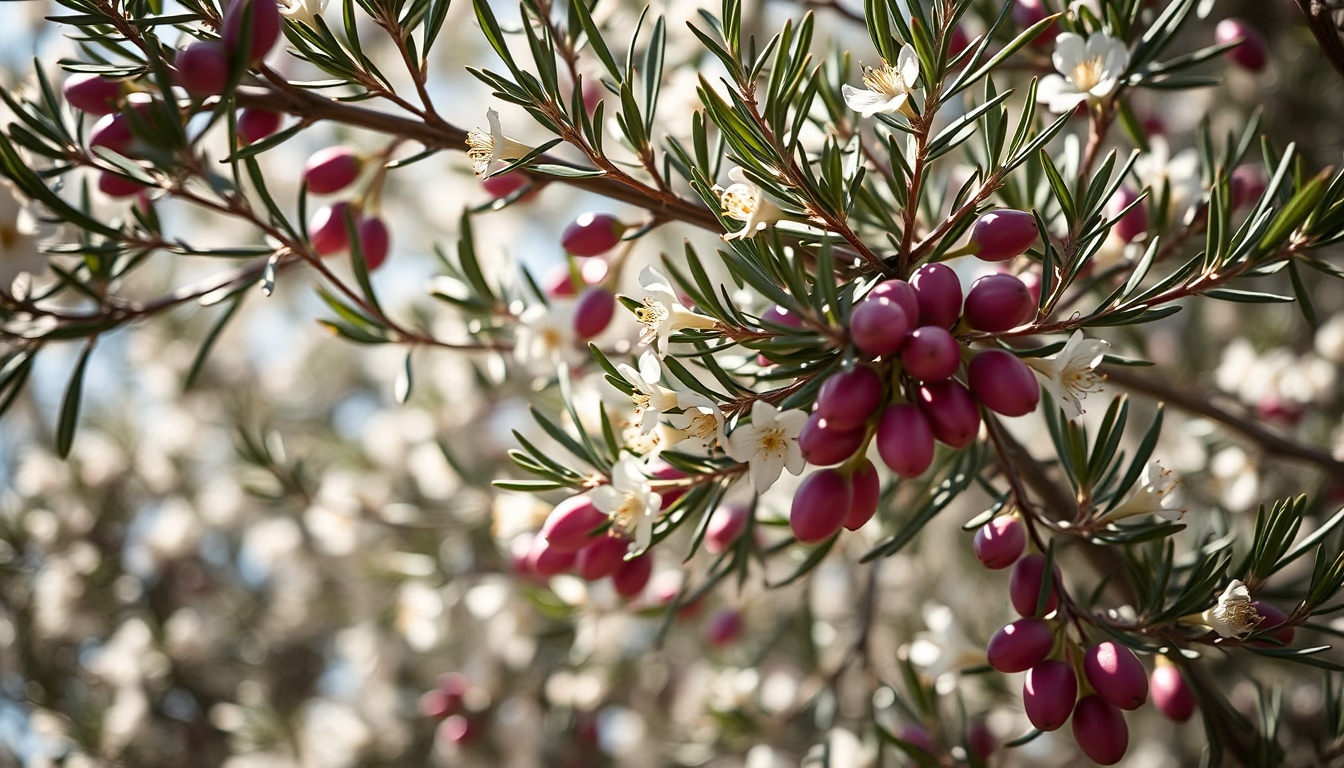
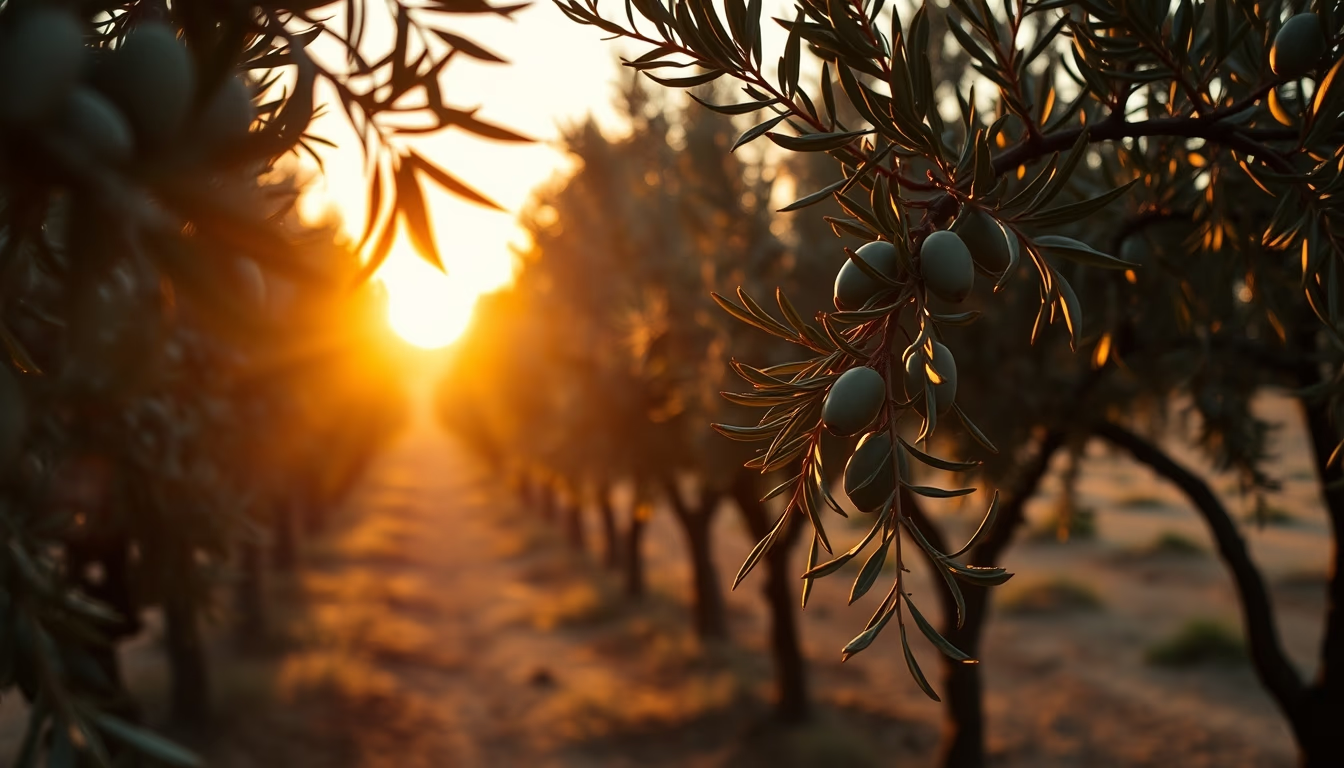
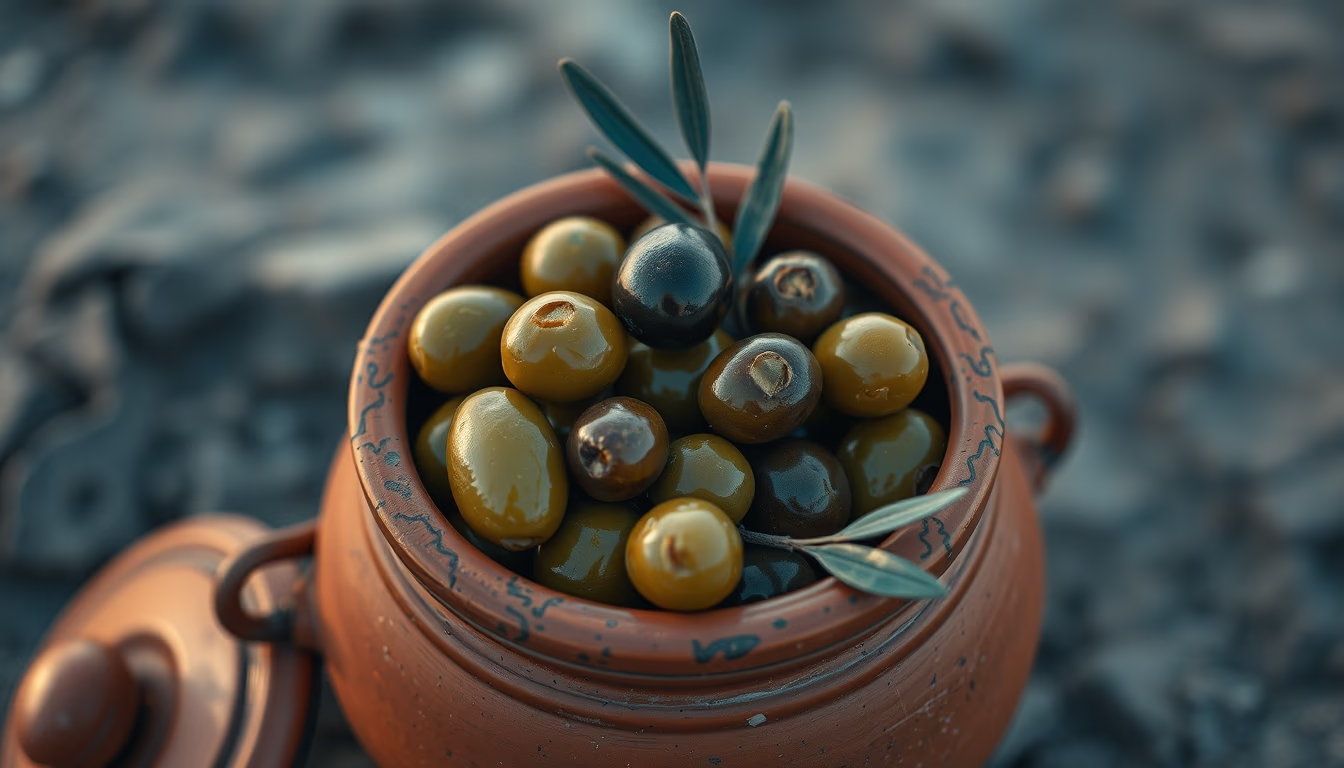
Olive branches with green olives
1344×768 · AVIF · CC BY 4.0
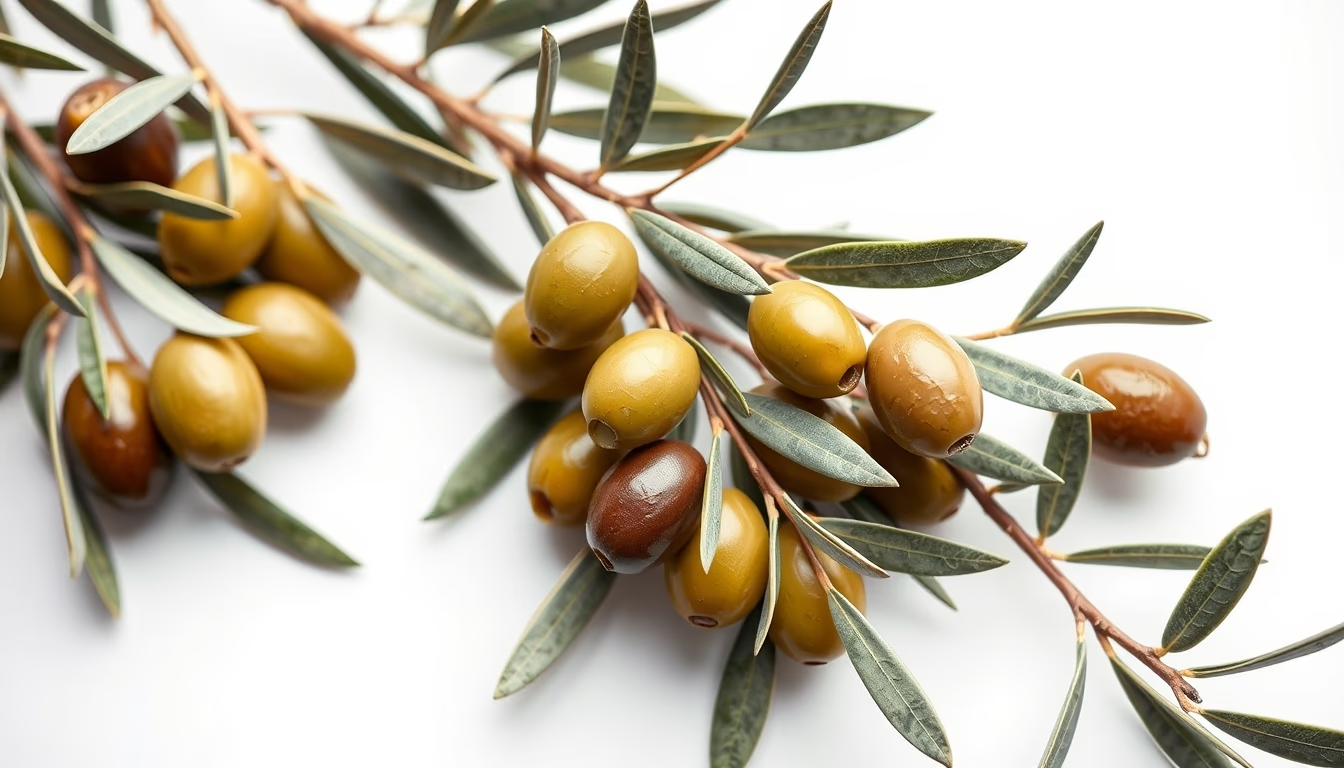
Olive branches with green olives symbolize peace and produce olive oil, cultivated for millennia in the Mediterranean region.
About this subject
Olive trees, Olea europaea, have been cultivated for over 6,000 years, originating in the Eastern Mediterranean. Green olives are harvested before full ripeness, offering a bitter taste and firm texture, ideal for pickling and virgin olive oil production. The most common table olive variety is Manzanilla from Spain, but hundreds of cultivars exist adapted to different soils and climates. The olive branch is a universal peace symbol, featured on the UN flag and in biblical and Greek narratives.
Olive cultivation requires a temperate climate with mild winters and dry summers. Leading producers include Spain, Italy, Greece, and Portugal. In Brazil, olive growing is recent, concentrated in Rio Grande do Sul and Serra da Mantiqueira, with award-winning oils. Green olives are rich in monounsaturated fats, vitamin E, and antioxidants, supporting heart health and reducing inflammation.
Harvesting green olives occurs between September and November in the Northern Hemisphere, typically by hand or mechanical shakers to preserve quality. After harvest, they undergo curing to remove oleuropein (bitter compound) via water, brine, or lye. Each method yields unique flavor and texture. Brine-cured green olives are common in cheese platters and appetizers.
Extra virgin olive oil from green olives tends to be fruitier and spicier, with herbal and almond notes. Oil classification depends on acidity and sensory analysis. Brazil imports most pickled green olives, mainly from Spain and Peru, but domestic oil consumption is rising with local production growth.
Frequently Asked Questions
What is the difference between green and black olives?
Green olives are harvested before full ripeness, firmer and more bitter. Black olives are harvested ripe, milder and softer. Both come from the same tree at different stages.
How are green olives processed for consumption?
They undergo curing to remove bitterness: immersion in water, brine (fermentation), or lye (chemical treatment). Brine curing is the most traditional, giving characteristic flavor.
Where are olive trees grown in Brazil?
Mainly in Rio Grande do Sul and Serra da Mantiqueira (MG/RJ/SP). The mild climate and altitude favor cultivation, producing award-winning extra virgin olive oils.
Direct URL
https://pub-c7d6a6ea828543ac903a74a341ccb2e1.r2.dev/imagens/olive-branches-with-green-olives-commercial-product-photography-p6.avifHow to credit
Include a visible link back to UtilizAí. Copy one of the snippets below:
<a href="https://xn--utiliza-eza.com/en/midia/imagens/olive-branches-with-green-olives-commercial-product-photography-p6">Olive branches with green olives</a> by <a href="https://xn--utiliza-eza.com">UtilizAí</a>, licensed under <a href="https://creativecommons.org/licenses/by/4.0/">CC BY 4.0</a>.
[Olive branches with green olives](https://xn--utiliza-eza.com/en/midia/imagens/olive-branches-with-green-olives-commercial-product-photography-p6) by [UtilizAí](https://xn--utiliza-eza.com), CC BY 4.0
License: CC-BY-4.0