Oil slick rainbow
1344×768 · AVIF · CC BY 4.0
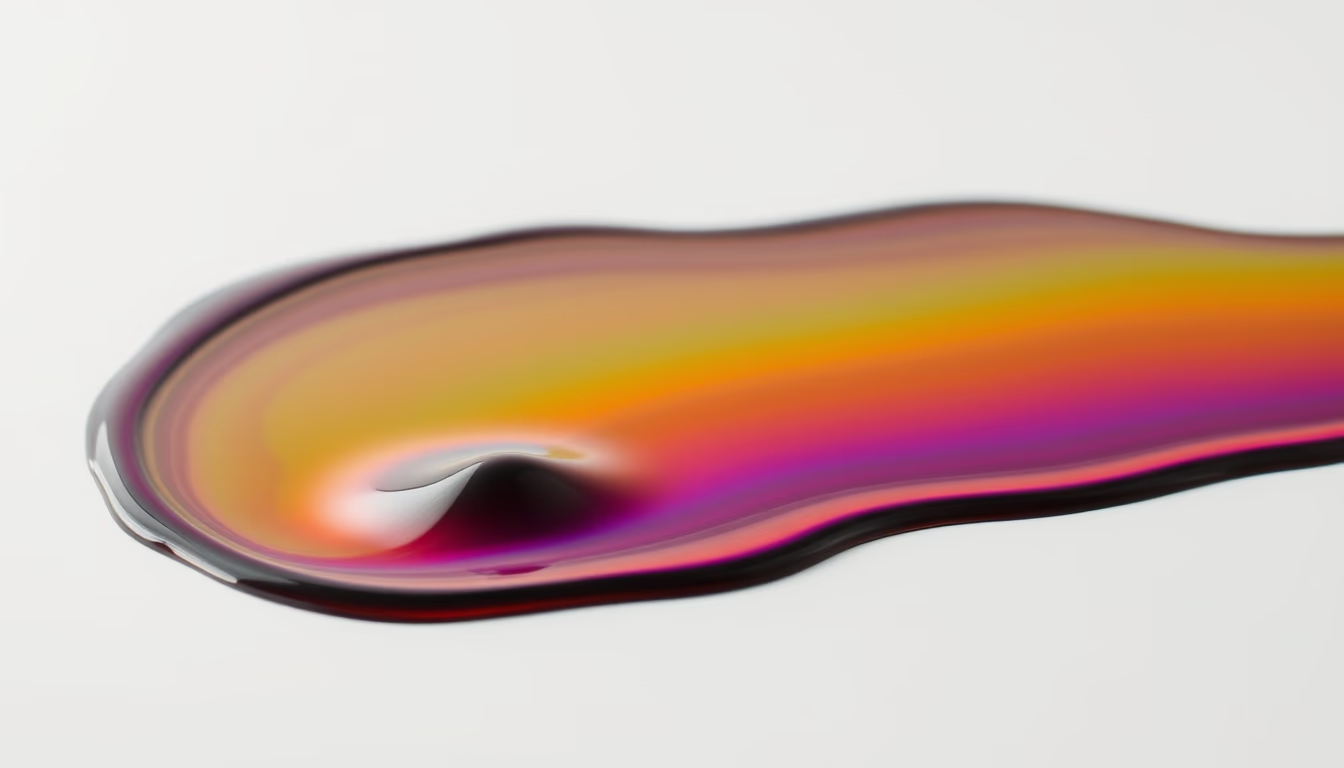
An oil slick on water displays rainbow colors due to light interference in thin hydrocarbon layers, a phenomenon known as iridescence.
About this subject
The rainbow effect on oil slicks, known as iridescence, occurs when white light strikes a thin film of hydrocarbons on the water surface. This film has a variable thickness, on the order of micrometers, and acts as a thin layer that reflects and refracts light at different angles. The light waves returning to the observer undergo constructive or destructive interference depending on the wavelength and local film thickness, resulting in a spectrum of colors reminiscent of a rainbow.
Such slicks can form naturally from oil seeps on the ocean floor or, more commonly, from accidental spills in parking lots, streets, and water bodies. However, not all iridescence on water is caused by oil; soap films or organic pollutants can produce a similar effect. In the case of oil, the layer is composed of aromatic and aliphatic hydrocarbons, which have low surface tension and spread quickly over water.
Despite their visual beauty, oil slicks pose a significant environmental hazard. They can suffocate aquatic life by blocking oxygen exchange at the water's surface and poison organisms. Iridescence serves as a visual indicator of pollutants, but its absence does not imply safety, as thicker oils may form an opaque, dark layer. In abstract photography, the contrast between vibrant colors and the dark water background creates striking compositions, often exploited in editorial and commercial stock photography.
Frequently Asked Questions
Why does oil on water form rainbow colors?
Oil forms a thin film on water. White light reflects from both the top and bottom surfaces of this film, and the light waves interfere with each other. Depending on the film thickness, certain wavelengths are reinforced (colors) and others canceled, creating an iridescent effect.
Do these colors indicate environmental danger?
Yes, iridescence usually indicates the presence of oil or other pollutants in the water. Although it may appear beautiful, the oil can be toxic to aquatic life and harm the ecosystem. The film thickness and colors can give an idea of the pollutant amount.
What thickness of oil layer produces the effect?
The typical thickness for visible iridescence is between 0.1 and 1 micrometer (100 to 1000 nanometers). Different colors appear at different thicknesses: for example, red appears in thinner layers and blue in slightly thicker layers.
Direct URL
https://pub-c7d6a6ea828543ac903a74a341ccb2e1.r2.dev/imagens/oil-slick-rainbow-commercial-product-photography-p1.avifHow to credit
Include a visible link back to UtilizAí. Copy one of the snippets below:
<a href="https://xn--utiliza-eza.com/en/midia/imagens/oil-slick-rainbow-commercial-product-photography-p1">Oil slick rainbow</a> by <a href="https://xn--utiliza-eza.com">UtilizAí</a>, licensed under <a href="https://creativecommons.org/licenses/by/4.0/">CC BY 4.0</a>.
[Oil slick rainbow](https://xn--utiliza-eza.com/en/midia/imagens/oil-slick-rainbow-commercial-product-photography-p1) by [UtilizAí](https://xn--utiliza-eza.com), CC BY 4.0
License: CC-BY-4.0