Oil paint palette artist
1344×768 · AVIF · CC BY 4.0
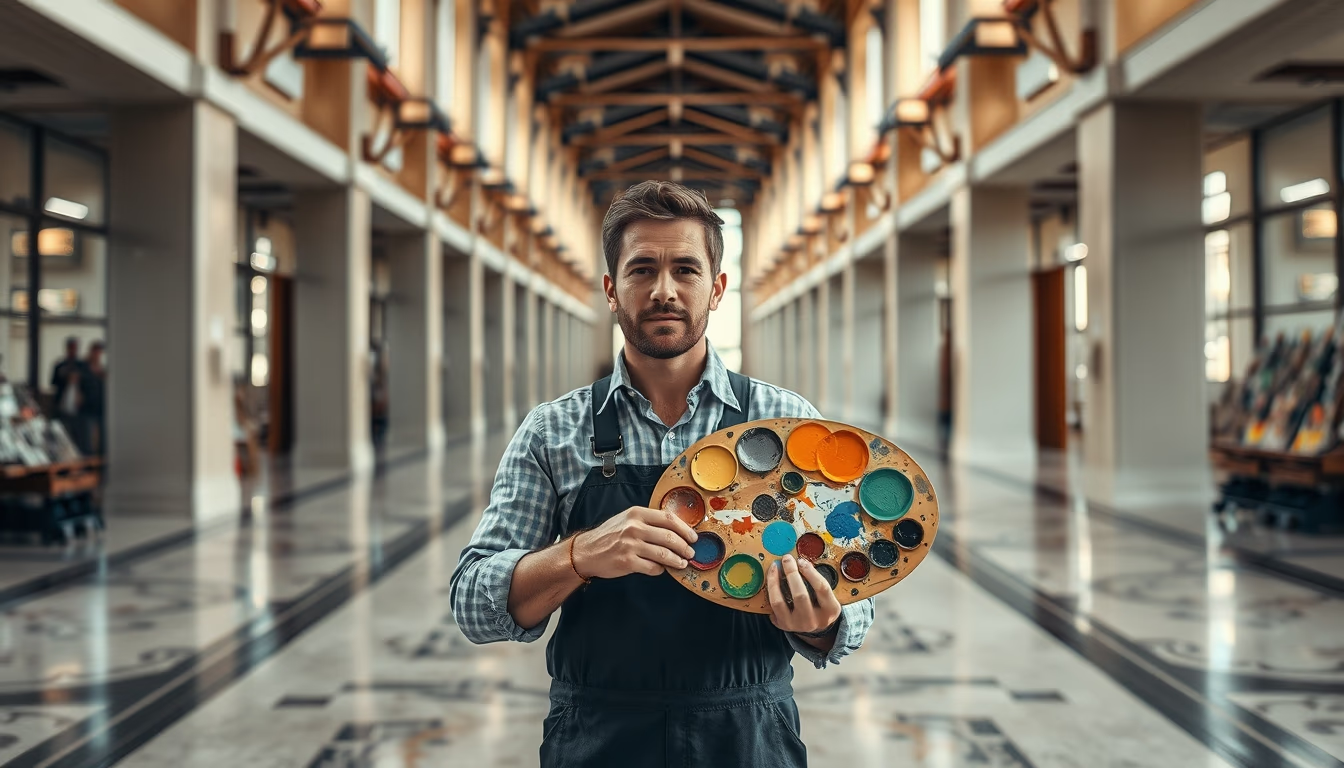
The oil paint palette is the essential tool for every painter, used to mix and organize colors from the Renaissance to contemporary art.
About this subject
The oil paint palette is a fundamental support in painting practice, used by fine artists, illustrators, and architectural photographers who employ traditional techniques. Its history dates back to the 15th century, when oil painting became dominant in Europe. Early palettes were made of hardwoods like walnut or mahogany, with polished surfaces that did not absorb oil. Over time, variations in porcelain, glass, and plastic emerged, each offering specific advantages for different paint types and mixing techniques.
In practice, color arrangement on the palette follows ergonomic and chromatic principles. Artists typically organize paints in spectral order, leaving spaces for mixtures. The palette also reflects the painter's personality: some prefer few colors, others a wide range. Masters like Leonardo da Vinci, Rembrandt, and Van Gogh used very distinct palettes, studied today to understand their chromatic approaches.
In the context of architectural photography, the oil paint palette can be used in manual representation techniques, such as watercolor or oil on canvas, to capture the lighting and texture of buildings. Artists specialized in architecture use palettes with preselected colors to ensure fidelity to the nuances of stone, concrete, and glass. Moreover, the palette itself, with its stains and signs of use, has become an aesthetic object, often photographed as a symbol of the creative process.
Trivia: disposable paper palettes were invented in the 20th century for easy cleaning. Glass palettes are popular among painters needing an inert surface for precise mixing. At auctions, historical palettes of famous artists fetch high prices, such as Jackson Pollock's, sold for over $50,000.
Frequently Asked Questions
What is the best material for an oil paint palette?
It depends on preference. Wooden palettes (walnut, mahogany) are traditional and durable. Glass palettes are easy to clean and inert. Plastic palettes are lightweight and inexpensive. For beginners, disposable paper palettes are practical.
How to clean an oil paint palette?
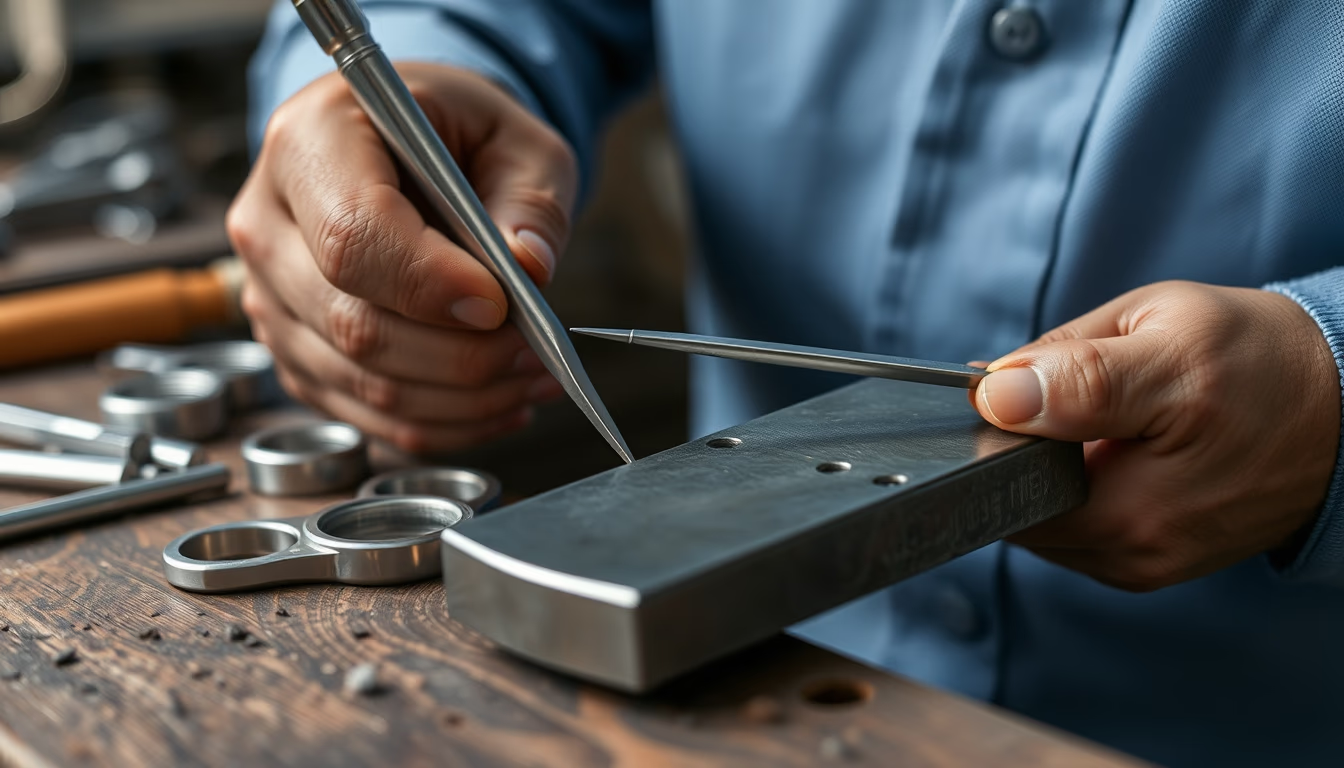
Use solvent like turpentine or vegetable oil to remove fresh paint. For dried residue, scrape with a palette knife. Glass palettes can be cleaned with a razor blade. Avoid abrasive products.
How to arrange colors on the palette?
Organize from light to dark or in spectral order. Leave a central area for mixing. Keep most-used colors near the edge for easy access. Position should be comfortable for brush movement.
Direct URL
https://pub-c7d6a6ea828543ac903a74a341ccb2e1.r2.dev/imagens/oil-paint-palette-artist-architectural-photography-p2.avifHow to credit
Include a visible link back to UtilizAí. Copy one of the snippets below:
<a href="https://xn--utiliza-eza.com/en/midia/imagens/oil-paint-palette-artist-architectural-photography-p2">Oil paint palette artist</a> by <a href="https://xn--utiliza-eza.com">UtilizAí</a>, licensed under <a href="https://creativecommons.org/licenses/by/4.0/">CC BY 4.0</a>.
[Oil paint palette artist](https://xn--utiliza-eza.com/en/midia/imagens/oil-paint-palette-artist-architectural-photography-p2) by [UtilizAí](https://xn--utiliza-eza.com), CC BY 4.0
License: CC-BY-4.0