Octopus coral camouflage
1344×768 · AVIF · CC BY 4.0
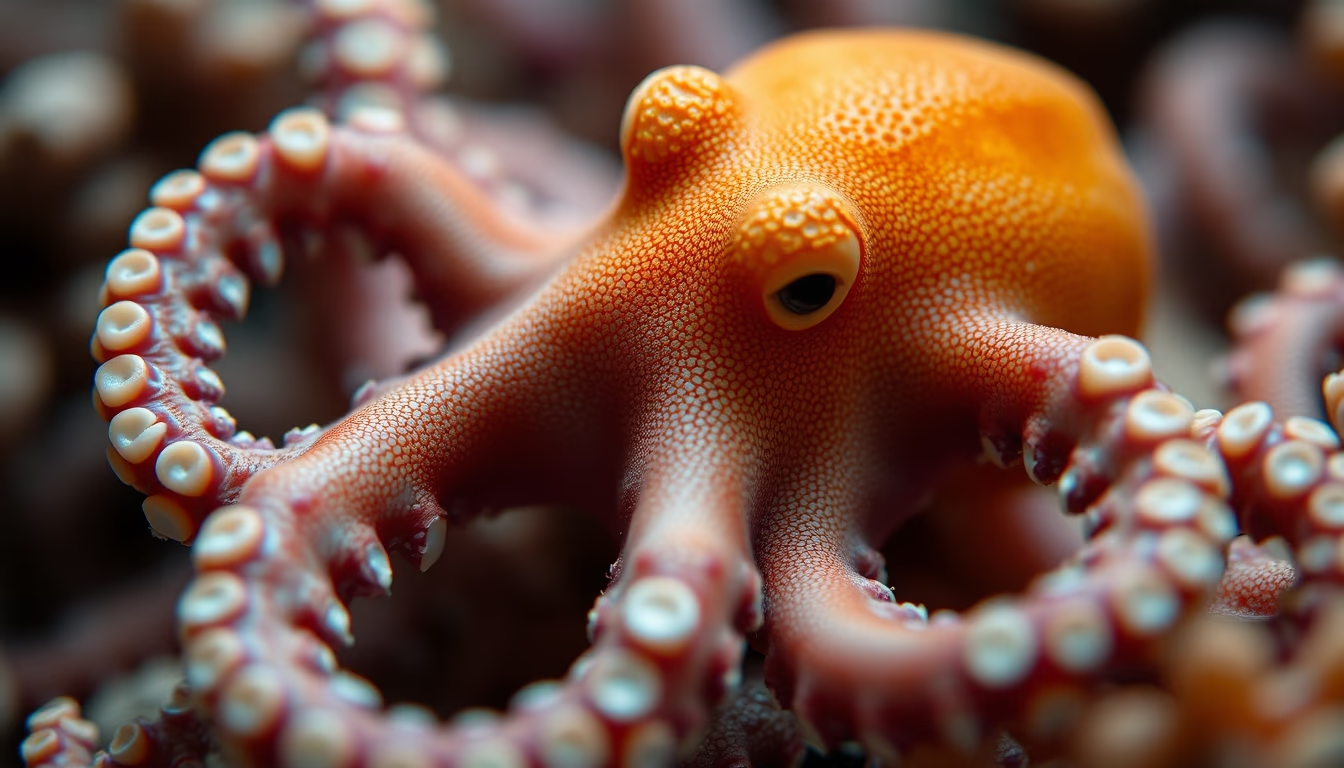
Octopuses are masters of camouflage, changing color and texture in milliseconds to hide among coral reefs.
About this subject
Octopuses belong to the order Octopoda and are renowned for their remarkable camouflage abilities. They possess specialized skin cells called chromatophores, which contain pigments and can expand or contract within milliseconds, enabling rapid color changes. Additionally, iridophores reflect light and leucophores scatter light, contributing to chromatic adaptation. Skin texture is altered by muscular papillae that can create bumps mimicking corals, algae, or rocks.
This ability is controlled by the nervous system and hormones. Octopuses can even camouflage while sleeping, as observed in some studies. Their skin contains light-sensitive proteins called opsins, which detect ambient light and help adjust camouflage without relying on the eyes. This evolutionary complexity makes the octopus one of the most adaptable animals in the ocean.
Camouflage is essential for octopus survival, as they are both predators and prey. In coral reefs, diverse environments, they hide from sharks, moray eels, and other predators while hunting crabs, mollusks, and fish. The mimic octopus (Thaumoctopus mimicus) is famous for imitating other species, such as lionfish and sea snakes, to avoid attacks.
Interestingly, octopuses also use camouflage for social communication, though they are typically solitary animals. They can display patterns indicating aggression or mating. Octopus intelligence is comparable to that of vertebrates, with problem-solving skills and tool use. These traits make camouflage not just a defense mechanism but a complex cognitive tool.
Frequently Asked Questions
How do octopuses change color so quickly?
Octopuses have chromatophores, pigment-containing cells surrounded by muscles. Contraction or relaxation of these muscles changes the pigment's visible area within milliseconds.
Can octopuses mimic other animals?
Yes, the mimic octopus can imitate up to 15 different species, including lionfish, sea snakes, and crabs, by altering color, texture, and movement.
Why is camouflage important for octopuses?
It helps them escape predators like sharks and moray eels, and allows them to approach prey undetected. It is also used in communication between individuals.
Direct URL
https://pub-c7d6a6ea828543ac903a74a341ccb2e1.r2.dev/imagens/octopus-coral-camouflage-macro-closeup-p6.avifHow to credit
Include a visible link back to UtilizAí. Copy one of the snippets below:
<a href="https://xn--utiliza-eza.com/en/midia/imagens/octopus-coral-camouflage-macro-closeup-p6">Octopus coral camouflage</a> by <a href="https://xn--utiliza-eza.com">UtilizAí</a>, licensed under <a href="https://creativecommons.org/licenses/by/4.0/">CC BY 4.0</a>.
[Octopus coral camouflage](https://xn--utiliza-eza.com/en/midia/imagens/octopus-coral-camouflage-macro-closeup-p6) by [UtilizAí](https://xn--utiliza-eza.com), CC BY 4.0
License: CC-BY-4.0