Octopus coral camouflage
1344×768 · AVIF · CC BY 4.0
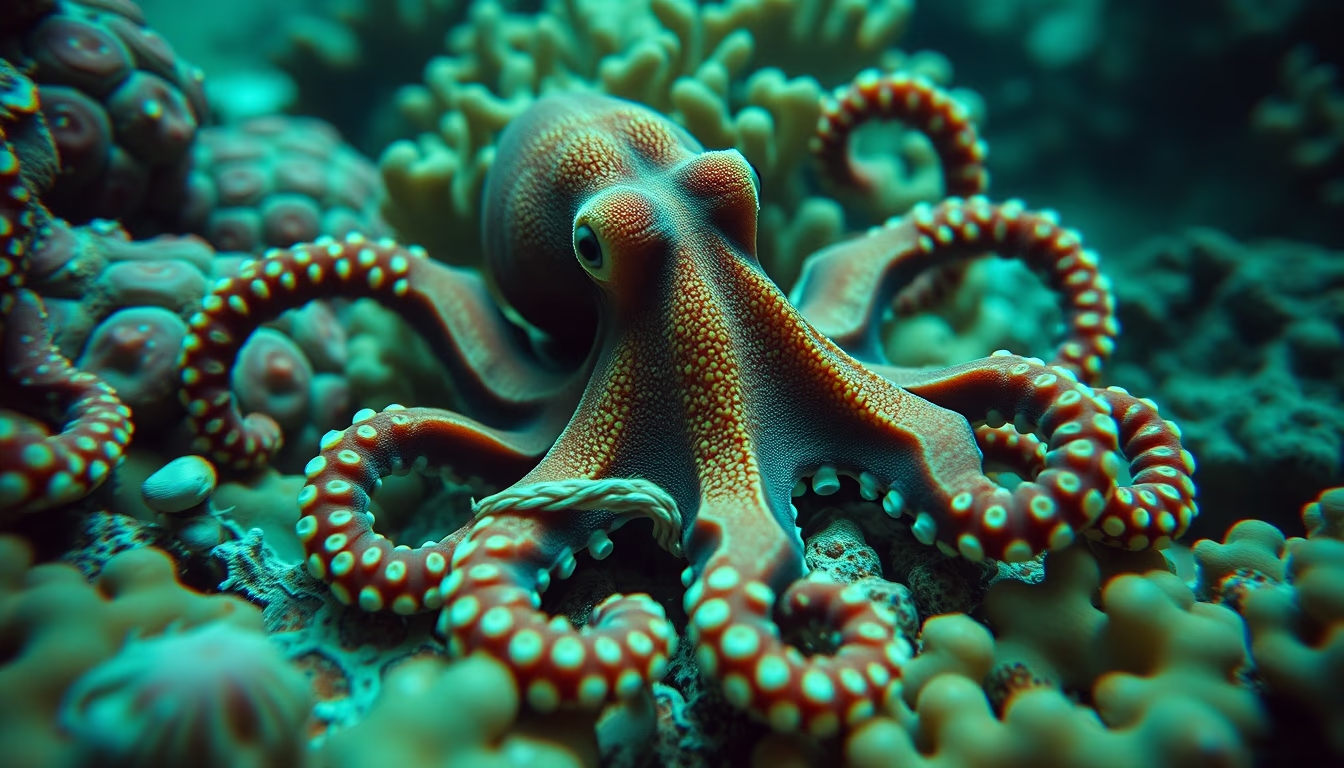
Octopuses camouflage against corals with impressive speed and precision, using specialized cells and advanced neural control.
About this subject
Octopuses (order Octopoda) are masters of dynamic camouflage, capable of changing skin color, pattern, and texture in milliseconds. This ability relies on chromatophores, iridophores, and leucophores, directly controlled by neurons. When positioned on or near corals, the octopus adjusts its appearance to match the visual complexity of the substrate, whether brain coral, staghorn coral, or mesophotic species.
Each coral forms a micro-ecosystem requiring specific mimicry. For instance, Acropora corals with branching structures and vivid colors are mimicked by octopuses in the Indo-Pacific region. In Caribbean reefs, species like Octopus briareus camouflage among massive corals such as Montastraea. Camouflage serves not only for predation but also to evade predators like moray eels and sharks.
Beyond color, octopuses control skin texture through muscular papillae, forming rough bumps to imitate algae or coral. Neurobiological studies show that the octopus brain processes visual and tactile information simultaneously, enabling real-time adjustments. This capability is considered among the most sophisticated in invertebrates.
Interestingly, an octopus's memory of a coral pattern can last days. In experiments, they recognize previously mimicked substrates and replicate the pattern efficiently. Camouflage in corals also protects the reefs, as octopuses act as predators of crabs and mollusks that damage coral structures.
Frequently Asked Questions
How can an octopus change color so quickly?
It uses chromatophore cells filled with pigment that expand or contract via muscles controlled by neurons. Visual cues from the environment trigger this response in milliseconds.
Do all octopuses camouflage in corals?
Most octopus species have camouflage abilities, but not all live in coral reefs. Benthic species like the common octopus (Octopus vulgaris) are specialists at blending with rocks and sand as well.
Is octopus camouflage the same as chameleon camouflage?
The key difference is that octopuses control camouflage via the central nervous system, while chameleons use hormones and take seconds to minutes. Octopuses are faster and more precise.
Direct URL
https://pub-c7d6a6ea828543ac903a74a341ccb2e1.r2.dev/imagens/octopus-coral-camouflage-lo-fi-disposable-camera-p1.avifHow to credit
Include a visible link back to UtilizAí. Copy one of the snippets below:
<a href="https://xn--utiliza-eza.com/en/midia/imagens/octopus-coral-camouflage-lo-fi-disposable-camera-p1">Octopus coral camouflage</a> by <a href="https://xn--utiliza-eza.com">UtilizAí</a>, licensed under <a href="https://creativecommons.org/licenses/by/4.0/">CC BY 4.0</a>.
[Octopus coral camouflage](https://xn--utiliza-eza.com/en/midia/imagens/octopus-coral-camouflage-lo-fi-disposable-camera-p1) by [UtilizAí](https://xn--utiliza-eza.com), CC BY 4.0
License: CC-BY-4.0