Octopus coral camouflage
1344×768 · AVIF · CC BY 4.0
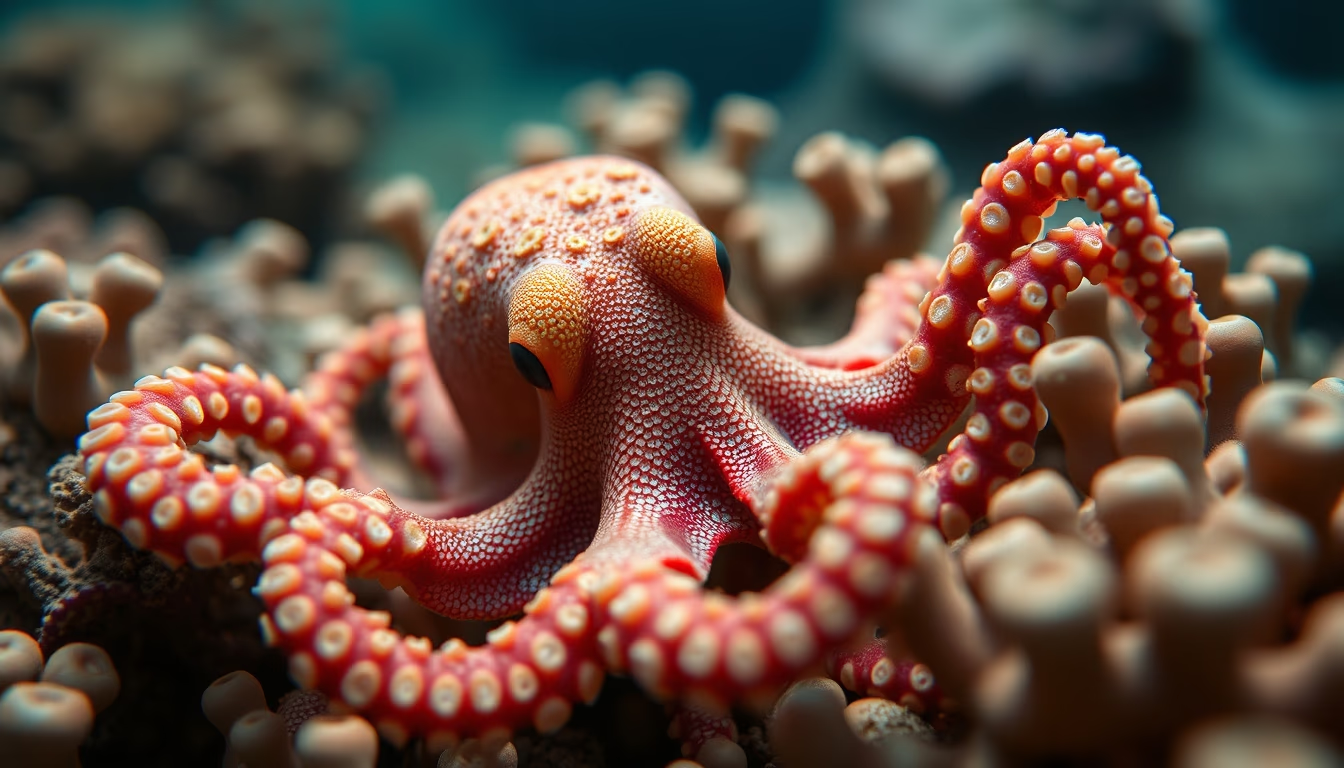
Octopuses are masters of camouflage on coral reefs, changing color and texture in milliseconds to blend into their surroundings.
About this subject
Octopuses are renowned for their exceptional camouflage abilities in marine environments, particularly on coral reefs. They belong to the family Octopodidae and are found in all oceans, with the highest diversity in tropical and subtropical waters. Camouflage is a critical evolutionary adaptation for avoiding predators and ambushing prey. An octopus can change its skin color thanks to specialized cells called chromatophores, which contain pigments and expand or contract under neural command. Additionally, it has cells called iridophores and leucophores that reflect light and help mimic complex patterns of the seafloor.
Skin texture is also modifiable through muscles that control small bumps called papillae. This allows the octopus to imitate not only colors but also the roughness of corals, algae, or rocks. Studies show that the octopus can visually assess its surroundings and adjust its appearance in less than a second. The common octopus (Octopus vulgaris), for example, can camouflage itself on various substrates, from sand to coral reefs. This skill is so refined that some octopuses can mimic the shape and movement of other animals, such as lionfish or sea snakes.
Interestingly, octopuses have dichromatic vision, seeing only shades of blue and yellow, but they can perceive light polarization, which may aid in camouflage. Camouflage is also influenced by the animal's mood: stressed octopuses may display more contrasting patterns. Besides defense, camouflage is used for hunting, allowing them to approach prey like crabs, mollusks, and small fish without detection. There are over 300 species of octopus, each with its own camouflage repertoire adapted to its specific habitat.
Frequently Asked Questions
How do octopuses change color so quickly?
They have chromatophores, pigment cells that expand or contract under neural control, allowing changes in milliseconds. They also use iridophores and leucophores to reflect light.
Is octopus camouflage only for protection from predators?
No. Besides defense, they use camouflage for hunting, approaching prey unnoticed. It can also be used in communication or to regulate temperature.
How many octopus species can camouflage?
All octopus species have some camouflage ability, but effectiveness varies. Reef-dwelling species tend to have more refined skills.
Direct URL
https://pub-c7d6a6ea828543ac903a74a341ccb2e1.r2.dev/imagens/octopus-coral-camouflage-documentary-photography-p2.avifHow to credit
Include a visible link back to UtilizAí. Copy one of the snippets below:
<a href="https://xn--utiliza-eza.com/en/midia/imagens/octopus-coral-camouflage-documentary-photography-p2">Octopus coral camouflage</a> by <a href="https://xn--utiliza-eza.com">UtilizAí</a>, licensed under <a href="https://creativecommons.org/licenses/by/4.0/">CC BY 4.0</a>.
[Octopus coral camouflage](https://xn--utiliza-eza.com/en/midia/imagens/octopus-coral-camouflage-documentary-photography-p2) by [UtilizAí](https://xn--utiliza-eza.com), CC BY 4.0
License: CC-BY-4.0