Octopus coral camouflage
1344×768 · AVIF · CC BY 4.0
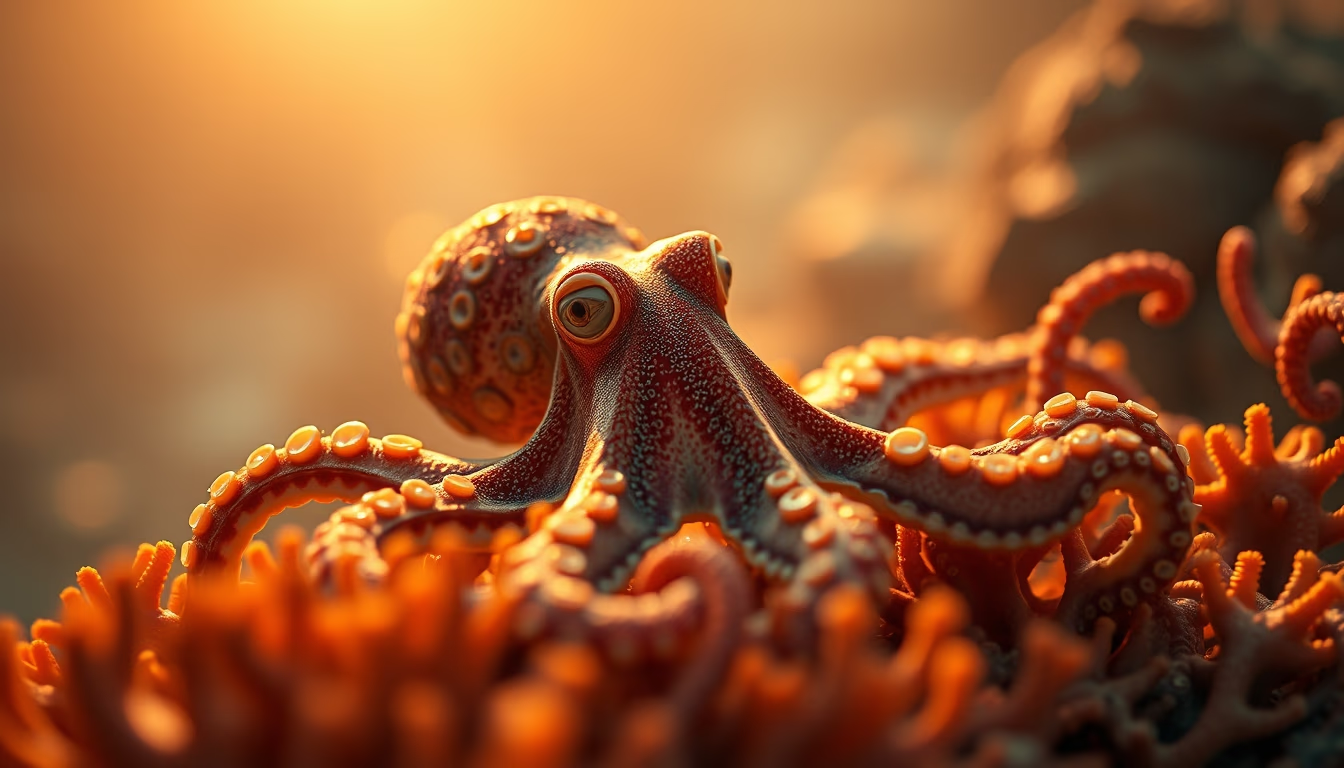
Octopuses are masters of camouflage, changing skin color, pattern, and texture in seconds to blend into corals and marine backgrounds.
About this subject
Octopuses (order Octopoda) possess one of the most sophisticated camouflage abilities in the animal kingdom. Thanks to specialized skin cells called chromatophores, iridophores, and leucophores, they can instantly alter body coloration and surface reflectivity. This ability is controlled by muscles and nerves that expand or contract chromatophores, allowing complex patterns such as stripes, spots, or textures that mimic algae, rocks, or corals. Beyond color, octopuses can modify skin texture through dermal papillae, forming bumps that replicate substrate roughness, such as coral.
The neural mechanism is extremely fast: changes occur in under a second. Studies indicate that octopuses do not rely solely on vision for camouflage; their skin contains light-sensitive proteins (opsins), suggesting it “sees” the environment locally and adjusts patterns without direct brain input. This is vital for avoiding predators like moray eels, sharks, and seals. On coral reefs, species such as the common octopus (Octopus vulgaris) and the blue-ringed octopus (Hapalochlaena) use camouflage for both hunting and defense.
Camouflage also plays a role in intraspecific communication. Octopuses may display contrasting patterns to signal aggression or mating. While hunting, they approach prey like crabs and shrimp almost invisibly, then strike rapidly. The ability to mimic not just the background but specific objects like shells or sea urchins has been documented. In captivity, octopuses can learn to match colors and textures to new environments, demonstrating behavioral plasticity.
From an evolutionary standpoint, octopus camouflage is a remarkable example of convergent adaptation in cephalopod mollusks. Unlike squid and cuttlefish, which use similar mechanisms, octopuses have greater textural manipulation. This adaptation is crucial for survival in reef ecosystems where predation is intense. The loss of an external shell millions of years ago was compensated by this intelligent skin, making octopuses one of the most successful invertebrates in the oceans.
Frequently Asked Questions
How does an octopus change color so quickly?
Octopuses have specialized cells called chromatophores containing pigment sacs, which are expanded or contracted by muscles controlled by nerves. The brain sends electrical signals that rearrange these pigments in milliseconds, enabling instant color and pattern changes.
Is octopus camouflage only visual or does it involve texture as well?
It involves both. In addition to color, octopuses alter skin texture using dermal papillae that can rise to mimic irregular surfaces such as corals, rocks, or algae. The combination of color and texture makes the camouflage highly realistic.
Can all octopuses camouflage equally well?
Most octopus species have camouflage abilities, but the degree varies. Species living on coral reefs or complex substrates tend to be more adept. The common octopus (Octopus vulgaris) is known for its versatile camouflage, while the blue-ringed octopus uses bold patterns for warning rather than concealment.
Direct URL
https://pub-c7d6a6ea828543ac903a74a341ccb2e1.r2.dev/imagens/octopus-coral-camouflage-cinematic-wide-shot-p3.avifHow to credit
Include a visible link back to UtilizAí. Copy one of the snippets below:
<a href="https://xn--utiliza-eza.com/en/midia/imagens/octopus-coral-camouflage-cinematic-wide-shot-p3">Octopus coral camouflage</a> by <a href="https://xn--utiliza-eza.com">UtilizAí</a>, licensed under <a href="https://creativecommons.org/licenses/by/4.0/">CC BY 4.0</a>.
[Octopus coral camouflage](https://xn--utiliza-eza.com/en/midia/imagens/octopus-coral-camouflage-cinematic-wide-shot-p3) by [UtilizAí](https://xn--utiliza-eza.com), CC BY 4.0
License: CC-BY-4.0