Obsidian black volcanic
1344×768 · AVIF · CC BY 4.0
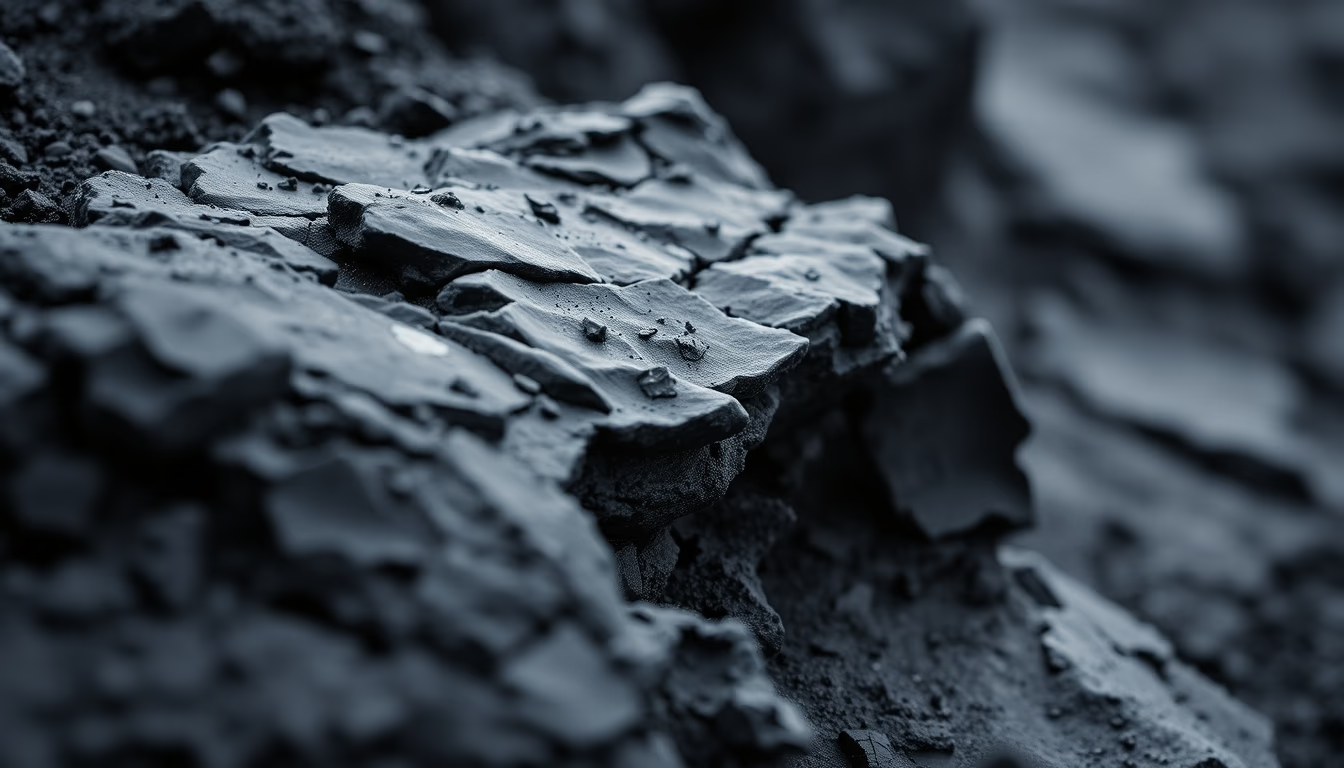
Obsidian is a natural volcanic glass formed by rapid cooling of silica-rich lava, without crystallization.
About this subject
Obsidian is an extrusive igneous rock classified as natural amorphous glass. It forms when felsic (silica-rich) lava cools so rapidly that atoms do not have time to arrange into a regular crystalline lattice, resulting in a vitreous, smooth texture. Its characteristic black color is due to impurities such as iron and magnesium oxides. However, obsidian can exhibit color variations like stripes or spots from mineral inclusions or gas bubbles, creating patterns such as “snowflake obsidian” (with white cristobalite crystals) or “rainbow obsidian” (with thin layers that refract light).
Although found worldwide, the most famous deposits occur in regions of recent volcanic activity, such as Iceland, Italy (Lipari Island), Mexico, the United States (Yellowstone National Park), and Japan. In Brazil, it occurs in ancient volcanic areas like Paraná and the southern region, but on a smaller scale. Early humans used obsidian to make sharp cutting tools, arrowheads, and knives, as its conchoidal fracture produces edges microscopically sharper than steel. Mesoamerican civilizations such as the Aztecs and Mayas carved mirrors and ritual objects from obsidian, and it is still used today in surgery for ultra-precise scalpel blades.
In gemology, obsidian is classified as an organic gem (though it is a mineraloid) and is cut into jewelry, ornaments, and decorative objects. Its hardness on the Mohs scale is about 5 to 5.5, making it relatively brittle but easy to work. When polished, black obsidian displays intense vitreous luster, highly valued in art pieces and sculptures. In popular culture, obsidian is believed to have metaphysical properties of protection and healing, often used in crystal therapy. However, its greatest historical significance lies in archaeology: obsidian from specific sources can be traced by geochemical analysis, revealing prehistoric trade networks among ancient peoples.
Frequently Asked Questions
Is obsidian a precious stone?
Technically, obsidian is not a mineral gemstone but a mineraloid (natural glass). It is valued as an organic gem and widely used in jewelry and decorative objects.
Where is obsidian found in Brazil?
In Brazil, obsidian occurs in small quantities in ancient volcanic regions such as the states of Paraná, Santa Catarina, and Rio Grande do Sul. The main mine is in Nova Prata (RS), producing black obsidian used for handicrafts.
Why is obsidian used in surgical scalpels?
Obsidian can be fractured to produce extremely sharp edges, up to 10 times sharper than surgical steel. Obsidian blades are used in high-precision surgeries like ophthalmology because they make cleaner cuts with less tissue damage.
Direct URL
https://pub-c7d6a6ea828543ac903a74a341ccb2e1.r2.dev/imagens/obsidian-black-volcanic-lo-fi-disposable-camera-p4.avifHow to credit
Include a visible link back to UtilizAí. Copy one of the snippets below:
<a href="https://xn--utiliza-eza.com/en/midia/imagens/obsidian-black-volcanic-lo-fi-disposable-camera-p4">Obsidian black volcanic</a> by <a href="https://xn--utiliza-eza.com">UtilizAí</a>, licensed under <a href="https://creativecommons.org/licenses/by/4.0/">CC BY 4.0</a>.
[Obsidian black volcanic](https://xn--utiliza-eza.com/en/midia/imagens/obsidian-black-volcanic-lo-fi-disposable-camera-p4) by [UtilizAí](https://xn--utiliza-eza.com), CC BY 4.0
License: CC-BY-4.0