Obsidian black volcanic
1344×768 · AVIF · CC BY 4.0
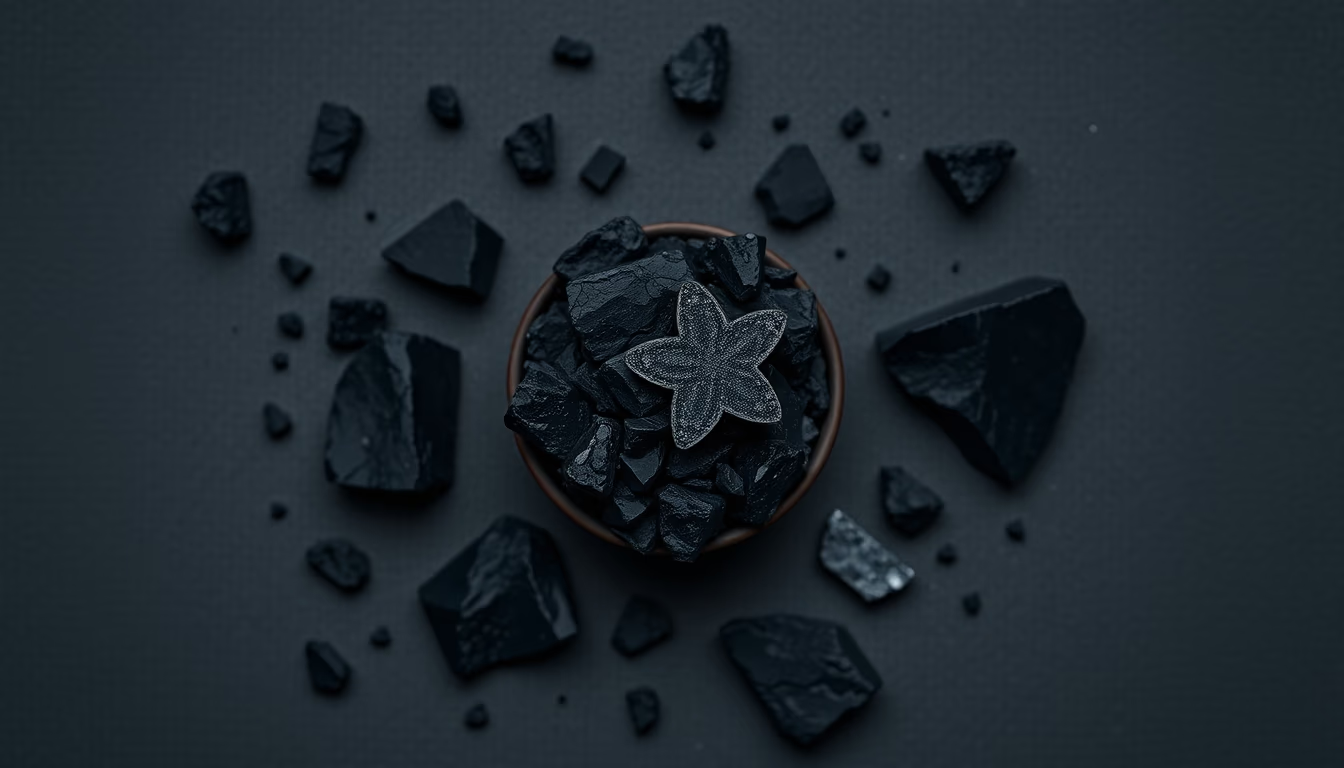
Obsidian is a natural volcanic glass formed by the rapid cooling of silica-rich lava, with a black appearance and vitreous luster.
About this subject
Obsidian is an extrusive igneous rock formed when silica-rich volcanic lava cools rapidly, preventing crystallization. This process creates an amorphous glass, typically black but sometimes brown, green, or blue due to mineral impurities. Obsidian is known for its conchoidal fracture, producing extremely sharp edges, and has been used since prehistoric times for cutting tools, arrowheads, and blades.
In Brazil, significant obsidian occurrences are found in the Central Plateau region, especially in Goiás and Minas Gerais, associated with ancient volcanic activity. Obsidian is also popular in jewelry and lapidary work, where it is polished into beads, cabochons, and sculptures. Its glassy surface reflects light characteristically, and specimens with feldspar crystal inclusions may exhibit a silvery sheen known as "silver sheen obsidian."
Beyond ornamental use, obsidian has archaeological importance because artifacts made from it help map ancient trade routes. Geochemical analysis can identify the source of an obsidian piece with high precision, revealing exchange networks between civilizations. Obsidian is also used in geothermal studies as an indicator of volcanic processes and in the abrasives industry due to its hardness.
Interestingly, obsidian is not considered a true mineral because it lacks a crystalline structure; it is classified as a mineraloid, like opal. Its chemical composition is similar to granite and rhyolite, but its glassy texture sets it apart. In some cultures, obsidian was used as a mirror, as its polished surface can reflect images with great clarity.
Frequently Asked Questions
What is the chemical composition of obsidian?
Obsidian is mainly composed of silicon dioxide (SiO2), ranging from 65% to 80%. It may contain impurities such as iron, aluminum, calcium, and sodium oxides, which affect its color and appearance.
Where is obsidian found in Brazil?
In Brazil, obsidian occurs primarily in the Central Plateau region, especially in the states of Goiás and Minas Gerais. There are also occurrences in Rio Grande do Sul and Bahia, associated with ancient volcanic activity.
Is obsidian used in jewelry?
Yes, obsidian is widely used in jewelry and lapidary work. It is polished into beads, pendants, cabochons, and sculptures. Black obsidian is the most common, but varieties with inclusions, such as silver sheen or rainbow obsidian, are also valued.
Direct URL
https://pub-c7d6a6ea828543ac903a74a341ccb2e1.r2.dev/imagens/obsidian-black-volcanic-isometric-flat-lay-p7.avifHow to credit
Include a visible link back to UtilizAí. Copy one of the snippets below:
<a href="https://xn--utiliza-eza.com/en/midia/imagens/obsidian-black-volcanic-isometric-flat-lay-p7">Obsidian black volcanic</a> by <a href="https://xn--utiliza-eza.com">UtilizAí</a>, licensed under <a href="https://creativecommons.org/licenses/by/4.0/">CC BY 4.0</a>.
[Obsidian black volcanic](https://xn--utiliza-eza.com/en/midia/imagens/obsidian-black-volcanic-isometric-flat-lay-p7) by [UtilizAí](https://xn--utiliza-eza.com), CC BY 4.0
License: CC-BY-4.0