Obsidian black volcanic
1344×768 · AVIF · CC BY 4.0
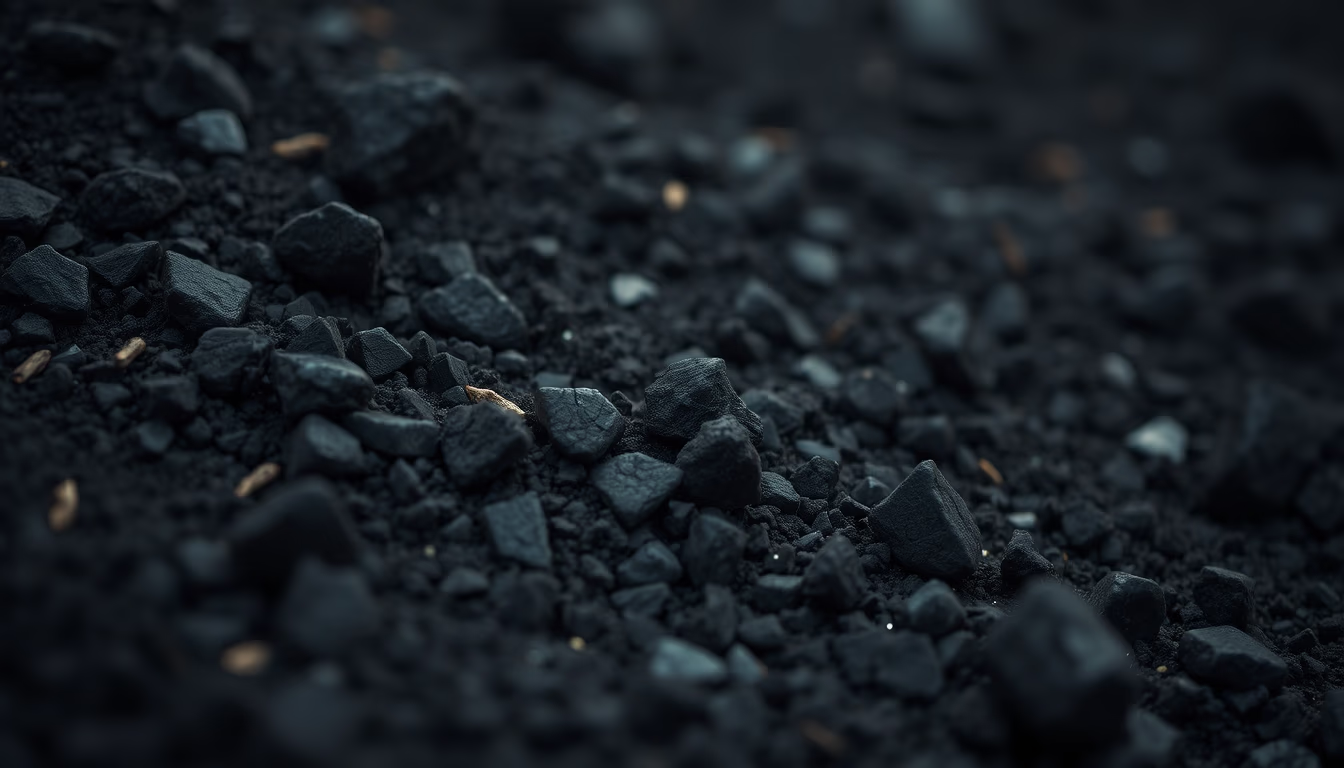
Obsidian is a natural volcanic glass formed by the rapid cooling of silica-rich lava, used since prehistoric times for sharp cutting tools.
About this subject
Obsidian is a natural volcanic glass formed when felsic lava (rich in silica) cools rapidly, preventing crystal growth. This occurs in lava flows or at the edges of volcanic domes. The most common color is deep black, but impurities can create varieties such as rainbow, golden, and snowflake obsidian. Its chemical composition is typically about 70% SiO2, with alumina, iron, and other oxides.
Since the Paleolithic era, obsidian has been prized for its ability to fracture into extremely sharp flakes. Civilizations like the Aztecs, Maya, and peoples of Mesopotamia used it to make knives, arrowheads, and mirrors. Because it is amorphous (non-crystalline), conchoidal fracture yields edges as thin as nanometers, sharper than steel surgical scalpels. Today, obsidian blades are used in cardiac and ophthalmic surgeries for causing less tissue damage.
Major deposits of obsidian are found in volcanic regions such as Iceland, Japan, Mexico, Peru, and the western United States. In Brazil, it occurs in Paraná (Cascavel) and the Paraná Basin, associated with basalt flows. Obsidian was also important in pre-Columbian trade, transported hundreds of kilometers. Provenance analysis using X-ray fluorescence helps trace ancient trade routes.
A curiosity: obsidian can contain feldspar crystals or gas bubbles, forming snowflake obsidian (with white cristobalite crystals) or golden obsidian (with hematite inclusions). Unlike manufactured glass, it is not recyclable, and its hardness is 5, 5.5 on the Mohs scale. In popular culture, it is associated with metaphysical properties of protection and mental clarity.
Frequently Asked Questions
How is obsidian formed?
Obsidian forms when silica-rich lava cools rapidly, preventing crystal formation. This happens in lava flows or at the edges of volcanic domes, resulting in natural glass.
Why is obsidian used in surgeries?
Obsidian blades can be sharpened to nanometer-scale edges (sharper than steel), causing less tissue damage and more precise cuts. They are used in cardiac and ophthalmic surgeries.
Where can I find obsidian in Brazil?
In Brazil, obsidian deposits are found mainly in Paraná state (Cascavel region) and the Paraná Basin, associated with basalt flows.
Direct URL
https://pub-c7d6a6ea828543ac903a74a341ccb2e1.r2.dev/imagens/obsidian-black-volcanic-documentary-photography-p10.avifHow to credit
Include a visible link back to UtilizAí. Copy one of the snippets below:
<a href="https://xn--utiliza-eza.com/en/midia/imagens/obsidian-black-volcanic-documentary-photography-p10">Obsidian black volcanic</a> by <a href="https://xn--utiliza-eza.com">UtilizAí</a>, licensed under <a href="https://creativecommons.org/licenses/by/4.0/">CC BY 4.0</a>.
[Obsidian black volcanic](https://xn--utiliza-eza.com/en/midia/imagens/obsidian-black-volcanic-documentary-photography-p10) by [UtilizAí](https://xn--utiliza-eza.com), CC BY 4.0
License: CC-BY-4.0