Obsidian black volcanic
1344×768 · AVIF · CC BY 4.0
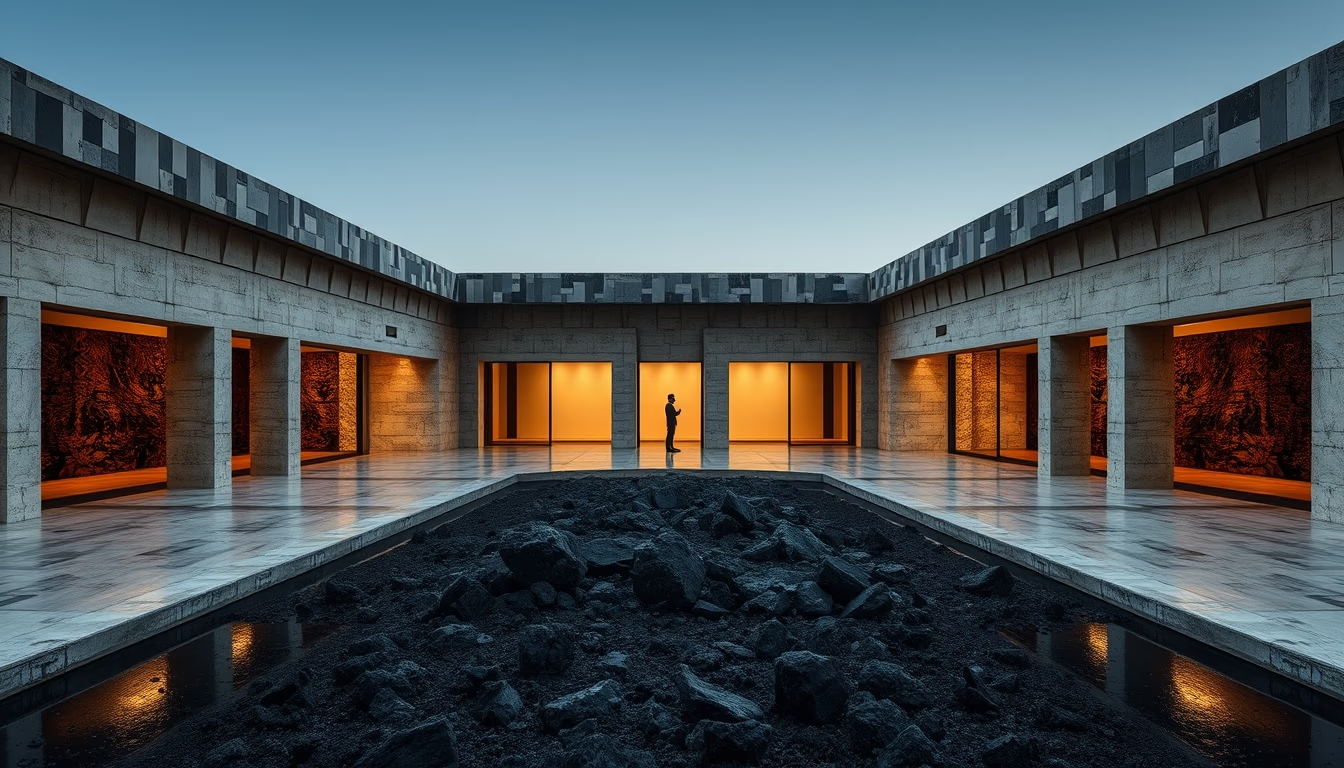
Obsidian is a natural volcanic glass formed by the rapid cooling of lava, known for its intense black color and use in architecture and design.
About this subject
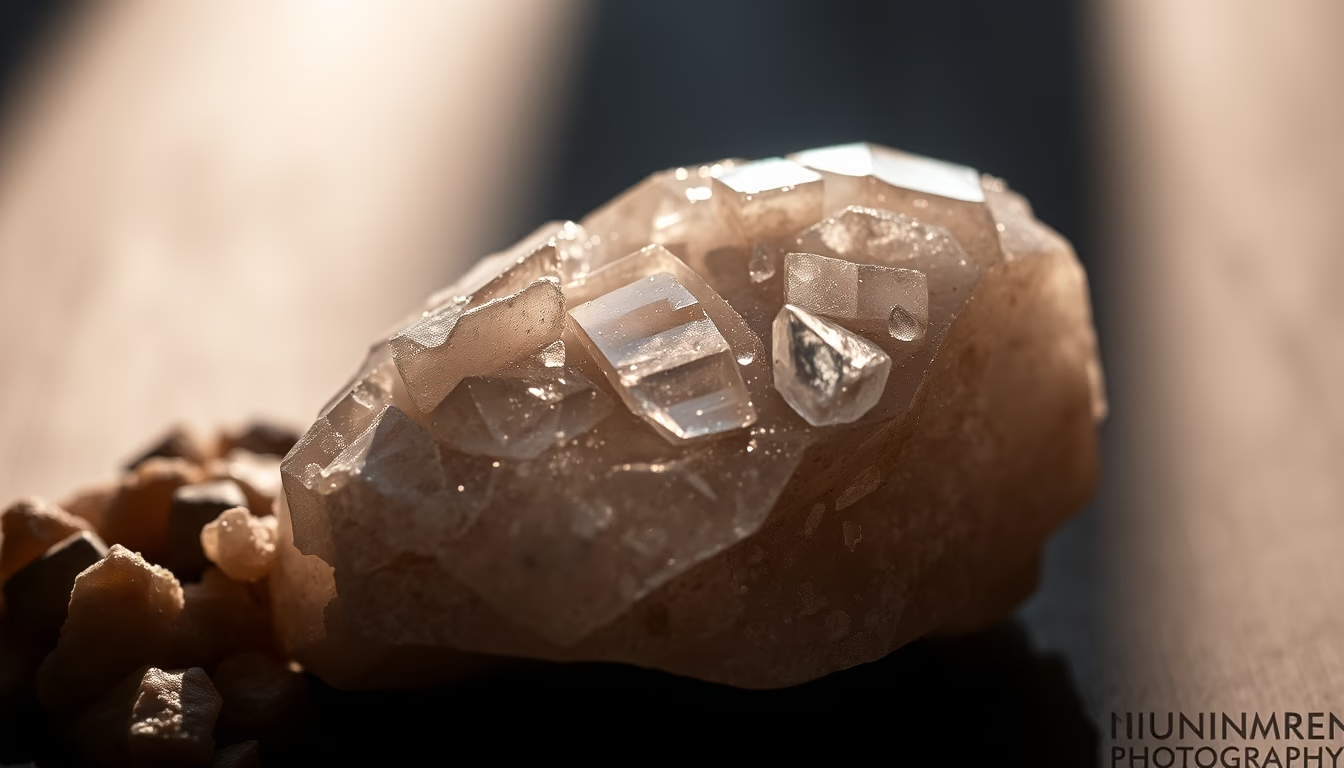
Obsidian is an extrusive igneous rock classified as volcanic glass, formed when silica-rich (felsic) lava cools rapidly, preventing crystal growth. This process commonly occurs during explosive volcanic eruptions or when lava flows contact water or cold air. The result is a homogeneous material with a glassy texture and conchoidal fracture, capable of producing edges as sharp as a razor blade.
Historically, obsidian was widely used by ancient civilizations such as the Aztecs and Maya to make cutting tools, arrowheads, and ceremonial objects. Its ability to form extremely sharp edges made it highly valuable before metallurgy. Today, black obsidian is employed in contemporary contexts: in architecture, it appears in polished cladding, kitchen countertops, sculptures, and decorative elements, thanks to its vitreous luster and elegant appearance. In medicine, obsidian blades are used in ophthalmic surgery for their precision and smoothness.
Geologically, obsidian is found in active or extinct volcanic regions worldwide. Notable deposits include Iceland, the Lipari Islands in Italy, Mexico, Peru, and the western United States (Oregon, California). Each locality has compositional variations that can produce brown, green, or even rainbow obsidian. The hardness on the Mohs scale ranges from 5 to 5.5, making it relatively brittle yet scratch-resistant when polished.
In popular culture and esoteric practices, black obsidian is associated with protection and grounding. It is believed to absorb negative energies and promote mental clarity. In interior design, its reflective surface is prized for creating sophisticated, minimalist spaces. As a natural material, each piece of obsidian is unique, with inclusions, bubbles, or bands that tell the story of its volcanic formation.
Frequently Asked Questions
How is obsidian formed?
Obsidian forms when silica-rich lava cools extremely quickly, preventing mineral crystallization. This rapid cooling can occur when lava contacts water, ice, or cold air, or during explosive eruptions.
What are the main architectural applications of obsidian?
In architecture, polished obsidian is used for wall and floor cladding, kitchen countertops, sinks, sculptures, and decorative elements. Its glassy surface and intense black color provide a sophisticated, modern look.
Is obsidian a rare natural stone?
It is not considered rare, but its occurrence is limited to volcanic regions. Significant deposits exist in countries like Mexico, Iceland, Italy, Peru, and the United States. Varieties like rainbow obsidian or those with specific inclusions can be scarcer.
Direct URL
https://pub-c7d6a6ea828543ac903a74a341ccb2e1.r2.dev/imagens/obsidian-black-volcanic-architectural-photography-p2.avifHow to credit
Include a visible link back to UtilizAí. Copy one of the snippets below:
<a href="https://xn--utiliza-eza.com/en/midia/imagens/obsidian-black-volcanic-architectural-photography-p2">Obsidian black volcanic</a> by <a href="https://xn--utiliza-eza.com">UtilizAí</a>, licensed under <a href="https://creativecommons.org/licenses/by/4.0/">CC BY 4.0</a>.
[Obsidian black volcanic](https://xn--utiliza-eza.com/en/midia/imagens/obsidian-black-volcanic-architectural-photography-p2) by [UtilizAí](https://xn--utiliza-eza.com), CC BY 4.0
License: CC-BY-4.0