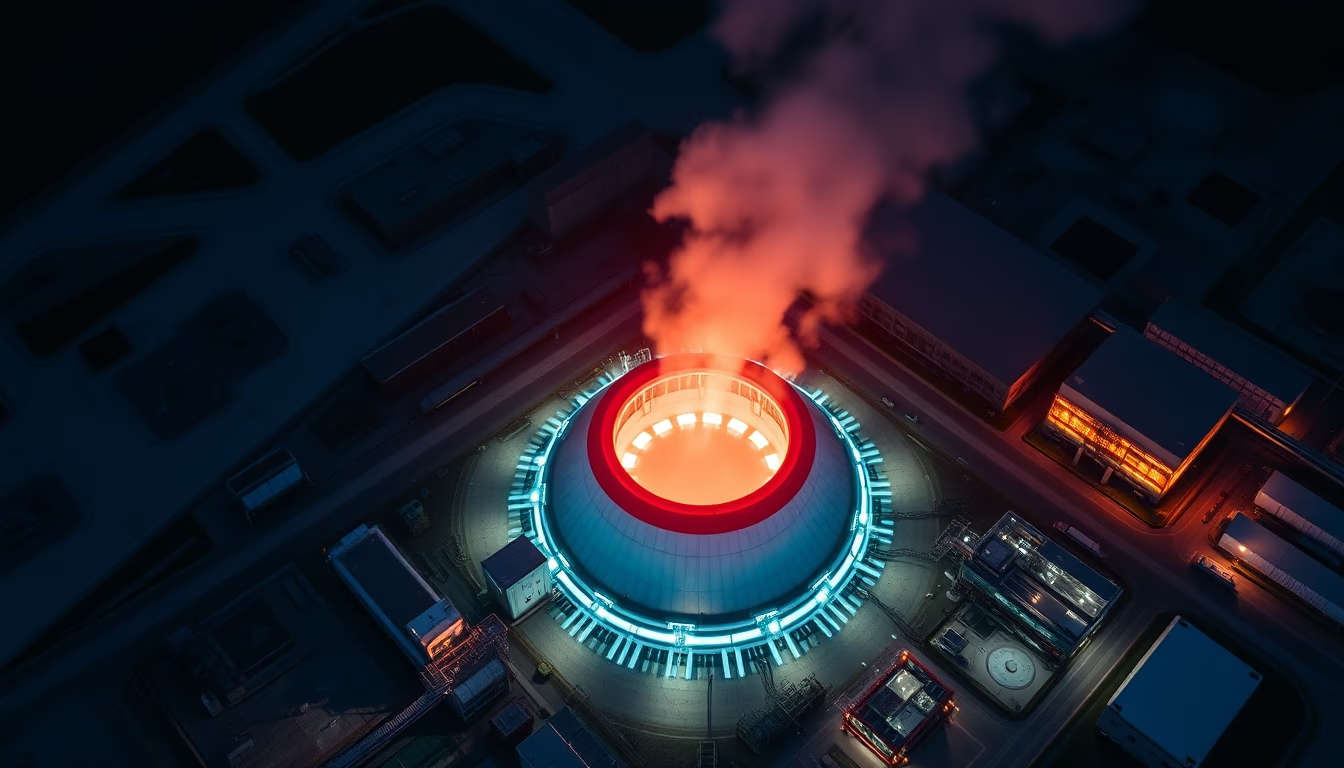
Nuclear reactor core glow
1344×768 · AVIF · CC BY 4.0
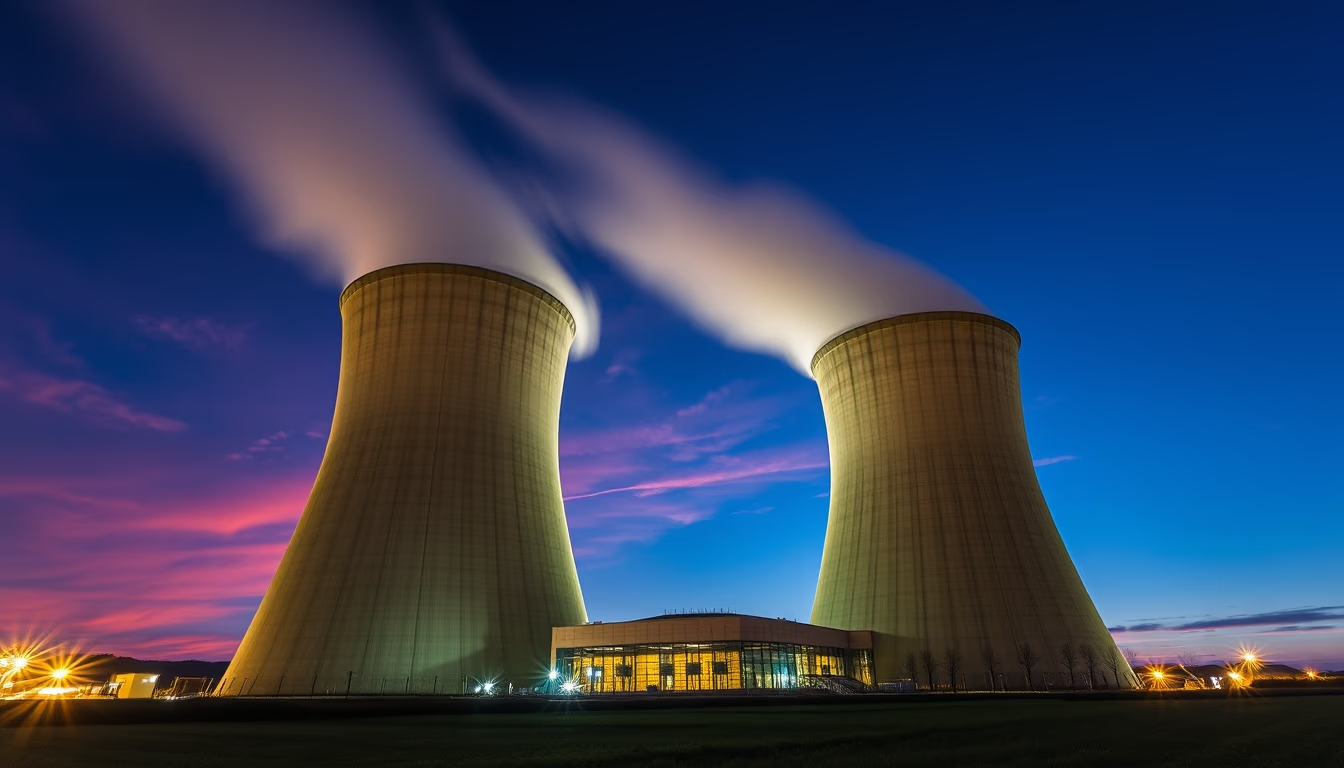
The characteristic blue glow of a nuclear reactor core, known as Cherenkov radiation, is a fascinating optical phenomenon that occurs in light-water reactors.
About this subject
The intense blue glow observed in the core of nuclear reactors results from Cherenkov radiation, a phenomenon that occurs when charged particles (such as electrons) travel through a medium faster than the speed of light in that medium. This effect is analogous to a sonic boom, but with light. In light-water reactors, such as PWR (Pressurized Water Reactor) and BWR (Boiling Water Reactor), water acts as both a moderator and coolant. During nuclear fission, high-energy particles are emitted; as they pass through water, they exceed the speed of light in water (about 75% of the speed of light in a vacuum), generating a cone of blue light.
The phenomenon is most visible in research reactors and spent fuel storage pools, where water provides radiation shielding and allows direct observation. The blue glow itself is not dangerous, but it indicates the presence of intense radiation. The characteristic blue color arises because Cherenkov radiation has a continuous spectrum, with peak intensity in the ultraviolet and blue regions, with blue being most visible to the human eye.
Interestingly, Cherenkov radiation is used in particle detectors, such as the Sudbury Neutrino Observatory and the IceCube experiment, to identify high-energy particles. In nuclear reactors, besides serving as a visual indicator of fission activity, it is also studied to better understand particle physics and reactor dynamics.
Historically, Cherenkov radiation was discovered in 1934 by Pavel Cherenkov, work that earned him the Nobel Prize in Physics in 1958. Since then, it has become an important tool in experimental physics and an iconic image associated with nuclear energy.
Frequently Asked Questions
What causes the blue glow in a nuclear reactor core?
The blue glow is caused by Cherenkov radiation, which occurs when charged particles move through a medium (like water) faster than the speed of light in that medium. This phenomenon generates a cone of light, predominantly blue.
Is Cherenkov radiation dangerous for someone observing the reactor core?
The glow itself is not dangerous, but its presence indicates high radiation levels. In reactors, water and shielding protect observers. In spent fuel pools, water absorbs radiation, allowing safe viewing.
Who discovered Cherenkov radiation and why is it important?
It was discovered by Soviet physicist Pavel Cherenkov in 1934, earning him the Nobel Prize in 1958. It is important for detecting high-energy particles in physics experiments and as a visual indicator of fission activity in reactors.
Direct URL
https://pub-c7d6a6ea828543ac903a74a341ccb2e1.r2.dev/imagens/nuclear-reactor-core-glow-long-exposure-p5.avifHow to credit
Include a visible link back to UtilizAí. Copy one of the snippets below:
<a href="https://xn--utiliza-eza.com/en/midia/imagens/nuclear-reactor-core-glow-long-exposure-p5">Nuclear reactor core glow</a> by <a href="https://xn--utiliza-eza.com">UtilizAí</a>, licensed under <a href="https://creativecommons.org/licenses/by/4.0/">CC BY 4.0</a>.
[Nuclear reactor core glow](https://xn--utiliza-eza.com/en/midia/imagens/nuclear-reactor-core-glow-long-exposure-p5) by [UtilizAí](https://xn--utiliza-eza.com), CC BY 4.0
License: CC-BY-4.0