Nuclear reactor core glow
1344×768 · AVIF · CC BY 4.0
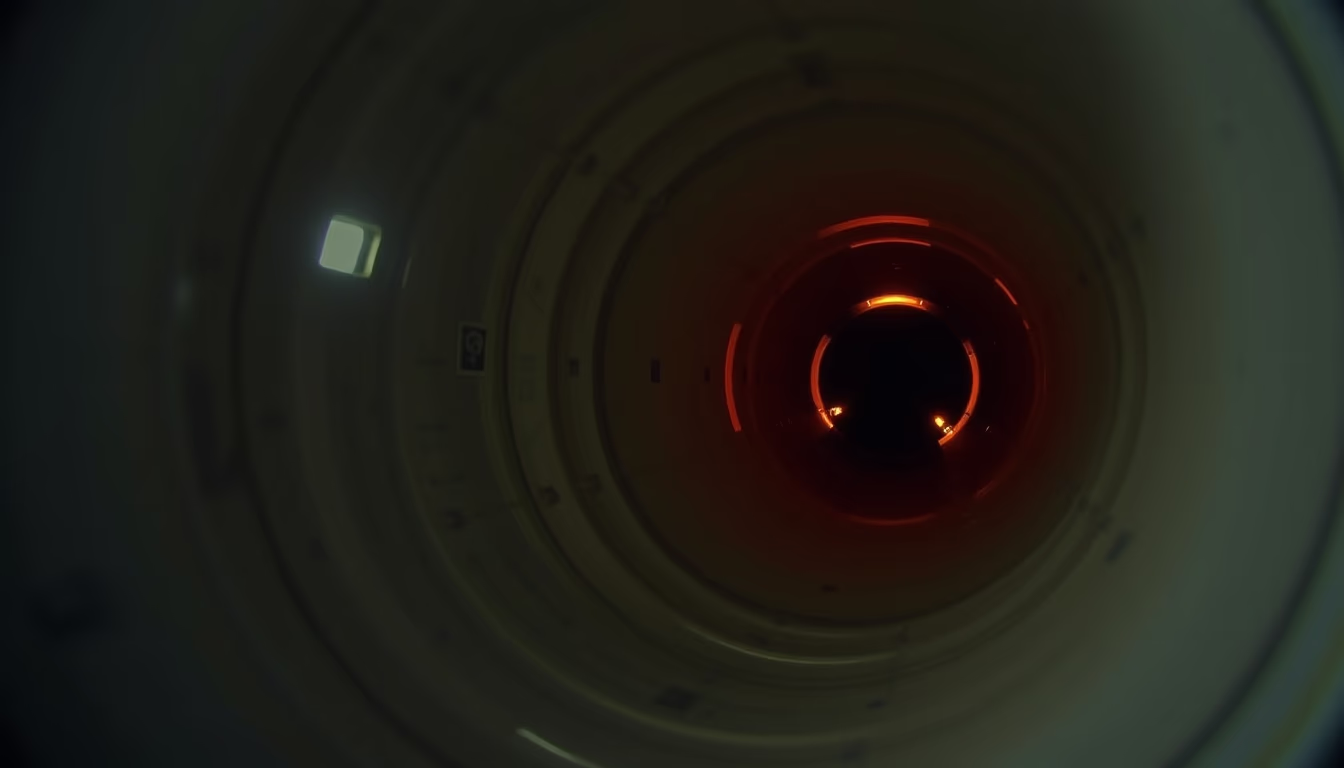
The distinctive blue glow of a nuclear reactor core is a physical phenomenon known as Cherenkov radiation, observable in research reactor pools and nuclear power plants.
About this subject
Cherenkov radiation is an optical phenomenon that occurs when charged particles, such as electrons, traverse a dielectric medium (like water) at a speed greater than the speed of light in that medium. Inside a nuclear reactor core, the fission of uranium or plutonium releases high-energy beta particles (electrons) that, upon entering the cooling water, produce this blue glow. The characteristic blue color arises from the higher intensity of radiation at the higher frequencies of the visible spectrum, near ultraviolet.
This glow is commonly seen in research reactors, such as those at the Nuclear and Energy Research Institute (IPEN) in São Paulo, and in power reactors during scheduled outages when spent fuel is stored in deactivation pools. The water surrounding the core serves both as a neutron moderator and as radiation shielding. Cherenkov radiation indicates intense nuclear activity but poses no immediate danger to operators when observed from a safe distance with proper protection.
Historically, the effect was described by physicist Pavel Cherenkov in 1934, earning him the Nobel Prize in Physics in 1958. Beyond reactors, the phenomenon is utilized in particle detectors at accelerators, such as the Super-Kamiokande neutrino observatory in Japan. In Brazil, the IEA-R1 reactor at IPEN, operating since 1957, is an example where Cherenkov radiation can be seen during experiments. The blue glow also serves as a reminder of the energy released in fission and the safety measures required to control the chain reaction.
Frequently Asked Questions
What causes the blue glow in a nuclear reactor core?
The blue glow is caused by Cherenkov radiation, which occurs when charged particles (electrons) travel faster than light in the reactor's water, emitting visible blue light.
Is Cherenkov radiation dangerous for reactor operators?
Not directly, as the water surrounding the core absorbs most radiation. Operators observe the phenomenon from safe distances with proper shielding, following safety protocols.
In which types of nuclear reactors is Cherenkov glow most common?
It is most common in research reactors and in spent fuel pools at nuclear power plants during outages for maintenance or refueling.
Direct URL
https://pub-c7d6a6ea828543ac903a74a341ccb2e1.r2.dev/imagens/nuclear-reactor-core-glow-fish-eye-wide-angle-p7.avifHow to credit
Include a visible link back to UtilizAí. Copy one of the snippets below:
<a href="https://xn--utiliza-eza.com/en/midia/imagens/nuclear-reactor-core-glow-fish-eye-wide-angle-p7">Nuclear reactor core glow</a> by <a href="https://xn--utiliza-eza.com">UtilizAí</a>, licensed under <a href="https://creativecommons.org/licenses/by/4.0/">CC BY 4.0</a>.
[Nuclear reactor core glow](https://xn--utiliza-eza.com/en/midia/imagens/nuclear-reactor-core-glow-fish-eye-wide-angle-p7) by [UtilizAí](https://xn--utiliza-eza.com), CC BY 4.0
License: CC-BY-4.0