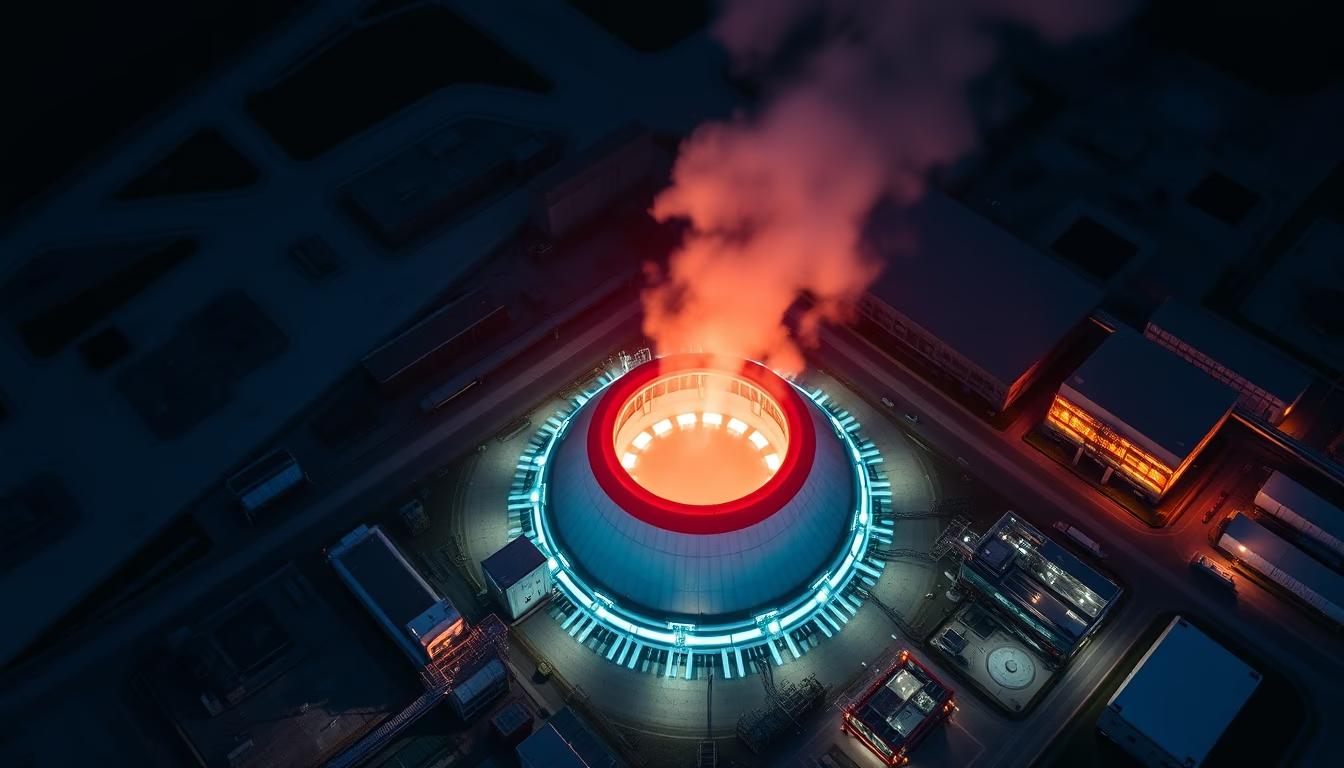
Nuclear reactor core glow
1344×768 · AVIF · CC BY 4.0
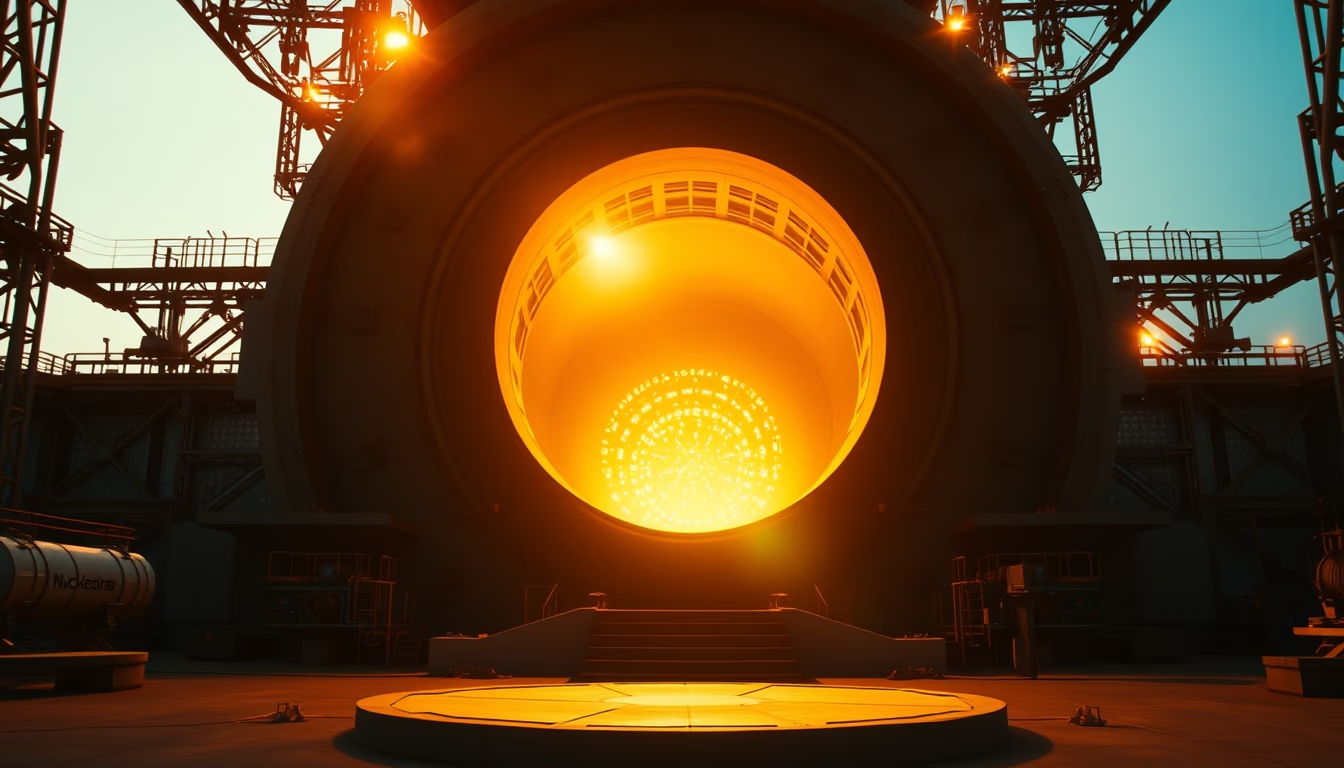
The distinctive blue glow of an operating nuclear reactor core is caused by Cherenkov radiation, an optical phenomenon that occurs when charged particles exceed the speed of light in water.
About this subject
The intense blue glow emanating from a nuclear reactor core submerged in water is known as Cherenkov radiation. This effect occurs when charged particles, such as electrons, move through a medium (water) at a speed greater than the speed of light in that medium. This creates an optical shock wave, analogous to the sonic boom of a supersonic aircraft, resulting in the emission of blue light.
This phenomenon is commonly observed in research reactor pools and nuclear power plants during operation. The water surrounding the core serves both as a neutron moderator and as a radiation shield. Cherenkov glow is not dangerous by itself, but it indicates the presence of intense radiation. Light water reactors, such as PWR (Pressurized Water Reactor) and BWR (Boiling Water Reactor), are the most common types where this effect can be seen, especially during fuel exchange or at low power conditions.
Historically, Cherenkov radiation was discovered by Soviet physicist Pavel Cherenkov in 1934, work that earned him the Nobel Prize in Physics in 1958. Since then, it has become an important tool in the detection of high-energy particles and in the characterization of beams in accelerators. In nuclear reactors, the intensity of the glow can vary depending on power and fuel type, being more intense in high-neutron-flux reactors.
Interestingly, the blue glow is also a form of luminous radiation that can be captured by ordinary cameras, although direct exposure to ionizing radiation is extremely dangerous. Therefore, images are usually taken through thick glass windows or with robotic equipment. The phenomenon is a visual reminder of the energy released by nuclear fission and the complexity of the physics involved in nuclear power generation.
Frequently Asked Questions
What causes the blue glow in nuclear reactors?
The blue glow is caused by Cherenkov radiation, which occurs when charged particles (like electrons) travel faster than light in water, emitting blue light.
Is Cherenkov glow dangerous?
The glow itself is not dangerous, but it indicates the presence of intense radiation. Therefore, direct observation is only safe with proper shielding, such as thick glass windows.
In which type of reactor is this glow most common?
It is most common in light water reactors (PWR and BWR) and research reactors, especially during low-power operation or fuel exchange.
Direct URL
https://pub-c7d6a6ea828543ac903a74a341ccb2e1.r2.dev/imagens/nuclear-reactor-core-glow-cinematic-wide-shot-p10.avifHow to credit
Include a visible link back to UtilizAí. Copy one of the snippets below:
<a href="https://xn--utiliza-eza.com/en/midia/imagens/nuclear-reactor-core-glow-cinematic-wide-shot-p10">Nuclear reactor core glow</a> by <a href="https://xn--utiliza-eza.com">UtilizAí</a>, licensed under <a href="https://creativecommons.org/licenses/by/4.0/">CC BY 4.0</a>.
[Nuclear reactor core glow](https://xn--utiliza-eza.com/en/midia/imagens/nuclear-reactor-core-glow-cinematic-wide-shot-p10) by [UtilizAí](https://xn--utiliza-eza.com), CC BY 4.0
License: CC-BY-4.0