Nuclear reactor core glow
1344×768 · AVIF · CC BY 4.0
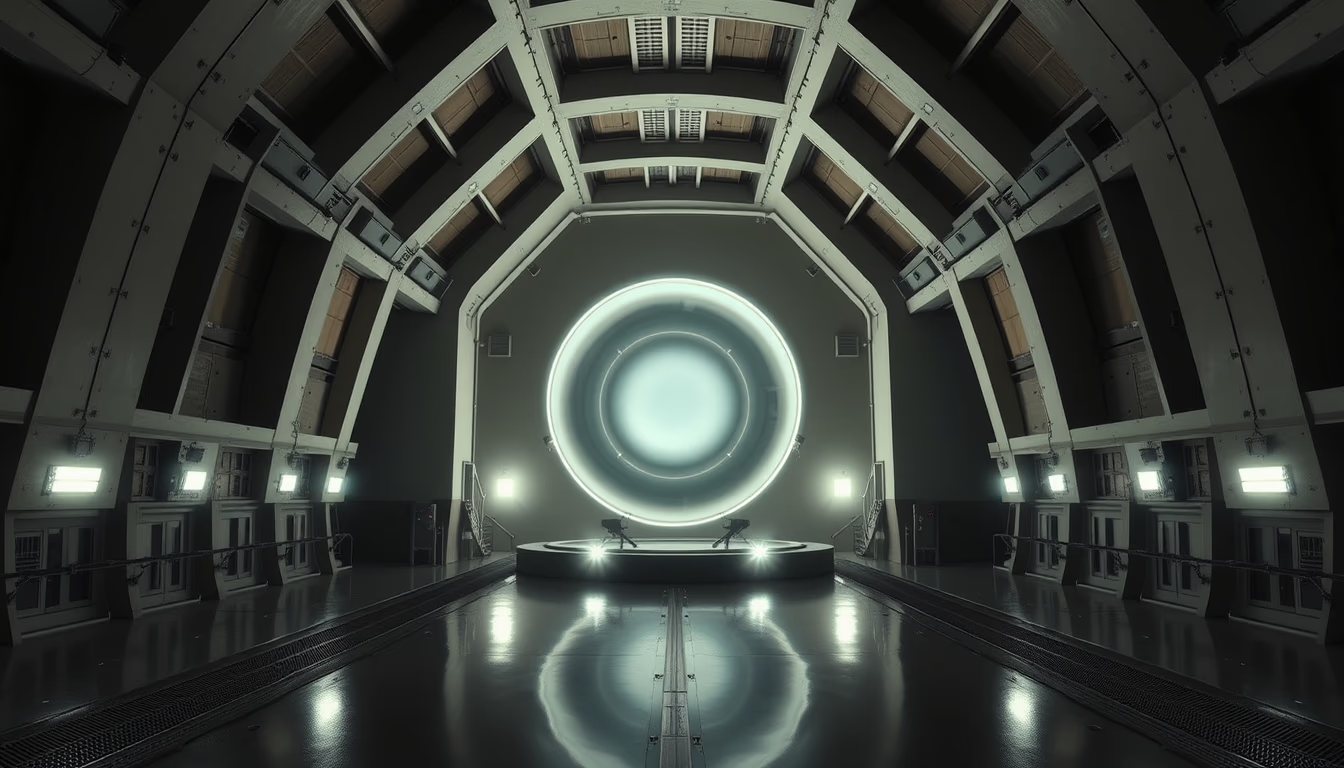
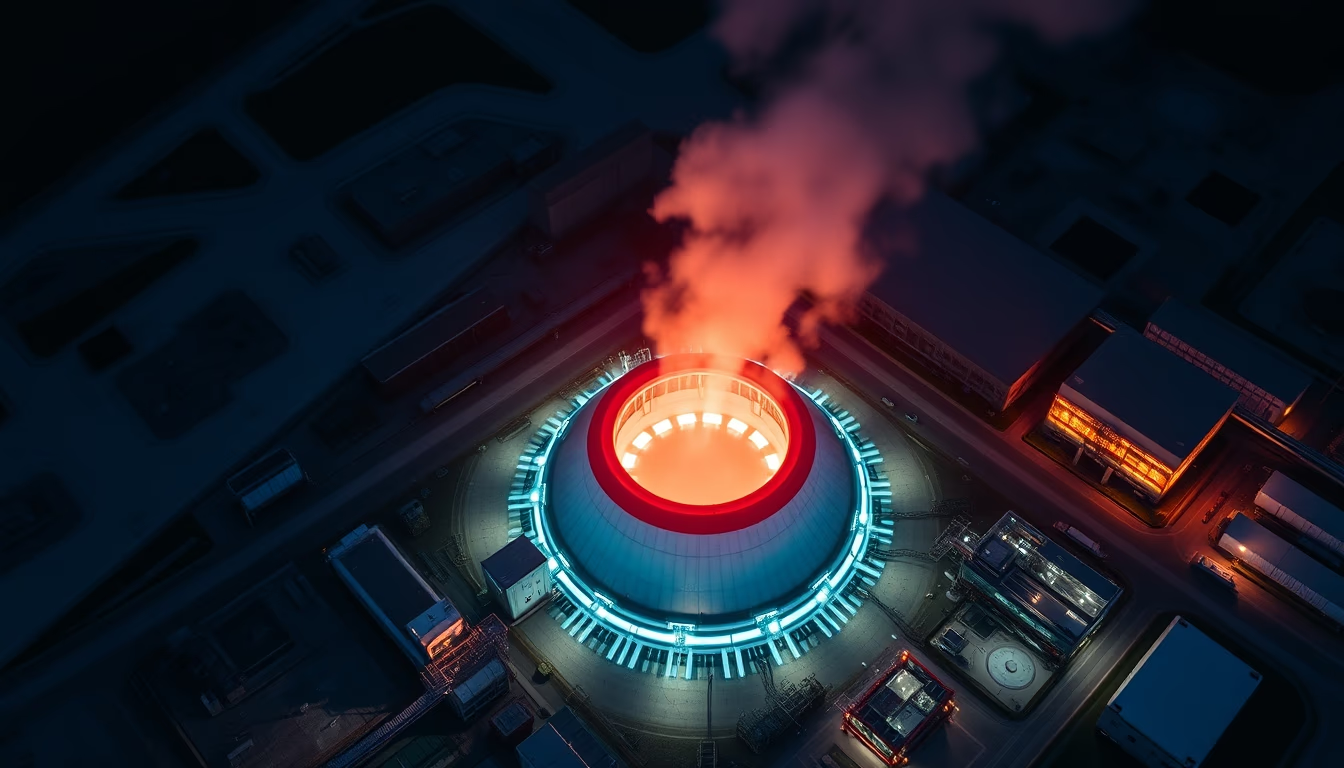
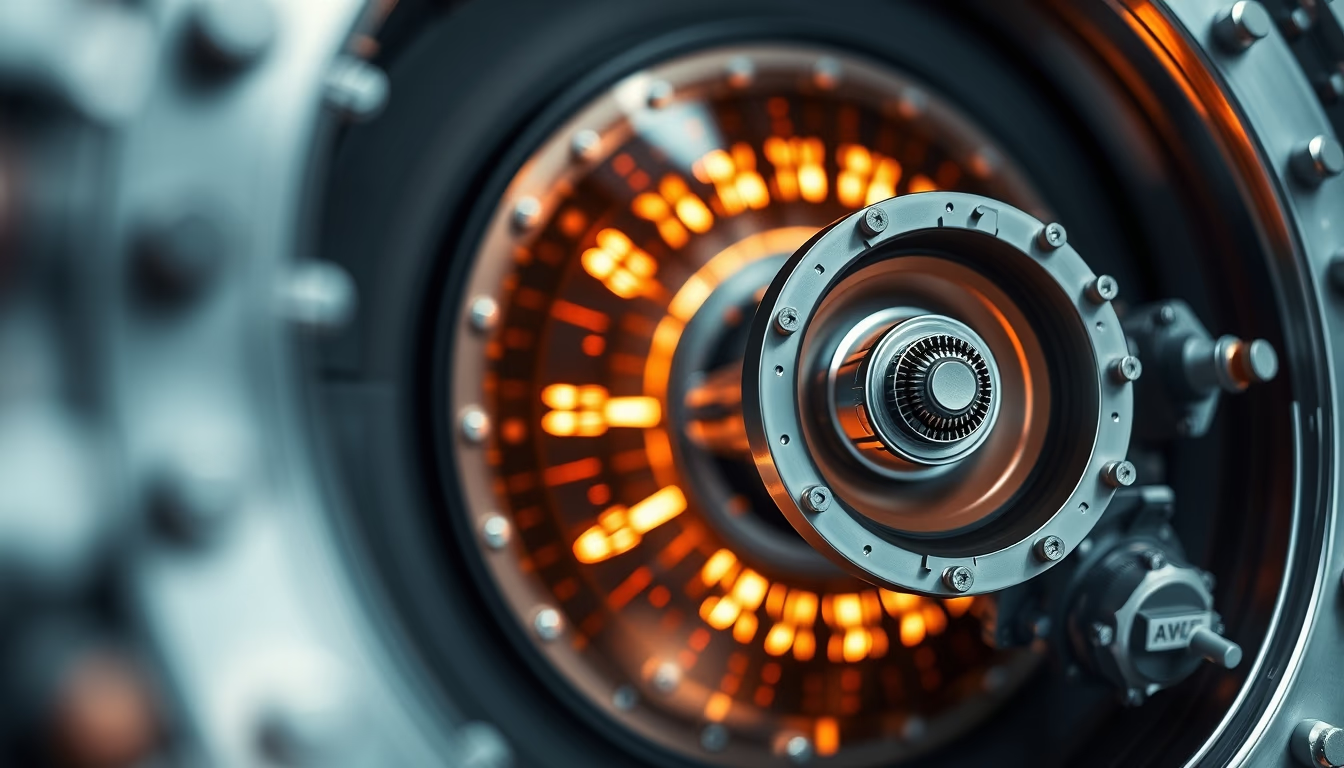
The characteristic blue glow of a nuclear reactor core is caused by Cherenkov radiation, an optical phenomenon that occurs when charged particles exceed the speed of light in water.
About this subject
Cherenkov radiation is a physical phenomenon discovered by Soviet scientist Pavel Cherenkov in 1934, which earned him the Nobel Prize in Physics in 1958. It occurs when charged particles, such as electrons or protons, travel through a dielectric medium (like water) at a speed greater than the speed of light in that medium. This superluminal speed does not violate the theory of relativity because the speed of light in a vacuum remains unattainable; light in water travels at about 75% of its vacuum speed. The emitted radiation forms a cone of blue light, analogous to a Mach cone in sound waves, and its blue color arises from the spectral intensity distribution, which is inversely proportional to the wavelength, making blue more intense.
In nuclear reactors, the Cherenkov glow is observed in the spent fuel pool or around the reactor core, especially in light-water reactors. The water serves as a moderator and coolant, and also as the medium for radiation. Gamma rays and neutrons generate high-energy secondary particles that produce the glow. This phenomenon is not an indicator of imminent danger; rather, it is a natural consequence of reactor operation. The intensity of the glow can provide information about reactor power and fuel activity.
Historically, Cherenkov radiation is also used in high-energy particle detectors, such as water tanks in neutrino observatories (Super-Kamiokande, IceCube). The Cherenkov light cone allows reconstruction of the direction and energy of incoming particles. Culturally, the blue glow has become an iconic symbol of nuclear energy, featured in movies and popular culture, although it is often mistakenly associated with nuclear fusion or immediate radioactive hazards. In practice, the glow is a sign that the reactor is operating in a controlled subcritical or critical condition, and it is monitored by instruments.
It is important to note that viewing Cherenkov radiation is restricted to controlled access areas in nuclear facilities. Exposure to the ionizing radiation that generates the glow is dangerous, and the glow itself is merely a visual byproduct. Safety in reactors involves multiple containment barriers and cooling systems to prevent accidents. The study of Cherenkov radiation remains a valuable tool in both nuclear physics and astrophysics.
Frequently Asked Questions
What causes the blue glow in a nuclear reactor?
The blue glow is caused by Cherenkov radiation, which occurs when charged particles, such as electrons, move through water faster than the speed of light in that medium, emitting a cone of blue light.
Is this glow dangerous to those nearby?
The glow itself is not dangerous, but the ionizing radiation that produces it is highly harmful. Viewing is done through shielding or in controlled areas to avoid radiation exposure.
Is Cherenkov radiation used in other fields besides reactors?
Yes, high-energy physics detectors use water tanks to detect neutrinos and other particles via the Cherenkov light cone, such as the Super-Kamiokande and IceCube observatories.
Direct URL
https://pub-c7d6a6ea828543ac903a74a341ccb2e1.r2.dev/imagens/nuclear-reactor-core-glow-architectural-photography-p1.avifHow to credit
Include a visible link back to UtilizAí. Copy one of the snippets below:
<a href="https://xn--utiliza-eza.com/en/midia/imagens/nuclear-reactor-core-glow-architectural-photography-p1">Nuclear reactor core glow</a> by <a href="https://xn--utiliza-eza.com">UtilizAí</a>, licensed under <a href="https://creativecommons.org/licenses/by/4.0/">CC BY 4.0</a>.
[Nuclear reactor core glow](https://xn--utiliza-eza.com/en/midia/imagens/nuclear-reactor-core-glow-architectural-photography-p1) by [UtilizAí](https://xn--utiliza-eza.com), CC BY 4.0
License: CC-BY-4.0