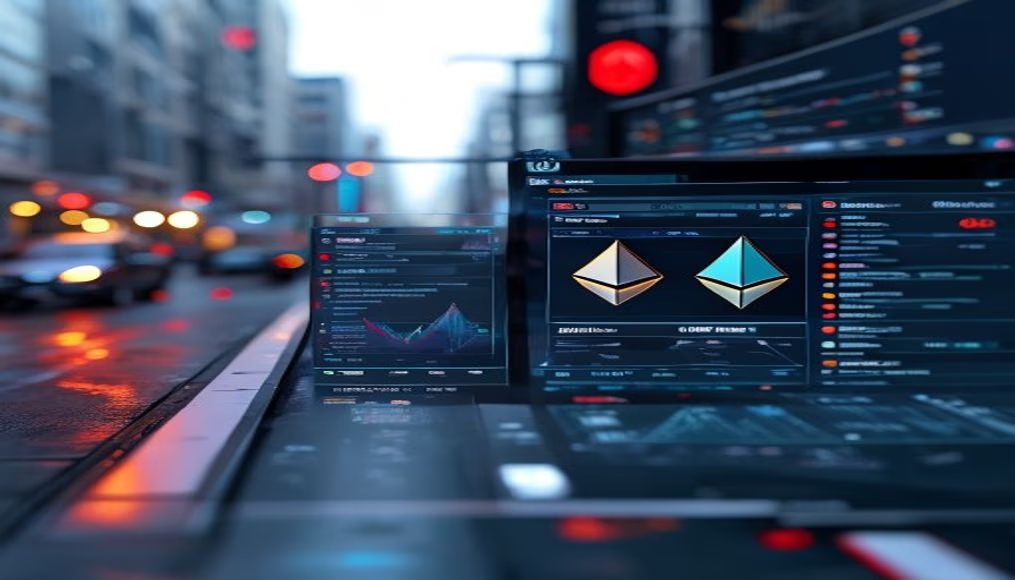
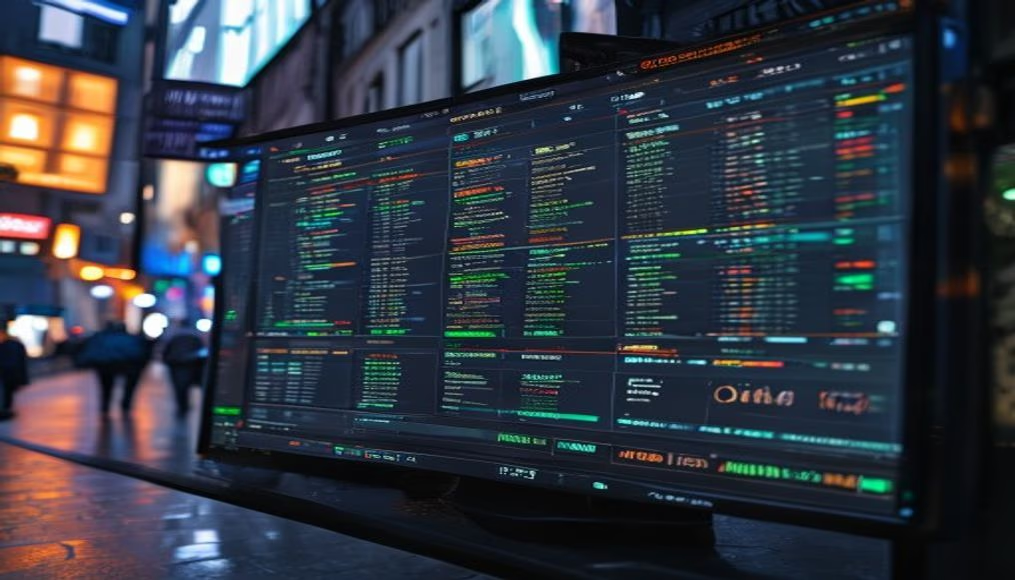
NFT art on transparent OLED screen
1344×768 · AVIF · CC BY 4.0
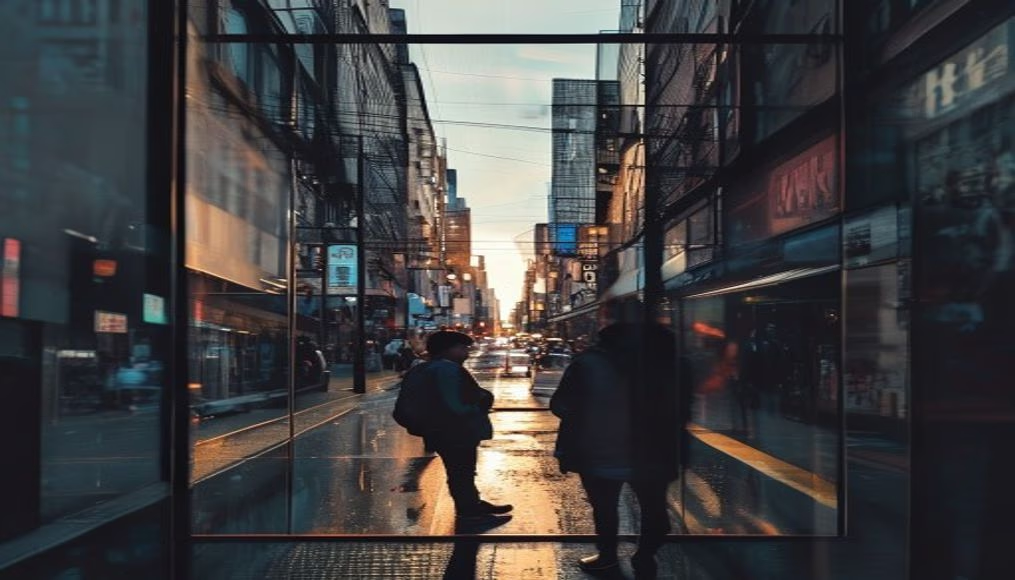
NFT art displayed on a transparent OLED screen, blending cutting-edge technology with urban street aesthetics.
About this subject
Displaying NFTs (non-fungible tokens) on transparent OLED screens represents an innovation in how digital art is consumed and integrated into the physical environment. Unlike traditional monitors, transparent OLED screens allow viewers to see digital content overlaid on the real scene, creating an augmented reality experience without the need for additional devices. This technology is particularly impactful in public spaces such as galleries, storefronts, and even building facades, where NFT art can interact with urban movement.
In the context of cryptocurrencies and digital art, using transparent screens to showcase NFTs goes beyond mere viewing. It challenges the traditional notion that digital art must be confined to opaque screens or personal devices. Artists and collectors are increasingly seeking ways to display their works in locations that attract public attention, transforming digital art into an element of the urban landscape. The screen's transparency also allows the artwork to blend with the environment, creating layers of meaning: what is real and what is virtual become blurred.
The adoption of transparent OLED screens for NFTs also raises questions about accessibility and energy consumption. While these screens are more efficient than LCDs, their cost is still high, limiting widespread adoption. However, projects in cities like Tokyo, Seoul, and New York already use this technology for public NFT exhibitions, often associated with events or brands aiming to position themselves at the digital forefront. The trend is that as prices drop, we will see more crypto art in street-level displays.
Interestingly, the combination of NFTs with transparent screens revives an old sci-fi idea: floating screens that appear to hover in the air. To the unsuspecting viewer, the image may look like a holographic projection, though it is actually a physical screen. This effect is particularly suitable for street photography, which captures the unexpected and ephemeral of urban life. Photographing an NFT artwork on a transparent screen amidst traffic or crowds produces images that document the fusion of the digital and concrete worlds.
Frequently Asked Questions
What is a transparent OLED screen?
It is a display that emits its own light (OLED) and allows you to see through it when turned off or displaying content with dark areas. This makes it possible to overlay digital images onto the real environment without blocking the view.
How are NFTs displayed on transparent screens?
Typically, the NFT digital file is played on software or a player connected to the screen. Transparency allows the art to appear to float in space, creating an immersive effect.
What is the advantage of using transparent screens for crypto art in public spaces?
They integrate digital art into the urban environment without obstructing the view, subtly attracting passersby's attention. Additionally, they save energy and can be installed in storefronts without compromising natural light.
Direct URL
https://pub-c7d6a6ea828543ac903a74a341ccb2e1.r2.dev/imagens/nft-art-on-transparent-oled-screen-street-photography-v11.avifHow to credit
Include a visible link back to UtilizAí. Copy one of the snippets below:
<a href="https://xn--utiliza-eza.com/en/midia/imagens/nft-art-on-transparent-oled-screen-street-photography-v11">NFT art on transparent OLED screen</a> by <a href="https://xn--utiliza-eza.com">UtilizAí</a>, licensed under <a href="https://creativecommons.org/licenses/by/4.0/">CC BY 4.0</a>.
[NFT art on transparent OLED screen](https://xn--utiliza-eza.com/en/midia/imagens/nft-art-on-transparent-oled-screen-street-photography-v11) by [UtilizAí](https://xn--utiliza-eza.com), CC BY 4.0
License: CC-BY-4.0