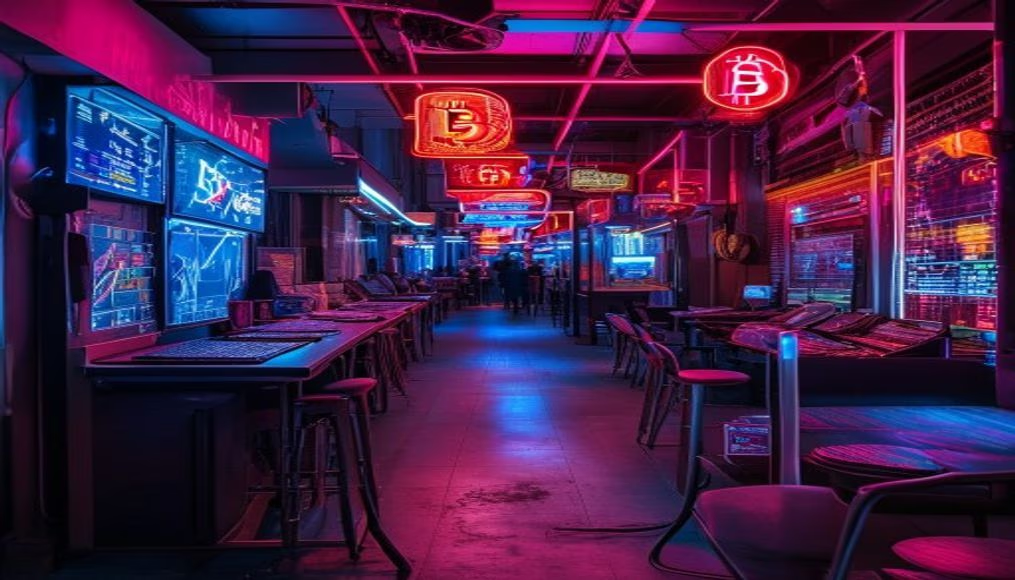
NFT art on transparent OLED screen
1344×768 · AVIF · CC BY 4.0

NFT art displayed on a transparent OLED screen combines technological innovation and digital art, highlighting the convergence between cryptocurrencies and display advancements.
About this subject
Using transparent OLED screens to display NFT art represents an evolution at the intersection of technology and cryptography. OLEDs (Organic Light-Emitting Diodes) are organic displays that emit light without requiring backlighting, allowing nearly total transparency when turned off. This type of screen is commonly used in smart shelves, automotive interfaces, and immersive experiences, but when applied to NFTs, it gains new dimensions: digital art becomes tangible and interactive.
The combination of NFTs and transparent OLEDs addresses both technical and aesthetic aspects. Technically, transparency allows the art to integrate with the physical environment, such as in gallery exhibitions or urban installations. Aesthetically, the borderless lightness of OLEDs enhances the perception of "pure art" without intrusive physical elements. Additionally, OLEDs' energy efficiency (up to 60% less consumption than LCDs) aligns with current sustainability debates in the NFT world, which faces criticism for high energy costs.
Verifiable curiosity: The first public NFT installation on a transparent OLED occurred in 2023 in New York, where an algorithm-generated artwork adapted in real-time to the traffic density of the location using IoT sensors. This application redefined the concept of "contextual art," where the artwork responds to its environment.
Cultural relevance lies in the democratization of access to digital art. NFTs ensure authenticity and ownership through blockchain, while transparent OLEDs enable large-scale public displays accessible to non-specialist audiences. This technological convergence also reflects the growing value of "ephemeral art" in the crypto market, where digital exclusivity coexists with hybrid physical experiences.
Frequently Asked Questions
How do transparent OLEDs differ from traditional screens?
Transparent OLEDs emit light organically without backlighting, allowing transparency when off. Traditional LCDs use backlighting and color filters, making them opaque and less energy efficient.
Why do NFTs pair well with OLEDs?
OLED transparency lets NFT art integrate with the physical environment, while blockchain ensures digital authenticity without requiring traditional frames or physical supports.
Is there a risk of OLEDs being replaced by other technologies?
Yes, emerging tech like micro-LEDs and holographic displays are in development, but OLEDs maintain cost and production advantages for art and exhibition applications.
Direct URL
https://pub-c7d6a6ea828543ac903a74a341ccb2e1.r2.dev/imagens/nft-art-on-transparent-oled-screen-macro-closeup-v5.avifHow to credit
Include a visible link back to UtilizAí. Copy one of the snippets below:
<a href="https://xn--utiliza-eza.com/en/midia/imagens/nft-art-on-transparent-oled-screen-macro-closeup-v5">NFT art on transparent OLED screen</a> by <a href="https://xn--utiliza-eza.com">UtilizAí</a>, licensed under <a href="https://creativecommons.org/licenses/by/4.0/">CC BY 4.0</a>.
[NFT art on transparent OLED screen](https://xn--utiliza-eza.com/en/midia/imagens/nft-art-on-transparent-oled-screen-macro-closeup-v5) by [UtilizAí](https://xn--utiliza-eza.com), CC BY 4.0
License: CC-BY-4.0