Neuromorphic chip
1344×768 · AVIF · CC BY 4.0
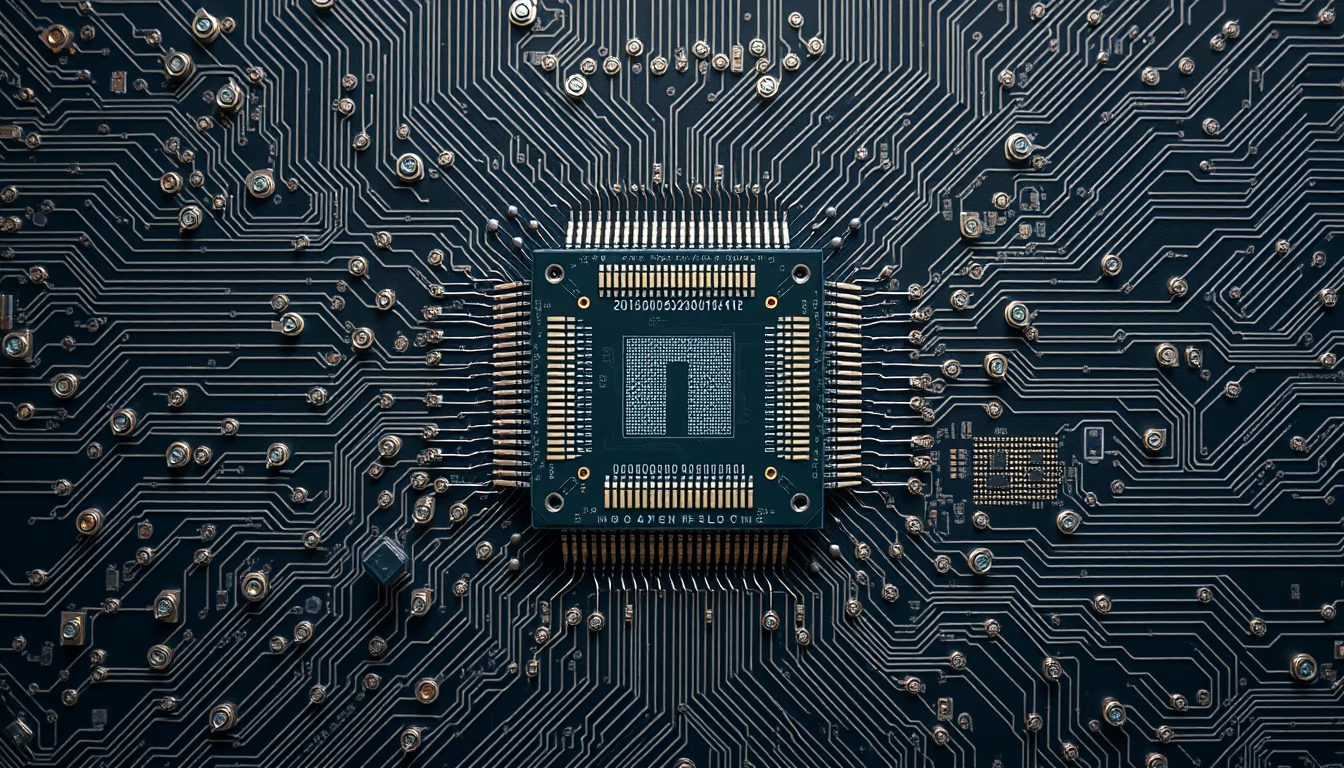
Neuromorphic chips mimic biological neural architecture for highly energy-efficient data processing.
About this subject
Neuromorphic circuits are a specialized class of semiconductors designed to emulate the functioning of the human brain. Unlike traditional von Neumann processors, which rely on a rigid separation between memory and computation, neuromorphic chips integrate memory and processing into artificial neurons interconnected by synapses. This architecture enables massive parallel and adaptive processing, similar to biological neural networks, resulting in drastically lower energy consumption for specific tasks such as pattern recognition and machine learning.
The development of neuromorphic hardware gained momentum with projects like Intel’s Loihi (launched in 2017) and IBM’s TrueNorth (2014). Loihi, for example, uses circuits that implement neural spikes for communication, avoiding the need for constant conversion to digital signals. This approach, known as spiking neural networks, allows the chip to operate with power consumption in the milliwatt range, while conventional hardware performing the same task would consume tens of watts. Efficiency is particularly advantageous for edge computing, mobile devices, and autonomous robotics, where battery life is limited.
Beyond efficiency, neuromorphic chips offer continuous learning and real-time adaptation. They can adjust synaptic weights based on biological plasticity rules like Spike-Timing-Dependent Plasticity (STDP). This makes them ideal for systems that need to learn in dynamic environments, such as smart sensors, drones, and neural prosthetics. Despite advances, challenges remain: large-scale fabrication is still expensive, and programming these devices requires specialized software tools, such as the Lava framework for Loihi.
Global research is accelerating. The University of Manchester’s SpiNNaker project and the European Human Brain Project have contributed significant open-source designs. In the United States, DARPA’s SyNAPSE program spurred early development. As fabrication processes improve and demand for low-power computing grows, neuromorphic chips are poised to become a key component in next-generation intelligent devices, from autonomous vehicles to brain-machine interfaces.
Frequently Asked Questions
What is a neuromorphic chip and how does it work?
A neuromorphic chip is a processor that mimics the brain’s structure using artificial neurons and synapses. It processes information in a parallel, event-driven (spiking) manner, consuming far less energy than conventional processors for machine learning tasks.
What are the main advantages of neuromorphic chips over traditional processors?
Key advantages include extremely high energy efficiency (up to a thousand times lower power consumption), real-time processing, continuous learning, and the ability to handle noisy or incomplete data, making them ideal for edge devices and robotics.
Where are neuromorphic chips currently used?
They are used in academic and industrial research for applications such as voice and image recognition, autonomous systems (drones, robots), neural prosthetics, and smart sensors. Commercial examples include Intel’s Loihi and IBM’s TrueNorth.
Direct URL
https://pub-c7d6a6ea828543ac903a74a341ccb2e1.r2.dev/imagens/neuromorphic-chip-isometric-flat-lay-p0.avifHow to credit
Include a visible link back to UtilizAí. Copy one of the snippets below:
<a href="https://xn--utiliza-eza.com/en/midia/imagens/neuromorphic-chip-isometric-flat-lay-p0">Neuromorphic chip</a> by <a href="https://xn--utiliza-eza.com">UtilizAí</a>, licensed under <a href="https://creativecommons.org/licenses/by/4.0/">CC BY 4.0</a>.
[Neuromorphic chip](https://xn--utiliza-eza.com/en/midia/imagens/neuromorphic-chip-isometric-flat-lay-p0) by [UtilizAí](https://xn--utiliza-eza.com), CC BY 4.0
License: CC-BY-4.0