Neuromorphic chip
1344×768 · AVIF · CC BY 4.0
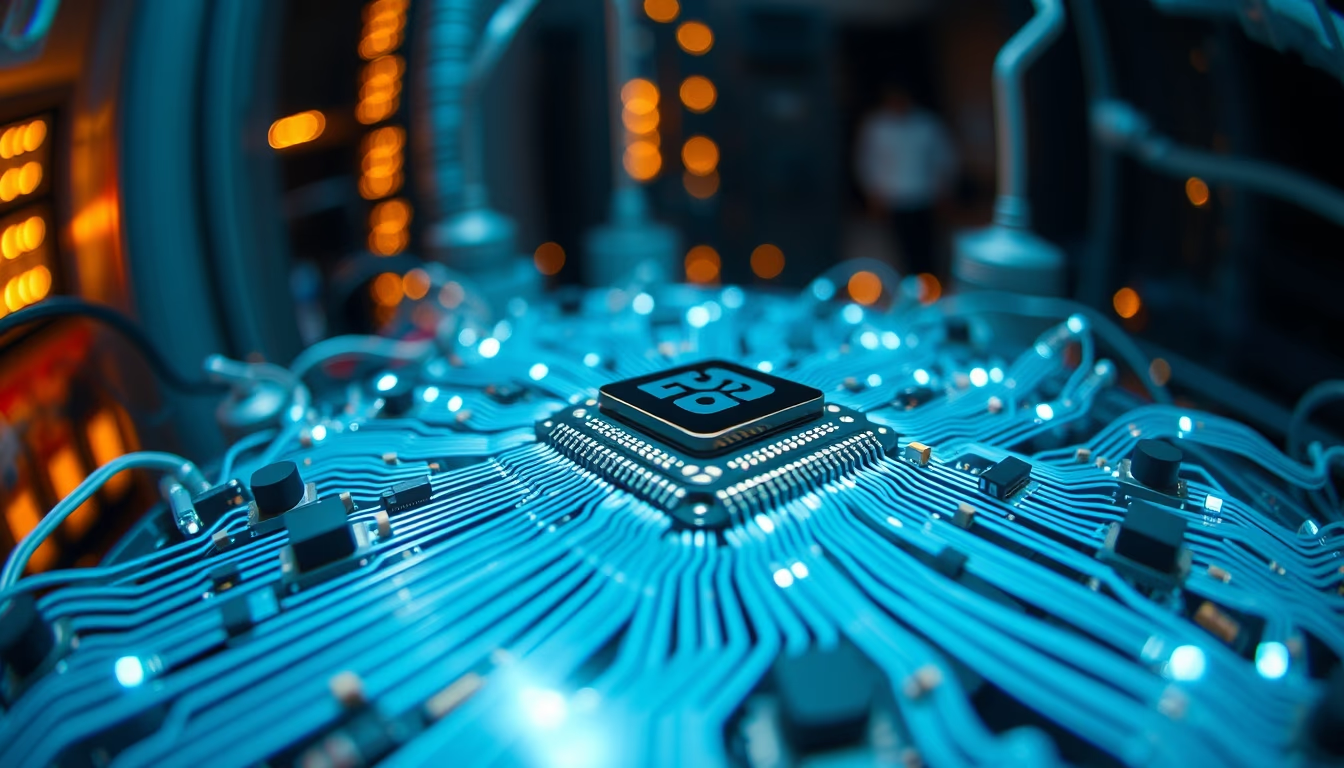
Neuromorphic chips mimic the brain's architecture to process information efficiently, revolutionizing artificial intelligence and edge computing.
About this subject
Neuromorphic chips represent a radically different approach to computing. Instead of following the von Neumann model, which separates memory and processing, these chips integrate both into structures that mimic neurons and synapses. They communicate via spikes, electrical pulses that occur only when needed, resulting in exceptional energy efficiency. Companies like Intel, with the Loihi chip, and IBM, with TrueNorth, lead the development. The Loihi 2, for instance, consumes thousands of times less energy than a conventional processor on specific machine learning tasks.
Practical applications are vast: autonomous robotics, IoT devices, pattern recognition, and smart sensors. A neuromorphic chip can learn continuously without sending data to the cloud, reducing latency and bandwidth consumption. In medicine, these chips power neural implants and intelligent prosthetics. Their ability to perform real-time inference with only a few watts makes them ideal for battery-powered devices.
Historically, the concept emerged in the 1980s with Carver Mead, who coined the term "neuromorphic." Advances in materials such as memristors and transition metal oxides have accelerated recent development. An interesting curiosity is that the energy consumption of a neuromorphic chip in pattern recognition tasks can approach that of a biological brain, around 20 watts, while an equivalent GPU would consume hundreds of watts.
The future of neuromorphic chips includes integration with quantum computing and spiking neural networks. They promise to revolutionize areas like autonomous vehicles, personal assistants, and space exploration, where efficiency and local processing are crucial. Despite manufacturing and programming challenges, research advances rapidly, with new hybrid architectures combining neuromorphic and digital elements.
Frequently Asked Questions
How does a neuromorphic chip differ from a traditional processor?
Traditional processors use von Neumann architecture with separate memory and CPU, while neuromorphic chips integrate processing and memory in neuron-like structures, enabling real-time learning and low energy consumption.
What are the main examples of neuromorphic chips?
Examples include Intel's Loihi, IBM's TrueNorth, and BrainChip's Akida, each focusing on energy efficiency and bio-inspired computing.
Why are neuromorphic chips important for artificial intelligence?
They enable massive parallel processing with a fraction of the energy of GPUs, making possible intelligent devices that learn locally without relying on the cloud.
Direct URL
https://pub-c7d6a6ea828543ac903a74a341ccb2e1.r2.dev/imagens/neuromorphic-chip-fish-eye-wide-angle-p1.avifHow to credit
Include a visible link back to UtilizAí. Copy one of the snippets below:
<a href="https://xn--utiliza-eza.com/en/midia/imagens/neuromorphic-chip-fish-eye-wide-angle-p1">Neuromorphic chip</a> by <a href="https://xn--utiliza-eza.com">UtilizAí</a>, licensed under <a href="https://creativecommons.org/licenses/by/4.0/">CC BY 4.0</a>.
[Neuromorphic chip](https://xn--utiliza-eza.com/en/midia/imagens/neuromorphic-chip-fish-eye-wide-angle-p1) by [UtilizAí](https://xn--utiliza-eza.com), CC BY 4.0
License: CC-BY-4.0